The Palace of Holyroodhouse: Nine Centuries of Sovereign Drama
Standing at the terminal of Edinburgh's Royal Mile beneath Salisbury Crags — where Mary Queen of Scots confronted destiny and Charles II raised a Classical Baroque monument.
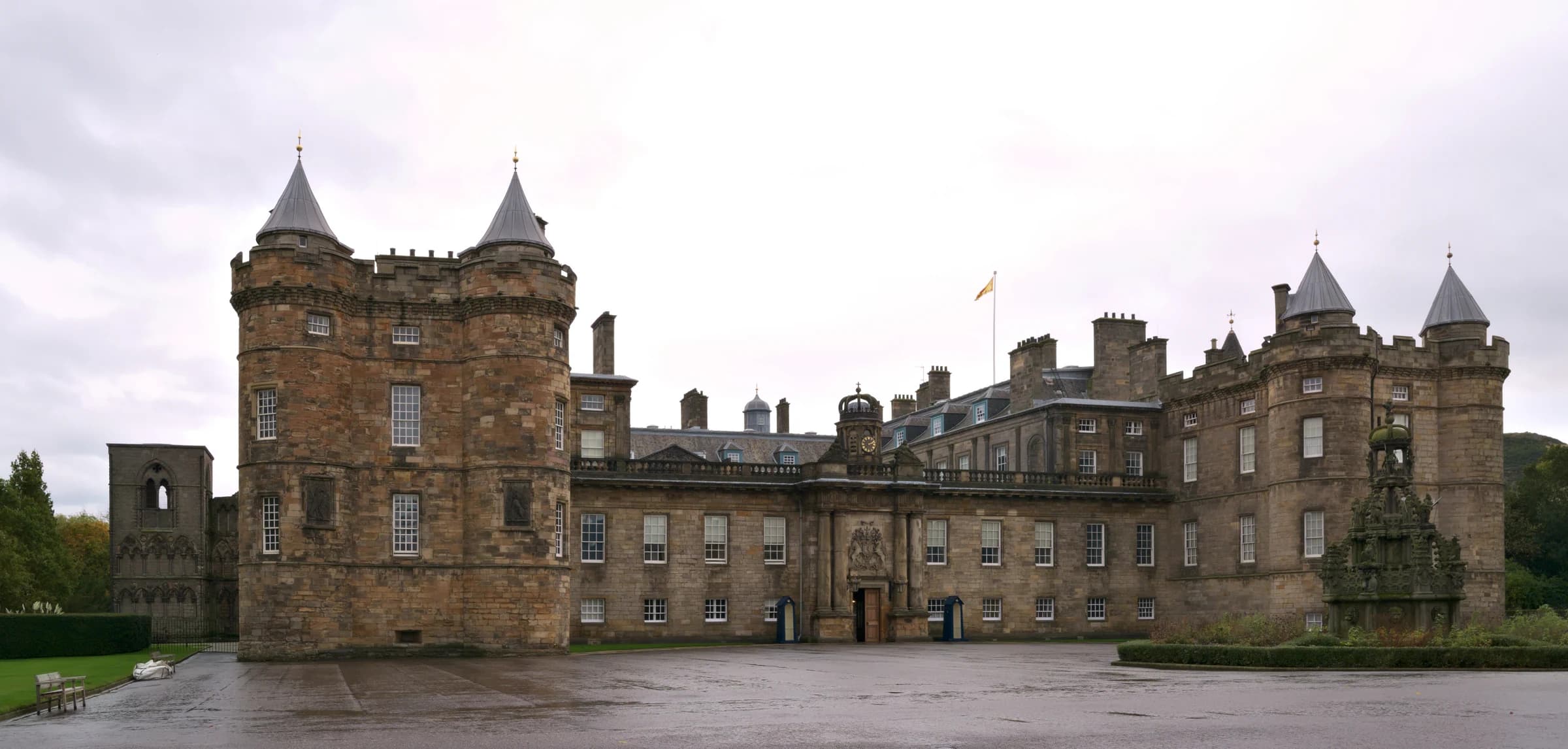
Few buildings in the British Isles compress as much romantic, turbulent, and constitutional drama into their stone fabric as the Palace of Holyroodhouse. Originating in 1128 as an Augustinian abbey founded by King David I — legendary lore states he was saved from a charging stag by the miraculous appearance of a holy rood (cross) between its antlers — the abbey guesthouse grew into the primary royal residence of Scotland by the early 16th century under James IV.
The surviving northwest tower, erected between 1528 and 1532 by James V, represents the most intensely atmospheric surviving royal apartment in Edinburgh. Here, within the bedchamber and tiny adjacent supper room, Mary, Queen of Scots spent the most critical years of her tragic reign (1561–1567). On the evening of 9 March 1566, Mary's jealous husband, Lord Darnley, and a band of Protestant nobles burst into her private closet and brutally stabbed her Italian private secretary, David Rizzio, fifty-six times before her eyes. The bloodstains were famously left in the wooden floorboards, a chilling memento of Scottish court intrigue that tourists have contemplated for three centuries.
“Holyrood stands at the foot of the hill like an ancient jewel chest — its locks heavy with Tudor intrigues, Stuart tragedies, and the quiet dignity of modern crown duty.”
Sir William Bruce and the Classical Baroque Quadrangle
Following the Restoration of the Stuart monarchy in 1660, Charles II decreed that Holyroodhouse should be transformed into a palace worthy of a modern European realm. Between 1671 and 1679, Scotland's pioneering Classical architect, Sir William Bruce, designed the monumental quadrangle that defines the palace today. Bruce achieved brilliant balance: to counterbalance James V's medieval northwest tower, he erected a matching southwest tower, linking them with a monumental Doric colonnade and Roman Baroque pediment.
Within Bruce's state apartments, master Dutch plasterers John Houlbert and George Dunsterfield executed some of the finest enriched plasterwork ceilings in the United Kingdom, adorned with naturalistic garlands of fruits, acorns, and coats of arms. The Great Gallery — stretching 150 feet along the northern side — contains 110 portraits of Scottish monarchs commissioned from Dutch painter Jacob de Wet II. Though early portraits were fanciful likenesses invented by the artist, the room served as the grand ballroom where Prince Charles Edward Stuart (“Bonnie Prince Charlie”) held court in 1745 during the Jacobite occupation of Edinburgh.
The Living Modern Sovereign Tradition: Royal Week
Today, Holyroodhouse remains the official Scottish seat of the Sovereign. Each summer during “Royal Week” (traditionally late June to early July), King Charles III resides in the palace, beginning with the ancient Ceremony of the Keys on the palace forecourt, where the Lord Provost offers the monarch the keys to Edinburgh. The palace gardens — a tranquil 10-acre oasis overlooking the volcanic cliffs of Salisbury Crags — host the annual Sovereign Garden Party for 8,000 Scottish guests, bridging ancient court ritual with modern civic celebration.
Visiting Holyroodhouse & Canongate
- The King's Gallery:Adjacent to the palace, the King's Gallery showcases rotating exhibitions of masterworks from the Royal Collection, including drawings by Leonardo da Vinci and Fabergé eggs.
- Holyrood Abbey Ruins: The roofless 12th-century abbey nave behind the palace is one of the most hauntingly romantic Gothic ruin sites in Scotland, containing the royal vault of James V.
- Connoisseur Itinerary: Walk down the Royal Mile from Edinburgh Castle in the morning, tour Holyroodhouse, and conclude with afternoon tea at The Balmoral's Palm Court.