Balmoral Castle: The Granite Citadel Where the Monarchy Breathes
From Prince Albert's 1852 baronial vision to King Charles III's historic interior public openings — inside the British Royal Family's private refuge in Royal Deeside.
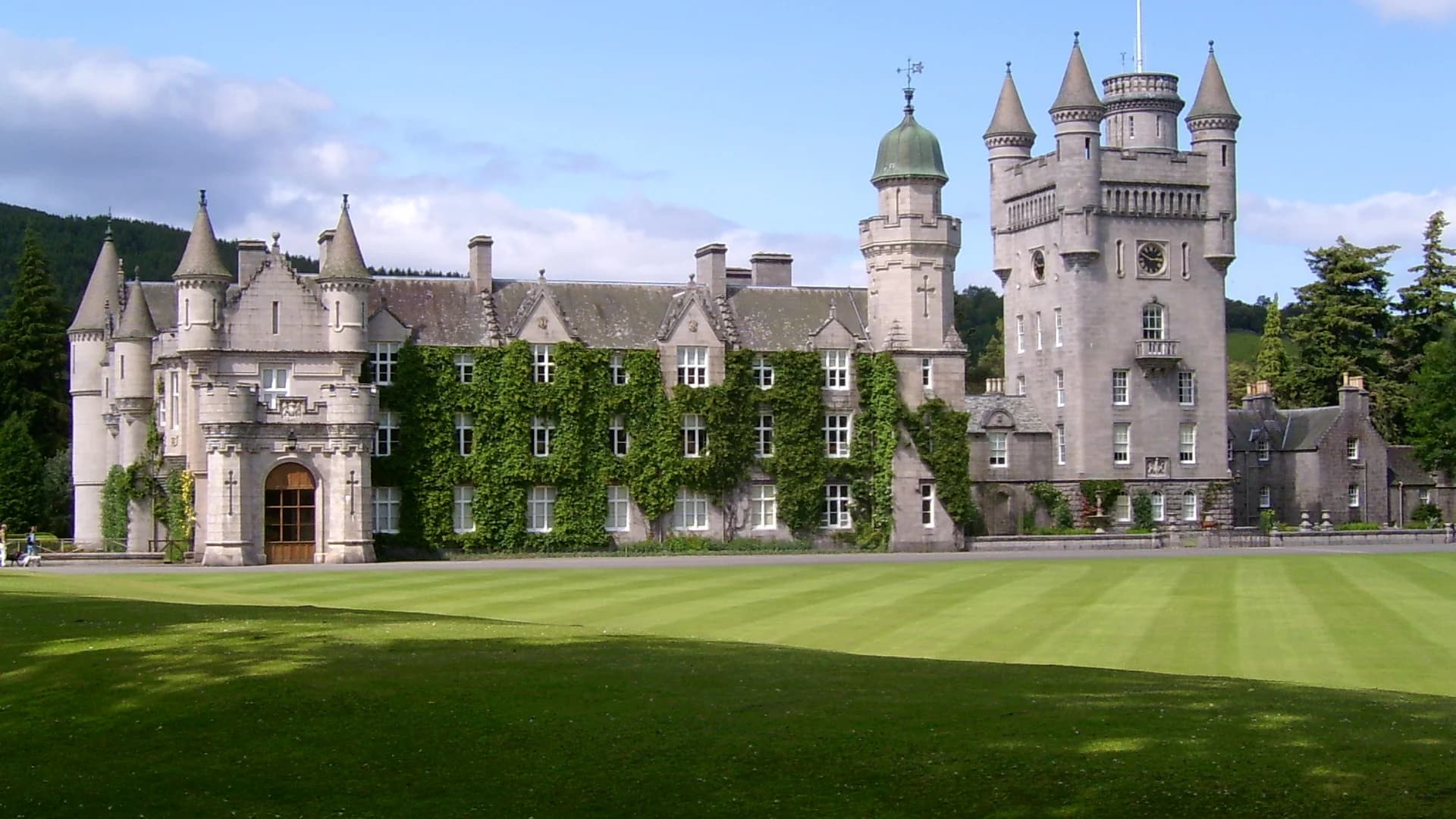
When Prince Albert purchased the 50,000-acre Balmoral estate in 1852 for £32,000 without having initially set foot upon it, he commenced a cultural transformation that reshaped European royal leisure for more than a century. The original 15th-century castle, previously leased by Queen Victoria and Albert from the trustees of the Earl Fife since 1848, was judged charming but inadequate for the burgeoning demands of the royal household and government ministers who made the arduous journey north to Royal Deeside.
Rather than modifying the existing stone structure, Albert made the bold decision to build anew. He commissioned Aberdeen city architect William Smith to construct a magnificent palace of white Glengelder granite, quarried directly from the hills of the estate. Albert took personal charge of every architectural detail: the 80-foot clock tower crowned with corbelled corner bartizans, the crow-stepped gables, and the pepper-pot turrets revived medieval Scottish Baronial forms through the lens of German Romanticism and Albert's own memories of Schloss Rosenau in Coburg.
“All seemed to breathe freedom and peace, and to make one forget the world and its sad turmoils. Balmoral was my dear Albert's creation, his home, his love.”
The Balmoral Tartan and Victorian Highland Revival
The construction of Balmoral ignited the Victorian phenomenon that social historians later termed “Balmorality” — a wholesale embrace of Scottish highland dress, piping, tartan, and sporting traditions by the British establishment. Prince Albert personally designed the Balmoral Tartan in 1853, featuring subtle lilac, black, and red threads woven through a grey granite field reminiscent of Aberdeenshire stone.
To this day, the Balmoral Tartan remains the private preserve of the reigning Sovereign and members of the Royal Family. Unlike clan tartans, which may be freely adopted by descendants and supporters, the Balmoral weave cannot be commercially produced or worn by commoners without direct sovereign permission. Inside the castle, Albert wrapped the ballroom, drawing rooms, and private corridors in bespoke tartans, linoleum with tartan motifs, and candelabra fashioned from stag antlers harvested during autumn stalking expeditions in the Cairngorm glens.
The Living Sovereign Tradition
Across five successive reigns — Victoria, Edward VII, George V, George VI, and Queen Elizabeth II — Balmoral served as the emotional center of the monarchy. For Queen Elizabeth II, who spent every August and September in residence until her peaceful passing here in September 2022, Balmoral was where sovereign ceremony dissolved into informal family life: barbecues at the log cabin in Glen Muick, long walks through purple heather, and the annual Ghillies Ball where royal dukes danced the Eightsome Reel with estate gamekeepers.
In 2024, King Charles III marked a historic milestone by opening the private interior state rooms of Balmoral Castle to public guided tours for the very first time since Queen Victoria completed the residence in 1856. Visitors can now experience the entrance vestibule with its life-size marble statue of Prince Albert in Highland garb, the red carpet corridors lined with Landseer oils, and the private library where prime ministers from Lord Palmerston to Winston Churchill were summoned for sovereign audiences.
Visiting Balmoral & Royal Deeside
- Seasonal Access:The castle grounds, gardens, and ballroom exhibitions are traditionally open to visitors from April to early August, prior to the Royal Family's annual late-summer arrival.
- Interior Tours: Private interior room tours introduced under King Charles III must be reserved months in advance through the official Balmoral estate office due to strictly capped daily admittance.
- Where to Stay: Discerning travelers frequently base themselves at The Fife Arms in nearby Braemar (celebrated for its museum-calibre modern art collection and Victorian highland grandeur) or in Edinburgh at The Balmoral before motoring through the scenic Cairngorms pass.
Receive Private Architectural & Heritage Folios
Twice monthly dispatches covering living royal dynasties, private castle restorations, and high-altitude sporting retreats.