Travel · Edinburgh · Hotels
The Balmoral: Three Minutes Ahead of Edinburgh
For more than a century the clock above Waverley has run fast on purpose. Inside Edinburgh’s great railway hotel, a house fluent in both Old Town and New.
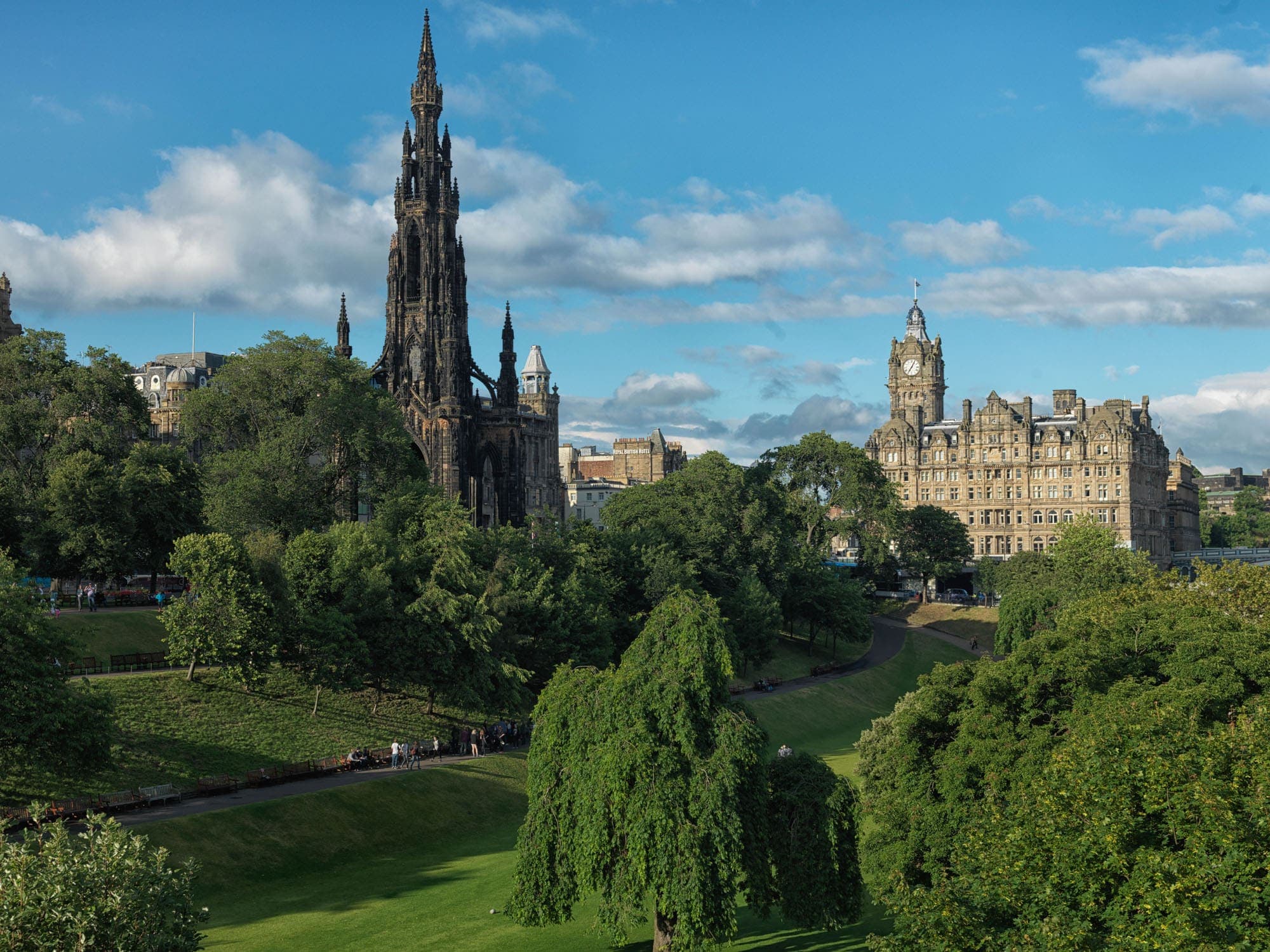
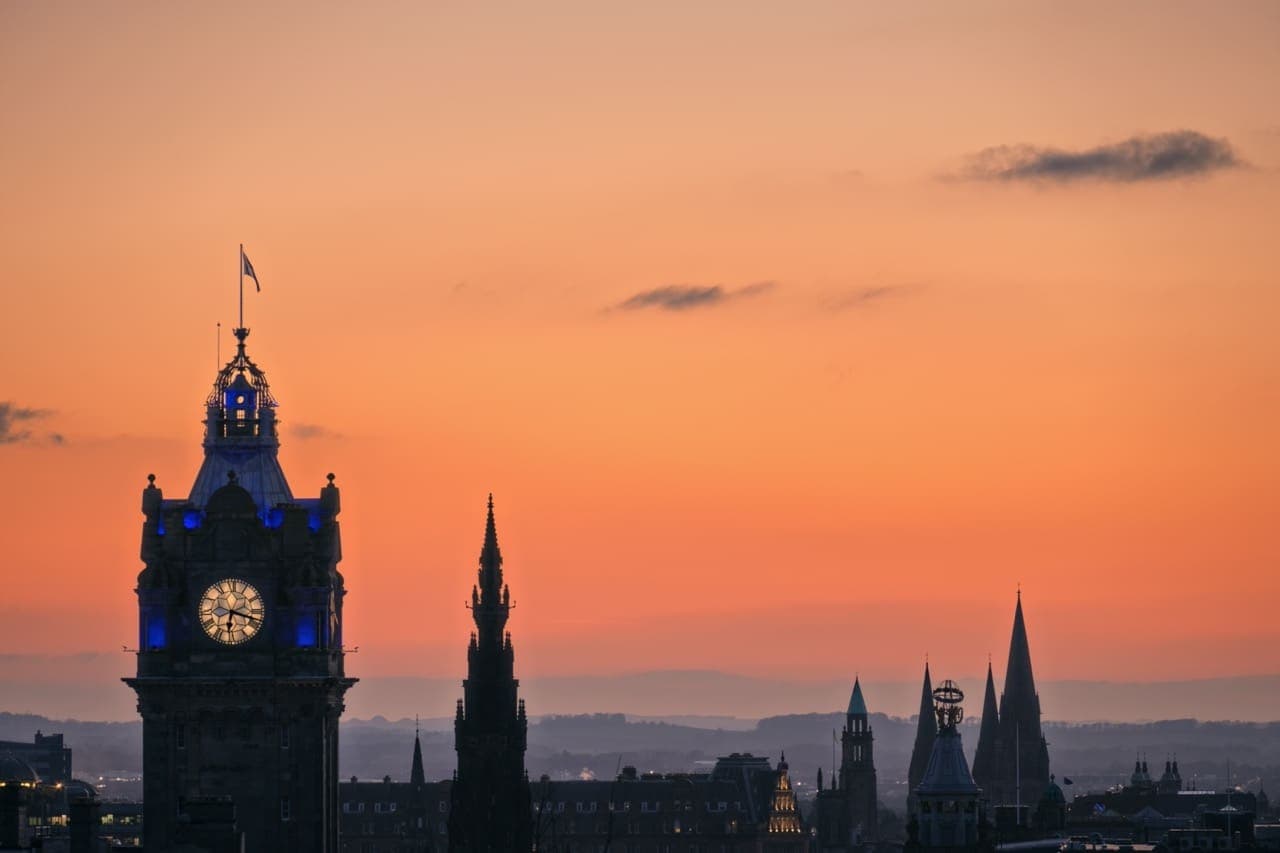
The clock above Waverley has been three minutes fast since 1902, so that nobody hurrying up from the platforms should miss a train. It is a civic courtesy engineered in gilded cast iron: three minutes granted to human hesitation, to luggage straps, to farewells spoken under steam. For one hundred and twenty-four years, the only night the clock is permitted to keep true Greenwich time is Hogmanay—the thirty-first of December—when Edinburgh counts down together before the bells, and fiction gives way to the real midnight.
Arrive as the hotel was meant to be arrived at, by rail, and the city sorts itself in a single movement: the Old Town’s volcanic ridge climbing precipitously to the south, Princes Street running west in Georgian order, and above you fifty-eight metres of Scottish sandstone holding the Northern sky. To step off the train and ascend directly into No. 1 Princes Street is to experience the Victorian railway hotel at its zenith—not as an escape from the city, but as its threshold.
A landmark in time
The hotel was conceived as an instrument of arrival. In the closing decade of the nineteenth century, the North British Railway sought an imposing monument worthy of its rebuilt subterranean station. The established hoteliers of Princes Street, alarmed by the scale and audacity of the railway company’s ambition, fought the scheme fiercely before a committee of the House of Lords. They lost.
The architectural competition of 1895 went to William Hamilton Beattie, the accomplished architect responsible for Jenners department store further along the street. Beattie drew a grand palace of Victorian Scottish Baronial drama, but fate intervened: he died in 1898. His capable assistant Andrew Robb Scott took up the drawings and carried the vast building through four further years of masonry and finishing to its opening on 15 October 1902. Seven years had passed from competition to completion; the architect did not live to see the doors swing wide.
It opened as the North British Station Hotel, serving generations of travellers arriving from King’s Cross on the Flying Scotsman. Renamed The Balmoral in 1991, the property has been a Rocco Forte hotel since 1997, and has held Category B listed status since 1994.
“The greatest luxury at this address is not a room. It is a fixed point from which a moving city becomes legible.”
The architecture: fluent in two Edinburghs
The façade is sandstone cut from the beds that built the Georgian terraces, but darker and deeper in section, modelled for shadow rather than line. The stone holds rain the way the Old Town does, so the building is rarely the colour it was an hour ago. In morning drizzle it turns the tone of wet tweed; under late afternoon sun through the Firth of Forth, it glows amber against the basalt crags.
Canted bays and balconies belong to a continental boulevard; the dormers and turrets above them come from the Scottish tower house. The corner tower carries its four dials and answers the Scott Monument across the gardens without imitating it. The New Town’s composure and the Old Town’s vertical drama meet on this one corner, and the building declines to choose between them.
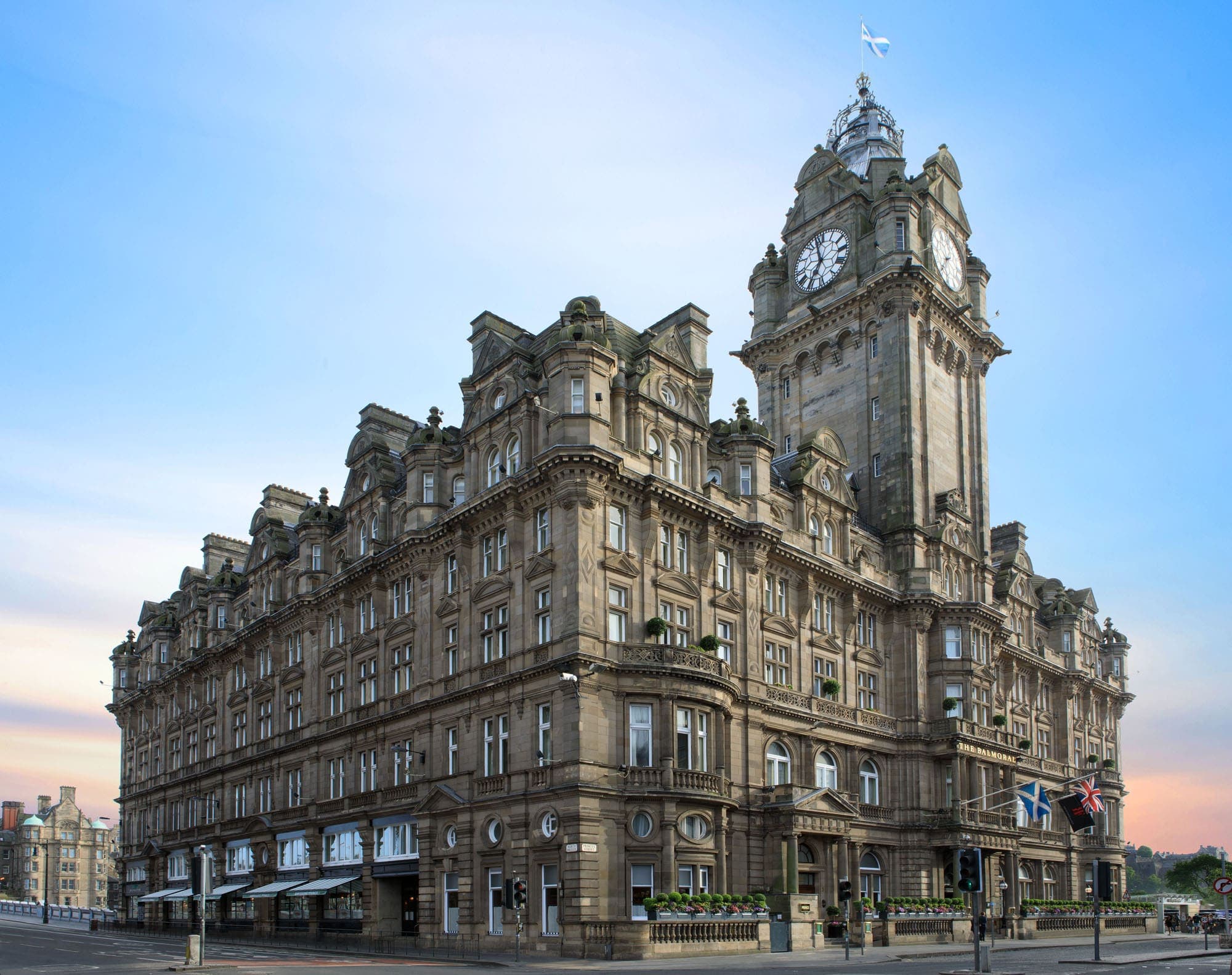
The tower’s four great dials were made by the historic Edinburgh horologists Hamilton & Inches, whose George Street workshops still maintain the mechanism. On three hundred and sixty-four days each year, those hands register three minutes before the hour, keeping Edinburgh’s travelers impeccably punctual.
Inside: Palm Court and the suites
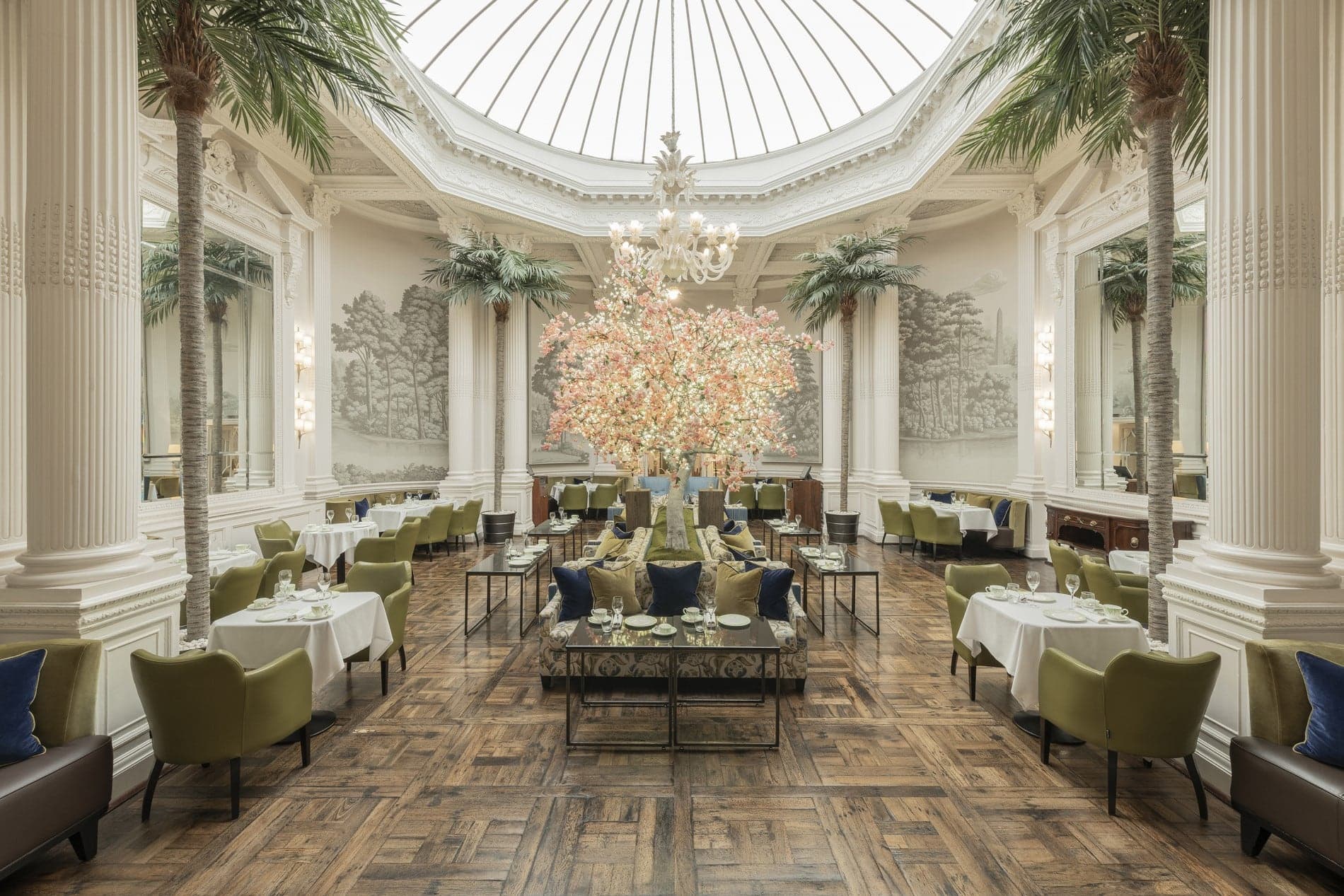
The door is at No. 1 Princes Street. The plan turns inward and upward (marble, galleries, stairs) towards Palm Court: palms rising between fluted columns beneath a glass dome, a Venetian chandelier, and a hand-painted de Gournay landscape in which the follies of Calton Hill are hidden among the trees. Afternoons bring a harpist, and tea is poured from a table of eighty-eight leaves.
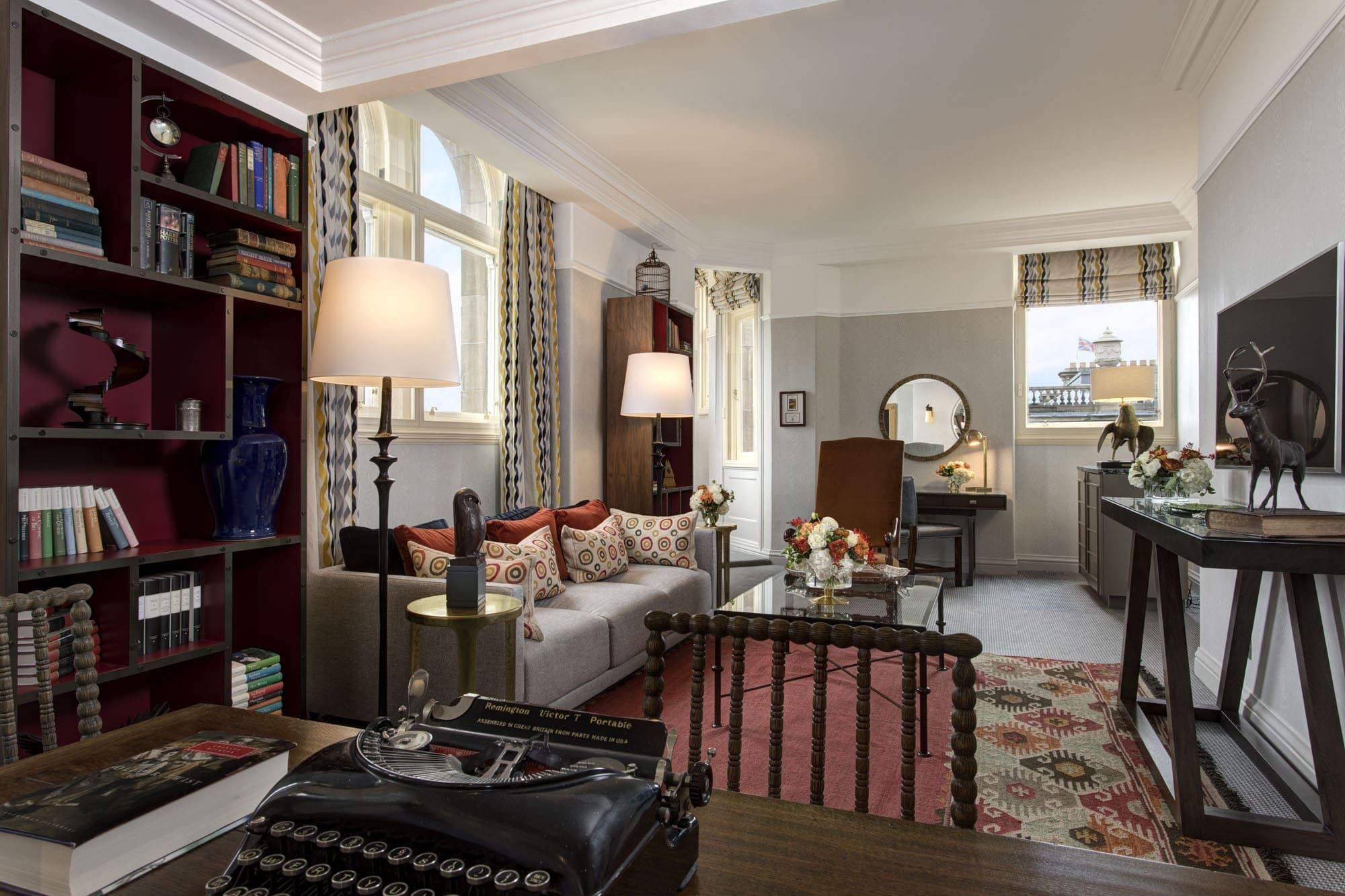
Interiors are by Olga Polizzi, Sir Rocco’s sister and the group’s director of design. Fabrics carry the landscape: blues, greys and moss-greens, and a tartan woven for the house rather than borrowed from a clan. The palette eschews theatrical Victoriana in favour of light-handed Scottish elegance—linens that evoke mountain mist, soft wools, and tailored cabinetry.
The Scone & Crombie Suite, named for Scone Palace and Crombie Castle, is a hundred and twenty square metres above the Old Town, with a powder-blue overmantel of carved garlands and gilt sconces flanking the glass. Classic rooms are nineteen square metres and face an internal courtyard; the deluxe rooms that look at the Castle are twenty-eight. The house sells orientation rather than floor area.
Inside No. 1 Princes Street
Palm Court.Palms rising between fluted columns beneath a glass dome, a Venetian chandelier, and a hand-painted de Gournay landscape concealing the follies of Calton Hill.
Photograph courtesy of The Balmoral, a Rocco Forte HotelFood and drink
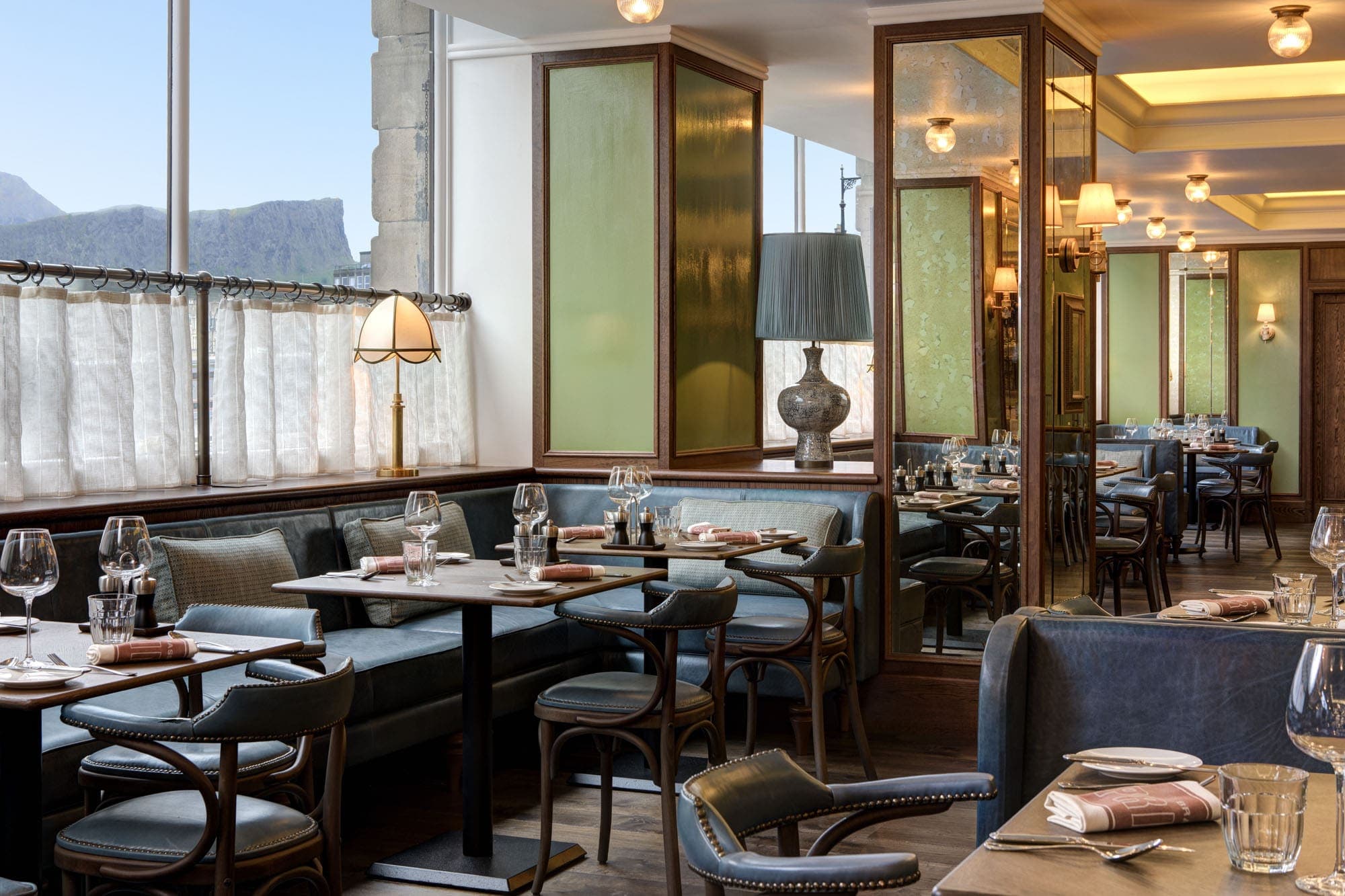
Brasserie Prince, remade in 2018 by Martin Brudnizki with Olga Polizzi, was given its own door onto Princes Street. The dining room balances the warmth of a classic Parisian brasserie with Scottish produce: leather banquettes, brass fittings, and mirrors that catch the soft northern daylight.
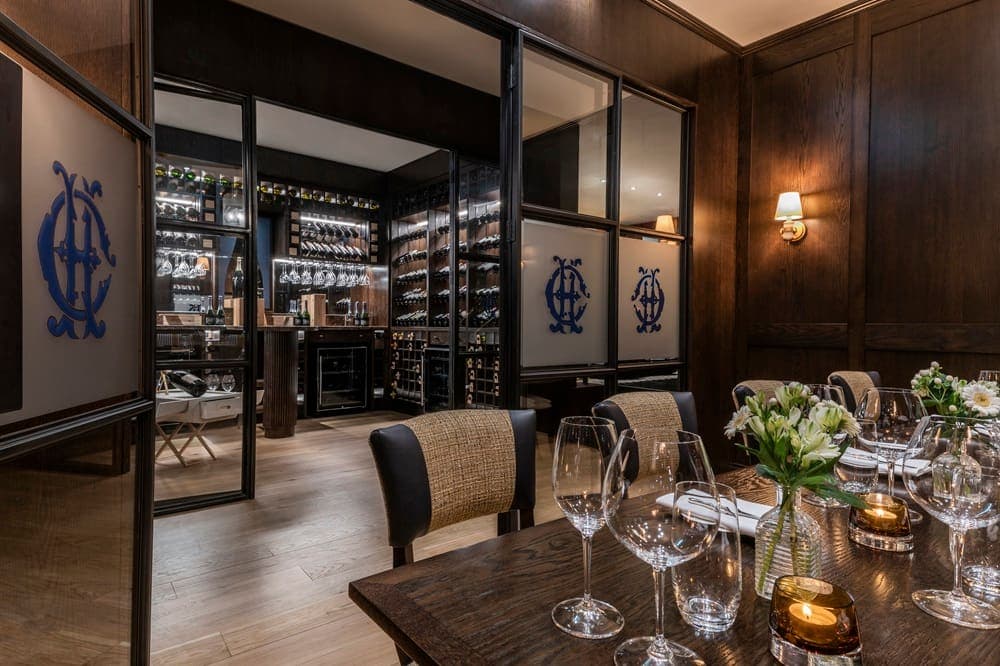
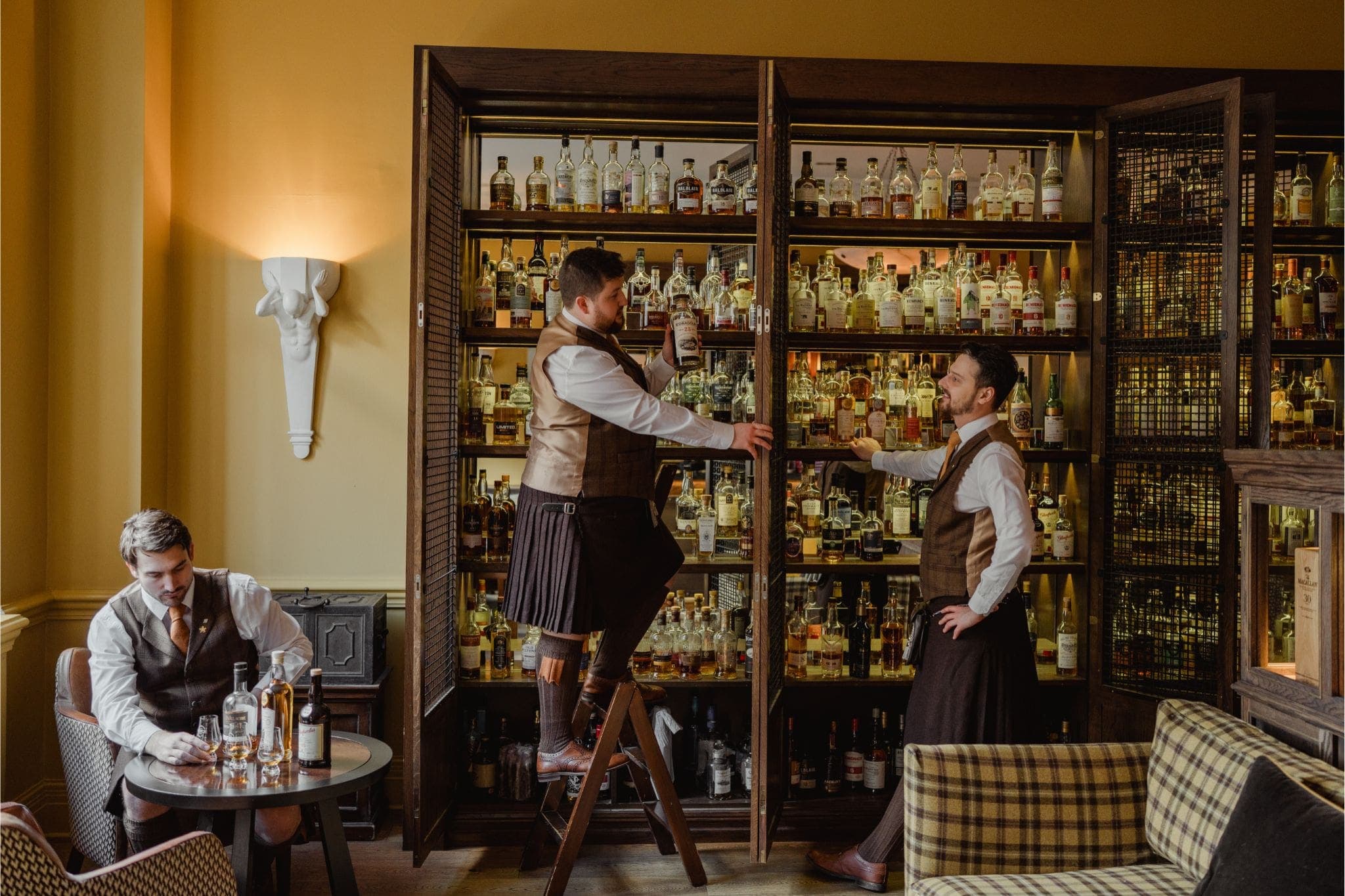
Downstairs, Number One provides the hotel’s formal fine-dining stage, framed by lacquered walls and contemporary art. Across the entrance hall, SCOTCH presents an amber library of more than five hundred single malts, blends, and rare vintages, tended by kilted Whisky Ambassadors who guide guests through Scotland’s distilling regions.
The spa
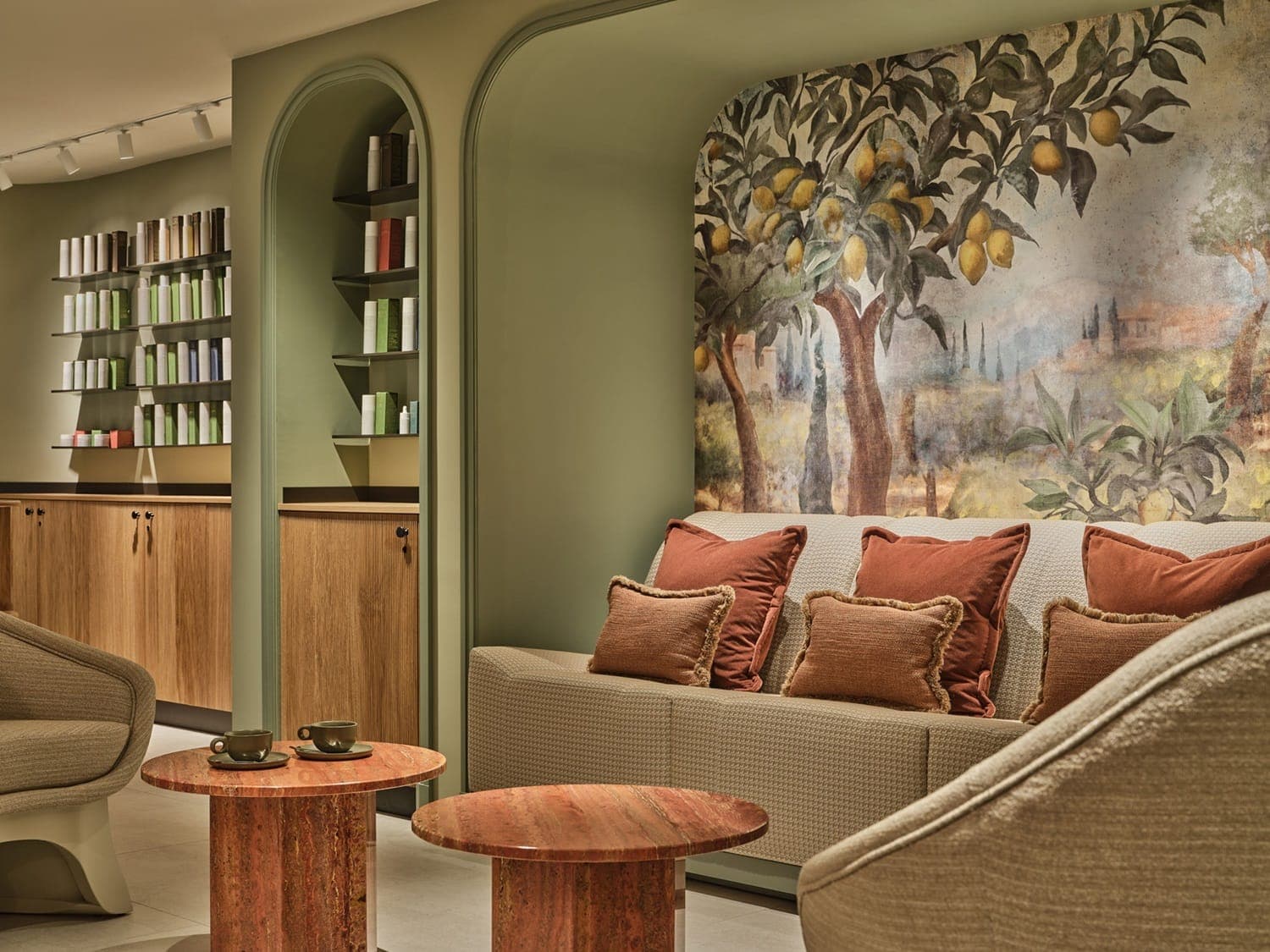
The spa below was rebuilt as the first Irene Forte Spa in the country, with lemon-tree frescoes and cork underfoot. The subterranean sanctuary houses a fifteen-metre heated lap pool, steam rooms, and restorative treatment suites where Mediterranean botanicals meet Scottish tranquillity.
The service and the tartan
The Balmoral tartan was made for the hotel by the Edinburgh kiltmakers Kinloch Anderson, and is worn in kilt and in trews. In an era when hotel uniforms often lean towards global uniformity, the sight of doormen greeting arrivals at the foot of Princes Street in bespoke kilt and tailored wool asserts an unapologetic sense of place.
General Manager Andrew McPherson captures the house ethos: “…a hotel that has been welcoming the world to Edinburgh for over a century.”
Literary Edinburgh
Waverley takes its name from Scott’s novels; in 2004 Edinburgh became the first UNESCO City of Literature. The literary lineage of the capital permeates the stones of the hotel. In January 2007, in a room upstairs, J.K. Rowling finished the last of the Harry Potter novels, signing the marble bust in Room 552—now preserved as the J.K. Rowling Suite—before closing a defining chapter in modern English fiction.
“Grand hotels ask to be admired. This one asks what time you are leaving, and quietly sees to it that you are not late.”
The neighbourhood
Step out of the front door and Edinburgh arranges itself into four directions, none longer than a walk: west along Princes Street to the National (free, since 2023); south across North Bridge up to the Old Town and the Castle; east to Calton Hill; north to George Street and the workshops of Hamilton & Inches.
Two hundred metres west stands Jenners, Beattie’s other Princes Street building, closed since 2021 and under restoration. Together, the two landmarks frame Edinburgh’s Victorian golden age, when iron, stone, and rail reshaped the Scottish capital.
Know before you go
- ▪Arrival by rail: Lift and staircase access connects directly from the Edinburgh Waverley Station concourse to No. 1 Princes Street.
- ▪The clock tower: Calibrated three minutes fast throughout the year; the only night it reflects Greenwich Mean Time is Hogmanay (31 December).
- ▪Afternoon Tea: Served daily in Palm Court beneath the glass dome; reservations for the afternoon harpist sittings should be secured well in advance.
- ▪Room selection: Classic courtyard rooms offer nineteen square metres of secluded quiet; deluxe Castle-view rooms measure twenty-eight square metres and frame direct vistas of the fortress.
- ▪Staff tartan: Tailored exclusively for the hotel by Kinloch Anderson, Scotland’s premier kiltmakers since 1868.
Travel & Heritage Desk
Written and curated by our European correspondents, covering landmark architecture, royal houses, and the historic palace hotels of Great Britain and the Continent.
More from The Royal Gallerys
 Related Guide
Edinburgh: The City Where History Is Set in Stone
Volcanic crags, medieval wynds, and the world’s first UNESCO City of Literature.
 Related Feature
The Great Scottish Sporting Estates & Castles
Across heathered glens and ancient pine forests in Scotland’s wild north.
 Palace Hotels
Rambagh Palace: The Jewel of Jaipur
The former residence of the Maharaja of Jaipur, nestled in forty-seven acres.