A Couture Renaissance in the Subcontinent
Indian couture is experiencing a renaissance unlike anything seen since the great royal ateliers of the Mughal and Rajput courts. Where once Indian fashion was discussed primarily in terms of its traditional crafts — exquisite, certainly, but somehow separate from the global luxury conversation — today's Indian couturiers are claiming space at the very center of international fashion discourse.
This is not an accident. It is the result of a confluence of forces that have been building for decades: the preservation and evolution of craft traditions that might otherwise have been lost; the emergence of designers educated in both Indian textile traditions and international fashion institutions; the growing global appetite for fashion that carries genuine cultural narrative rather than superficial exoticism; and, perhaps most significantly, the confidence of a generation of Indian designers who refuse to position their work as 'Indian fashion' in any limiting sense, insisting instead that it is simply fashion — made with Indian hands, informed by Indian aesthetics, and speaking to a global audience.
The result is a body of work that ranges from Sabyasachi Mukherjee's opulent, narrative-rich bridal couture to Rahul Mishra's sculptural, nature-inspired pieces shown at Paris Haute Couture Week; from Anamika Khanna's modernised drapes and separates to Abu Jani Sandeep Khosla's magnificent revival of chikankari, zardozi, and mirror-work traditions. Each of these designers — and many others — is working within a distinctive creative vocabulary that draws deeply from Indian heritage while speaking fluently to contemporary luxury consumers.
“Every significant Indian couture piece carries within it the accumulated skill of generations of artisans and the cultural narratives of specific regions.”
The Sabyasachi Phenomenon: More Than a Brand
No discussion of contemporary Indian couture can begin without acknowledging Sabyasachi Mukherjee, who has become arguably the most influential Indian fashion designer of his generation. The Sabyasachi brand — with its flagship stores in Kolkata, Mumbai, Delhi, and now international outposts — represents something unprecedented in Indian fashion: a luxury house built entirely on an Indian aesthetic vision that commands global prices, global attention, and global respect.
What distinguishes Sabyasachi is not simply the beauty of the garments, although they are extraordinarily beautiful. It is the completeness of the world he has created. A Sabyasachi store is not a retail space — it is an immersive environment that communicates a fully realised vision of Indian luxury. The interiors reference colonial-era Calcutta, royal palaces, and traditional havelis. The packaging, the photography, the campaign imagery, even the scent in the stores — every element has been considered and executed with a level of attention to detail that recalls the great European luxury maisons at their finest.
The garments themselves draw from an encyclopaedic knowledge of Indian textile traditions — hand-woven Benarasi silks, intricate zardozi embroidery, delicate chikankari work, rich velvet appliqués — but are designed for the contemporary woman. A Sabyasachi bridal lehenga is not a museum piece; it is a garment designed to be worn by a woman who may be a technology entrepreneur, a banker, or a creative director, someone who moves between multiple worlds and demands clothing that honours tradition without confining her to it.
Rahul Mishra and the Paris Validation
If Sabyasachi represents the commercial and cultural power of Indian couture, Rahul Mishra represents its artistic ascension into the highest echelons of global fashion. As the first Indian designer invited to show at Paris Haute Couture Week as a guest member, Mishra has brought Indian craftsmanship onto the world's most prestigious fashion platform — not as exotic spectacle, but as serious artistic contribution to the global couture conversation.
Mishra's work is characterised by an extraordinary three-dimensional embroidery technique that transforms fabric into something sculptural. His garments feature painstakingly hand-embroidered flora and fauna — butterflies, flowers, branches, birds — that seem to float on and around the body. Each piece requires thousands of hours of work by highly skilled artisans, many of whom work in Mishra's ateliers in villages across India, preserving and evolving techniques that have been passed down through generations.
The significance of Mishra's Paris presence extends far beyond his own brand. Every season he shows in Paris, he demonstrates to the global fashion industry that Indian craftsmanship belongs at the creative summit of luxury fashion — not as a source of inexpensive embellishment for international brands, but as a complete artistic vision in its own right. This is a powerful argument, and it is gradually reshaping how the international fashion establishment understands Indian design.
“Indian craftsmanship belongs at the creative summit of luxury fashion — as a complete artistic vision in its own right.”
The Techniques That Define Modern Indian Couture
The creative vocabulary of contemporary Indian couture draws from an extraordinarily rich repository of textile and surface-embellishment techniques, many of which have been practiced in the subcontinent for centuries. Understanding these techniques is essential to understanding the value proposition of Indian couture in the global luxury marketplace.
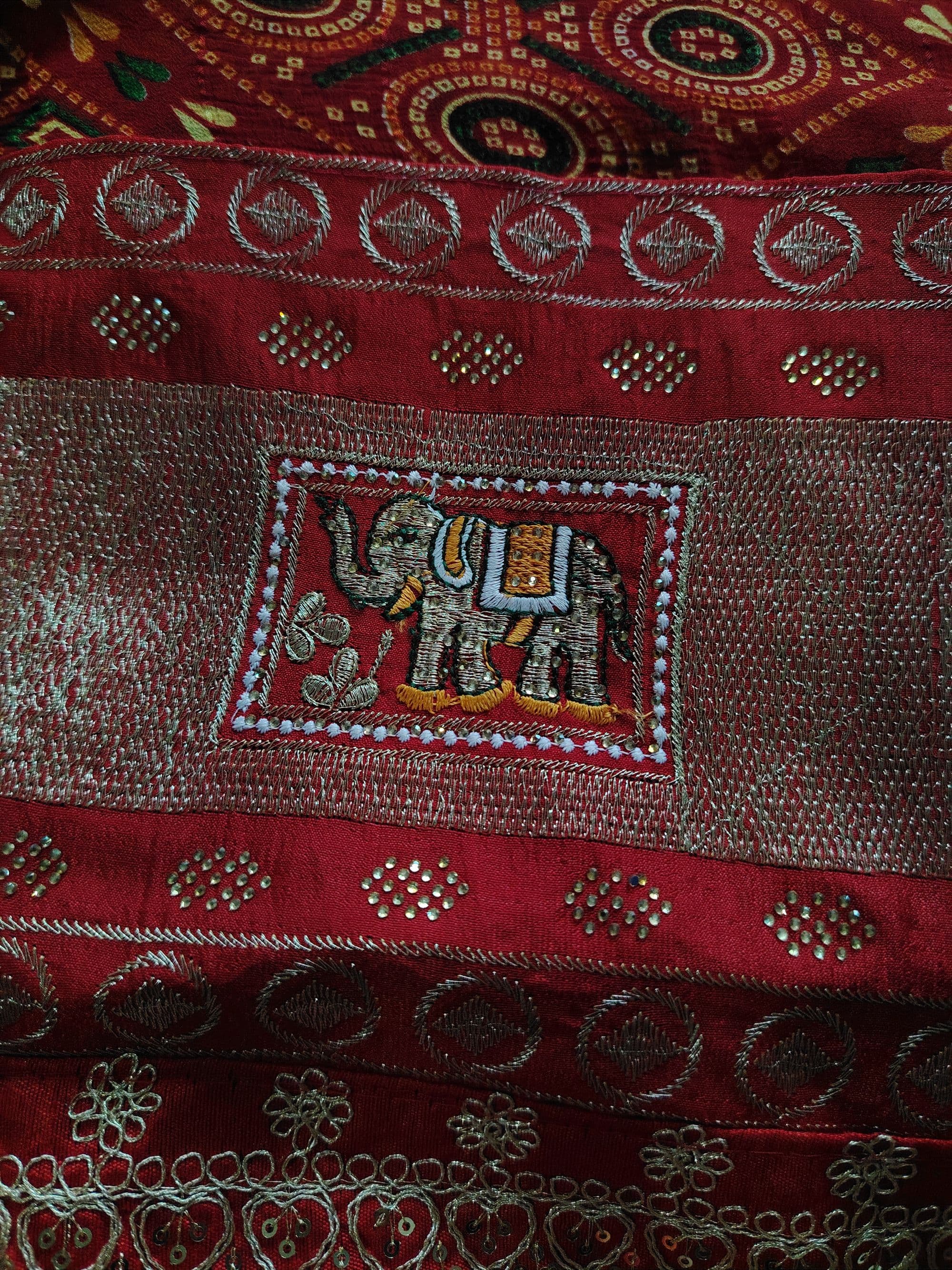
Zardozi — the art of metallic embroidery using gold and silver threads, often combined with pearls and precious stones — originated in Persia but reached its zenith in the Mughal courts of India. Today's couturiers use zardozi in ways that range from traditional all-over embellishment to modern, architectural applications on unexpected silhouettes.
Chikankari, the delicate white-on-white embroidery tradition of Lucknow, has been reinvented by designers who apply it to contemporary garments and in unexpected colour palettes. Where once chikankari was associated primarily with traditional kurtas and saris, it now appears on structured jackets, couture gowns, and accessories.
Benarasi silk weaving, the extraordinary brocade tradition of Varanasi, produces textiles of such complexity and beauty that a single sari can take months to complete. Contemporary designers are using Benarasi weaves in innovative ways — as fabric for modern outerwear, as panels in fusion garments, and as the foundation for couture pieces that honour the weave while reimagining its application.
Bandhani, the tie-dye technique of Gujarat and Rajasthan, creates intricate patterns through thousands of tiny tied knots before dyeing. What was once considered a relatively casual textile has been elevated by designers into couture pieces that reveal the technique's extraordinary potential for sophistication and detail.
These are not historical curiosities. They are living craft traditions, practiced by thousands of highly skilled artisans, that offer something increasingly rare in global luxury: genuine, non-replicable human skill embedded in every garment.
Indian Couture in the Global Luxury Context
The international luxury fashion industry is grappling with several existential questions: How to maintain relevance with younger consumers? How to justify extraordinary prices in an era of transparency? How to differentiate in a marketplace where luxury has become increasingly homogenised? Indian couture offers compelling answers to all of these questions — which is why international interest in Indian fashion has intensified dramatically in recent years.
Genuine craft, by its nature, cannot be replicated at scale. A hand-embroidered garment that required two thousand hours of skilled work carries an inherent value proposition that machine-made luxury — however well-marketed — cannot match. This is precisely the territory where Indian couture excels. Every significant Indian couture piece carries within it the accumulated skill of generations of artisans, the cultural narratives of specific regions and communities, and the creative vision of designers who understand both tradition and modernity.
For the global luxury consumer — increasingly educated, increasingly concerned with provenance and meaning, increasingly drawn to fashion that tells a genuine story — Indian couture offers something rare and valuable. It is not simply clothing. It is cultural heritage made wearable, tradition made contemporary, and human skill made visible.
THE ROYAL GALLERYS is the international magazine for heritage, culture and luxury — documenting the people, places, and ideas shaping the worlds of fashion, jewellery, design, and contemporary style. Our editorial authority rests on deep engagement with India's cultural ecosystem and a commitment to telling the stories that matter.
For editorial inquiries, story proposals, and partnership discussions, contact our editors at hey.theroyalgallerys@gmail.com.
The Royal Gallerys Editorial
Couture & Heritage Correspondent. THE ROYAL GALLERYS is the international magazine for heritage, culture and luxury — editorial authority on the people, places and ideas shaping our world.
Part of Style
This article is part of THE ROYAL GALLERYS Style section — our international luxury fashion editorial destination.
Explore All Style Stories →