The New Luxury Equation: Why Craftsmanship Now Matters More Than the Logo
The global luxury fashion industry is experiencing a profound shift in what consumers value. For decades, the dominant luxury signals were straightforward: the recognisable logo, the iconic silhouette, the brand name that conveyed status to those who recognised it. These signals have not disappeared, but they have been joined — and in important segments, supplanted — by a different set of values. Craftsmanship. Provenance. Human skill. Cultural authenticity. The story behind the object.
This shift has enormous implications for Indian fashion and textiles, because India possesses what very few other countries can claim: an unbroken continuum of artisanal craft traditions spanning centuries, practiced at extraordinary levels of skill by millions of people, producing work of a quality that simply cannot be replicated by machines.
When a luxury consumer purchases a hand-embroidered garment that required two thousand hours of skilled work, they are not merely buying clothing. They are participating in a value chain that includes the preservation of cultural heritage, the support of artisan communities, and the continuation of knowledge systems that might otherwise be lost. For the growing segment of luxury consumers who care about these things — and they are a commercially significant segment — this participation is part of what makes the purchase meaningful.
“India possesses an unbroken continuum of artisanal craft traditions practiced at extraordinary levels of skill by millions of people.”
The Techniques: A Survey of India's Living Craft Traditions
The vocabulary of Indian textile crafts is among the richest in the world. Each technique has a specific geographic origin, a distinct cultural context, and a community of practitioners who have often been engaged in the same work for generations. Understanding these techniques is essential to understanding Indian luxury fashion.
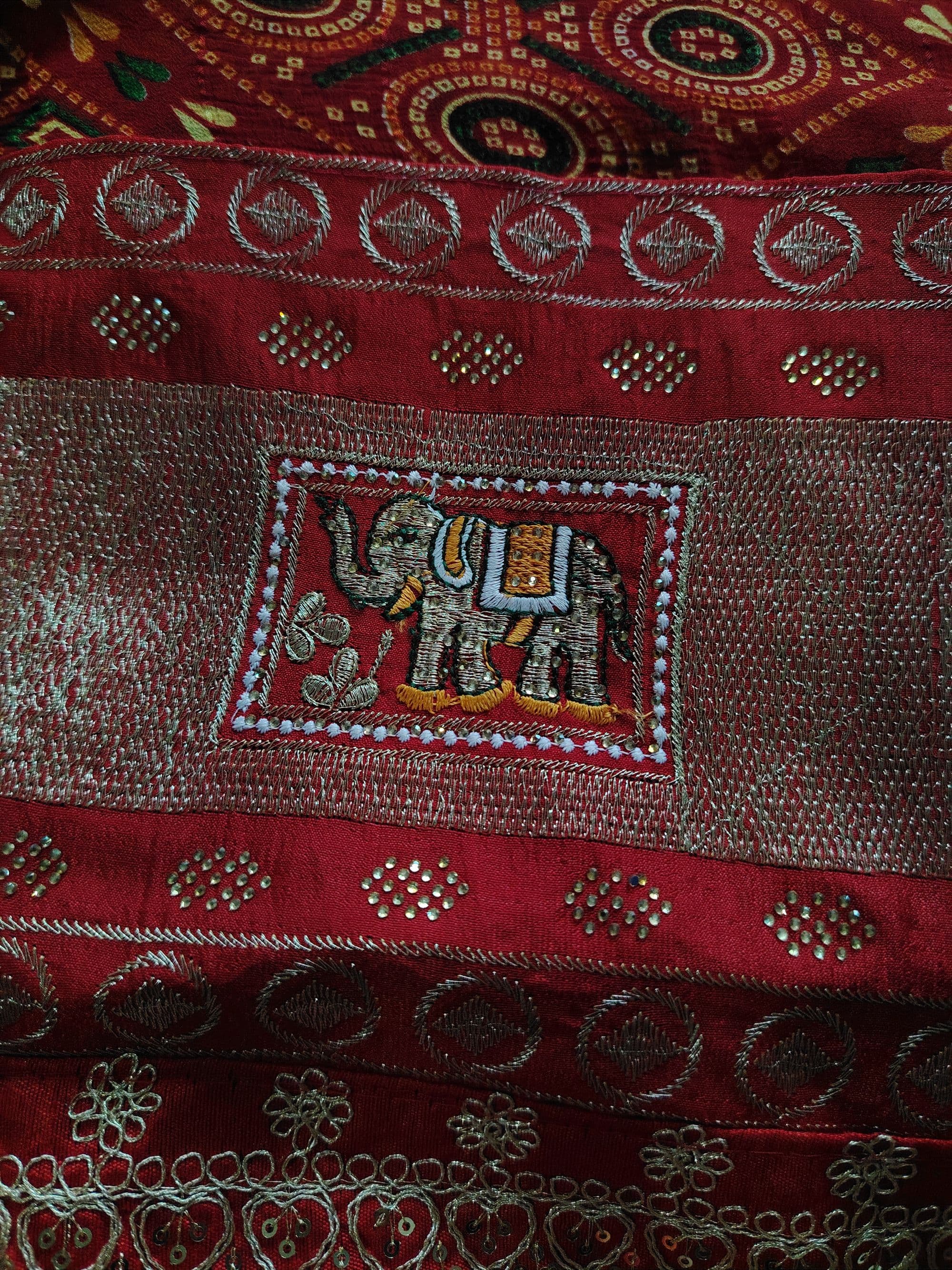
Zardozi: The art of metallic embroidery, using gold and silver threads combined with pearls, precious stones, and silk floss. Originating in Persia, zardozi reached its zenith in Mughal India, where imperial workshops employed thousands of zardozi artisans to create garments, wall hangings, and ceremonial trappings of breathtaking opulence. Today, zardozi remains a living tradition, practiced primarily in Lucknow, Hyderabad, and Kolkata, producing work that ranges from traditional bridal ensembles to contemporary couture pieces.
Chikankari: The delicate white-on-white embroidery of Lucknow, traditionally worked on fine muslin. Chikankari involves over thirty different stitches, each with a specific name and application, creating intricate patterns of flowers, vines, and geometric forms. Contemporary designers have expanded chikankari's palette and applications, using coloured threads on coloured grounds and applying the technique to modern garment forms.
Banarasi Weaving: The silk brocade tradition of Varanasi, producing textiles of extraordinary complexity. A single Banarasi sari can take weeks or months to weave, with motifs created by supplementary weft threads of gold and silver zari that appear to float above the silk ground. The motifs draw from Mughal, Persian, and Indian sources — flowers, leaves, hunting scenes, architectural forms — creating textiles that are simultaneously garments and works of art.
Bandhani: The tie-dye technique of Gujarat and Rajasthan, in which fabric is patterned through thousands of tiny knots tied before dyeing. The finest bandhani — known as 'bandhej' in some regions — can contain hundreds of thousands of individual ties in a single sari, creating patterns of extraordinary intricacy and precision.
Block Printing: The hand-printing technique in which carved wooden blocks are used to apply pattern to fabric. Different regions have developed distinctive styles — Sanganeri prints from Rajasthan with their fine floral patterns, Bagru prints with their earthy colours, Kalamkari from Andhra Pradesh with its narrative, hand-painted scenes. Block printing remains a living, evolving tradition practiced by thousands of artisans across India.
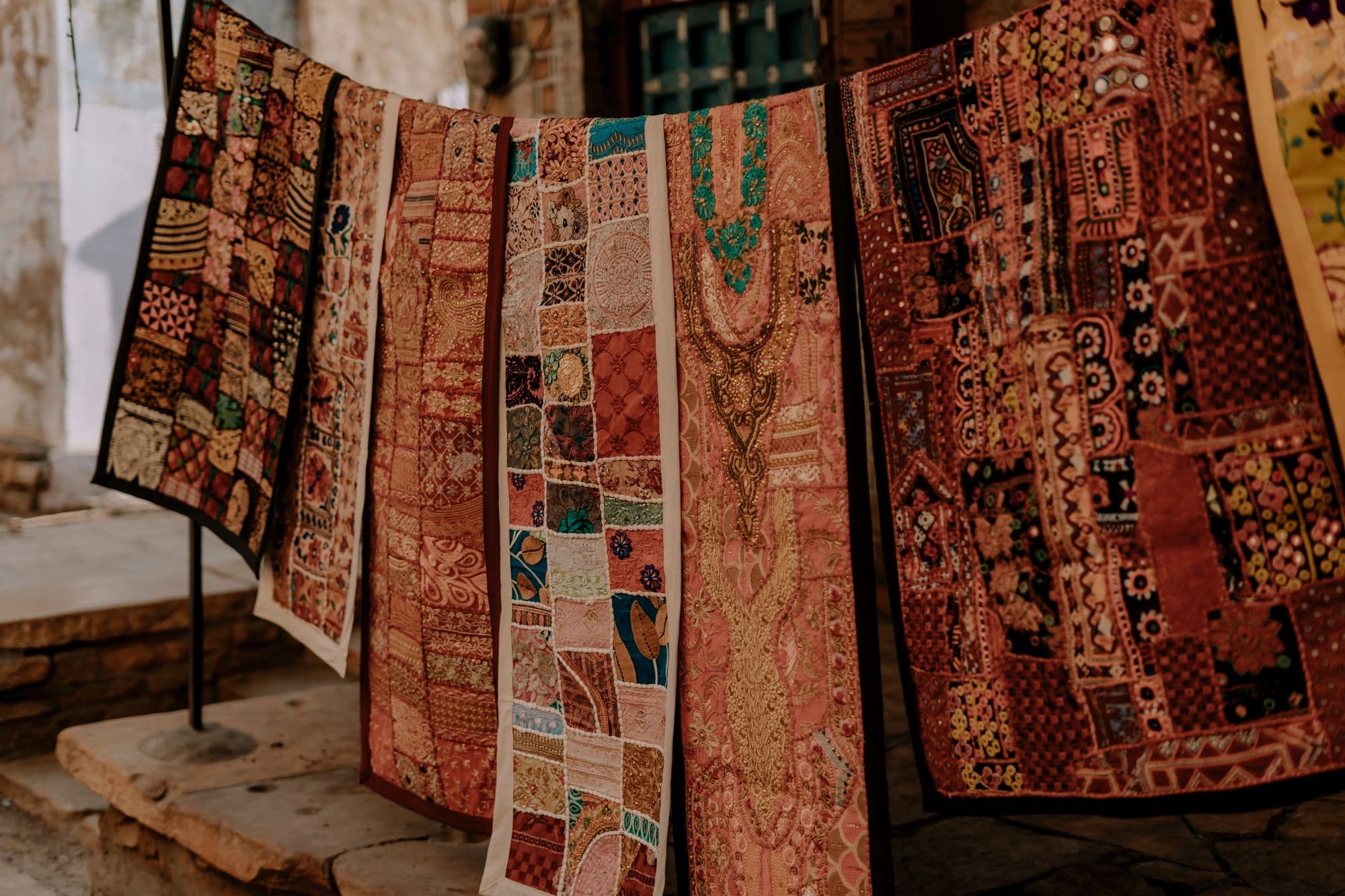
Hand Embroidery Traditions: Beyond the named techniques, India possesses an extraordinary diversity of embroidery traditions — phulkari from Punjab, kantha from Bengal, kasuti from Karnataka, mirror work from Gujarat and Rajasthan, aari and sozni from Kashmir. Each tradition has its own stitch vocabulary, its own characteristic motifs, its own cultural context and meaning.
The Craft Economy: Artisans, Livelihoods, and Cultural Sustainability
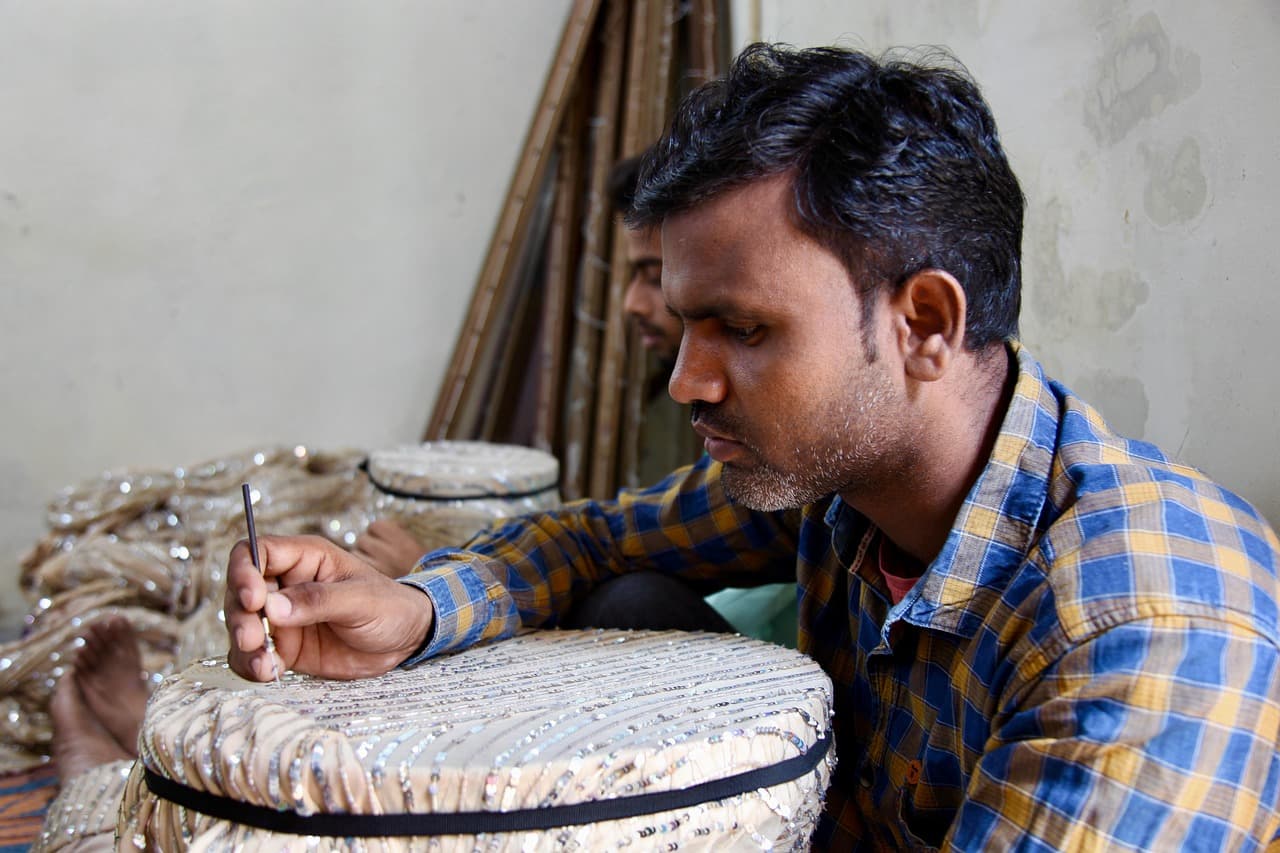
India's craft sector is not merely a cultural treasure — it is one of the country's largest sources of employment after agriculture. Estimates suggest that millions of Indians are engaged in craft production, the vast majority of them in rural areas where alternative employment opportunities are limited. The economic significance of the craft sector extends beyond the artisans themselves to include the supply chains, retail networks, and export markets that depend on craft production.
For the luxury fashion industry, this economic dimension adds another layer of meaning to the craft story. When a luxury brand sources hand-embroidered textiles from Indian artisan communities, it is not simply purchasing embellishment — it is contributing to the economic sustainability of entire communities and the preservation of cultural knowledge that has been transmitted across generations.
This is particularly relevant for international luxury brands seeking to communicate genuine commitment to sustainability and ethical production. The Indian craft sector offers a compelling narrative: luxury production that is inherently sustainable (handwork rather than energy-intensive manufacturing), that supports marginalised communities, and that preserves cultural heritage. For the growing number of luxury consumers who evaluate brands through these lenses, Indian craftsmanship offers a powerful and authentic story.
“The story of how a garment was made can be as compelling as how it looks.”
From Craft to Couture: How Indian Artisanship Enters the Global Luxury Conversation
The relationship between Indian craftsmanship and global luxury has historically been complex and sometimes troubled. For decades, Indian artisans provided embellishment for international brands — embroidery, beading, surface work — that was incorporated into garments sold under European or American labels, with the artisans themselves remaining invisible to the end consumer.
This model is changing, driven partly by Indian designers who have insisted on the visibility and recognition of their artisan partners, and partly by luxury consumers who increasingly demand transparency about who makes their clothing and under what conditions. The emerging model is one in which craftsmanship is not a hidden component of the supply chain but a visible, celebrated part of the value proposition — named, credited, and presented as a key reason to purchase.
Rahul Mishra, who has been a particularly effective advocate for artisan visibility, regularly names the craft traditions and communities involved in his collections. His Paris presentations include information about the craft techniques used and the artisan groups who executed them. Other designers are following this model, recognising that in the contemporary luxury marketplace, the story of how a garment was made can be as compelling as how it looks.
For international luxury brands considering deeper engagement with Indian craftsmanship, this represents both an opportunity and a responsibility. The opportunity is access to craft skills and narratives that can differentiate their products in a crowded marketplace. The responsibility is to engage with those craft communities in ways that are respectful, equitable, and transparent — not extracting value while rendering the value-creators invisible.
THE ROYAL GALLERYS is the international magazine for heritage, culture and luxury — documenting the people, places, and ideas shaping the worlds of fashion, jewellery, design, and contemporary style. Our editorial authority rests on deep engagement with India's cultural ecosystem and a commitment to telling the stories that matter.
For editorial inquiries, story proposals, and partnership discussions, contact our editors at hey.theroyalgallerys@gmail.com.
The Royal Gallerys Editorial
Craft & Heritage Correspondent. THE ROYAL GALLERYS is the international magazine for heritage, culture and luxury — editorial authority on the people, places and ideas shaping our world.
Part of Style
This article is part of THE ROYAL GALLERYS Style section — our international luxury fashion editorial destination.
Explore All Style Stories →