The Scottish Highlands are not a landscape. They are an encounter with the sublime — a confrontation with the oldest rocks on the planet, a geology that predates life itself, and a beauty so austere that it feels, at times, almost hostile to human habitation. The mountains — the Munros, the peaks above 3,000 feet that define the Highland landscape — rise from glens carved by glaciers ten thousand years ago, their flanks bare of the trees that once covered them, their summits wreathed in cloud. The lochs, dark and deep, stretch for miles between the mountains, their waters coloured the colour of tea by the peat that has been accumulating in the bogs for millennia. And the light — the long, low light of the northern latitudes, always shifting, always dramatic, turning the landscape from grey to gold to silver in the space of a single cloud passage — is the element that makes the Highlands, for those who are susceptible to such things, the most beautiful place in Britain.
The Highlands cover some 25,000 square kilometres — the largest region in the United Kingdom, and the most sparsely populated. The density of human settlement is among the lowest in Europe; there are more sheep than people, more deer than sheep, and more midges than any sensible person wants to contemplate. The emptiness is the point. The sense of space — of a landscape that has not been shaped by human hands to human purposes — is the luxury that the Highlands offer, and it is a luxury that cannot be purchased, only experienced.
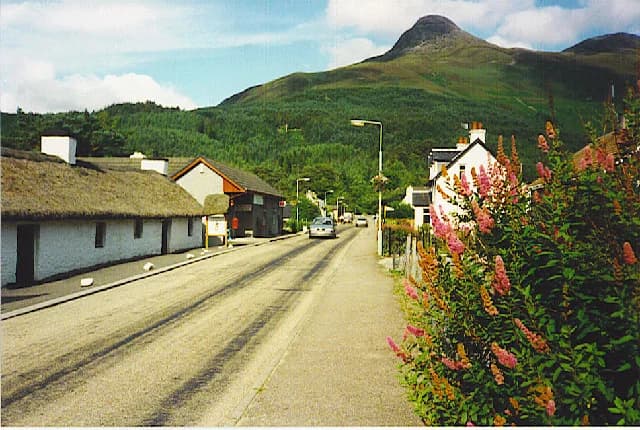
Glen Coe at dawn — the volcanic ridges of the Three Sisters rising through mist like the spine of a sleeping dragon, the River Coe a silver thread winding through the valley floor, the silence broken only by the distant roar of a waterfall and the cry of a golden eagle
Glen Coe was carved from a caldera that collapsed 380 million years ago — the oldest volcanic structure in Britain — and sculpted by Ice Age glaciers into the dramatic U-shaped valley visible today. The Three Sisters — Beinn Fhada, Gearr Aonach, and Aonach Dubh — form the eastern wall of Bidean nam Bian, at 1,150 metres the highest peak in Argyll, whose Munro summits and precipitous scrambling routes attract mountaineers from across the world. The name 'Glen Coe' likely derives from the Gaelic Gleann Comhann, referencing a pre-Christian deity or tribal territory.
Glen Coe: The Weeping Glen
Glen Coe is the most dramatic of the Highland glens — a volcanic valley carved by glaciers into a U-shaped trough of sheer rock walls and tumbling waterfalls. The mountains that form its walls — the Three Sisters of Bidean nam Bian, the Aonach Eagach ridge — are among the most challenging climbs in Scotland, and the view from the road that winds through the valley floor, with these dark, glowering peaks rising on either side, is one of the most powerful landscape experiences in Europe.
The glen is also the site of the Massacre of Glencoe, one of the defining tragedies of Scottish history. In February 1692, soldiers of the Campbell clan, who had been guests of the MacDonalds of Glencoe for twelve days, rose in the night and murdered their hosts — thirty-eight men, women, and children — on the orders of the government in London. The massacre, a betrayal of the Highland code of hospitality so profound that it still resonates three centuries later, gave the glen its nickname: the Weeping Glen. The sense of an ancient wrong, absorbed into the landscape, is palpable — whether it is history or imagination that creates it is beside the point.
The West Highland Way, Scotland's most famous long-distance walking route, passes through Glen Coe on its 154-kilometre journey from Glasgow to Fort William. The section through the Devil's Staircase, a steep ascent to the highest point on the trail at 550 metres, rewards with views of the Mamores and the Ben Nevis massif that justify every step of the climb. For those who prefer to experience the glen without the backpack, the road through the valley — the A82, one of the world's great drives — offers pull-offs and viewpoints every few hundred metres, and the short walk to the Lost Valley (Coire Gabhail), a hidden hanging valley where the MacDonalds hid their stolen cattle, is a two-hour hike that delivers a sense of genuine discovery.
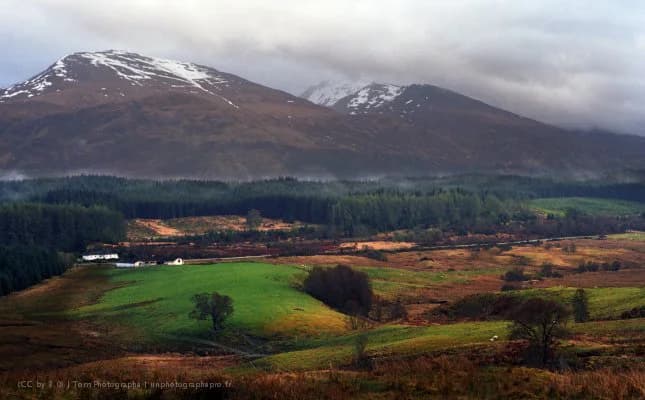
The River Coe at the base of the Three Sisters — the dark volcanic rock of the glen walls reflected in the peaty water, the mood shifting from black to grey to silver as clouds race across the sky, the sense of an ancient presence impossible to photograph and impossible to forget
The River Coe rises on the slopes of Buachaille Etive Mòr — the 'Great Herdsman of Etive' — at 1,022 metres, and descends 11 kilometres through the glen to Loch Leven, its dark amber colour coming from peat particles leached from the blanket bog that carpets the surrounding moorland over millennia. The river is a spawning ground for wild Atlantic salmon, which migrate upstream each autumn to the gravel beds near the head of the glen, and its waters can rise by over a metre within hours during the heavy rainfall that gives the West Highlands their lush green character.
The Whisky Trail: Water, Barley, and Time
Scotch whisky is the Highlands' most significant contribution to world culture, and the distilleries where it is made — from the industrial-scale operations of Speyside to the tiny, family-run operations of the islands — are places of pilgrimage for the devoted and the curious alike. The process is simple — water, barley, yeast, and time — but the variations in water source, barley variety, peat level, still shape, cask type, and maturation regime create a universe of flavour that ranges from the light, floral notes of a Lowland malt to the smoky, medicinal power of an Islay.
The Speyside region, in the northeastern Highlands, is the heartland of Scotch whisky production — more than half of Scotland's distilleries are concentrated in this small area, drawn by the pure water of the River Spey and its tributaries. The Malt Whisky Trail, a signposted route connecting nine distilleries (including Glenfiddich, Glenlivet, and the exceptional Macallan, whose new distillery and visitor centre, designed by Rogers Stirk Harbour + Partners and opened in 2018, is as architecturally significant as the whisky it produces), is the standard introduction. Book tastings in advance — the best distilleries run small-group tours that fill quickly — and hire a driver; the whisky is generous, the roads are narrow and winding, and the Scottish police take drink-driving very seriously indeed.
For a more intimate experience, the smaller, independent distilleries — Edradour (one of Scotland's smallest), Glengoyne (on the Highland-Lowland border), Oban (a distillery that predates the town that grew around it) — offer tastings led by people who have been making whisky for decades, in settings that have changed little since the nineteenth century. The whisky tastes different here, drunk within sight of the stills that made it, the water that fed it, and the warehouse where it slept for twelve, fifteen, or twenty-five years — the same landscape, the same climate, the same peat, the same alchemy in a glass.
A copper pot still at a Speyside distillery — the polished copper glowing in the low light, the spirit running clear into the spirit safe, the distiller drawing a sample with the practised care of forty years' experience, the smell of malted barley and yeast filling the warm air
Copper pot stills have been the defining technology of Scotch whisky since the Excise Act of 1823 legalised small-scale distilling, ending decades of illicit production; the copper removes volatile sulphur compounds during distillation, and the shape of the still — the height of the neck, the angle of the lyne arm — profoundly influences the spirit's character and flavour profile. Speyside, stretching along the fertile valley of the River Spey, concentrates more than half of Scotland's 140-plus distilleries, with some — such as Strathisla, founded in 1786 — still drawing water from the same granite-filtered springs that supplied the original illicit stills hidden in the glens from excisemen.
“Whisky is sunlight held together by water.”
Castles, Lochs, and the Jacobite Steam Train
The Highlands are thick with castles — some ruined, some restored, some still the residences of the clan chiefs whose ancestors built them. Eilean Donan Castle, on a small island at the confluence of three sea lochs, is the most photographed castle in Scotland — a thirteenth-century fortress rebuilt in the early twentieth century, its stone bridge and dramatic setting (the mountains of Kintail rising behind, the loch stretching to the sea) creating a composition of such romantic perfection that it has featured in countless films and a hundred thousand wedding photographs. Go early, before the tour buses arrive from Inverness, to experience the castle in the solitude that its setting demands.
Urquhart Castle, on the shores of Loch Ness, is a ruin of the thirteenth to seventeenth centuries — a fortress that changed hands between the Scots and the English more times than anyone has bothered to count, and whose strategic position on the Great Glen was so important that it was blown up by its own garrison in 1692 to prevent it falling into Jacobite hands. The view of Loch Ness from the castle's tower — twenty-three miles of dark water stretching to the southwest, the Great Glen fault line continuing to the distant horizon — is the finest on the loch, and the absence of monsters (Nessie, for once, does not appear) does nothing to diminish its power.
The Jacobite Steam Train — the "Hogwarts Express" of the Harry Potter films — runs from Fort William to Mallaig along the West Highland Line, one of the most spectacular railway journeys in the world. The 84-mile round trip takes six hours, crossing the Glenfinnan Viaduct (the curving, 21-arch bridge that Harry Potter fans will recognise instantly) and delivering views of Loch Shiel, the Small Isles, and the Cuillin ridge of Skye that are worth the price of the ticket — and the months-in-advance booking that the train's popularity requires.
The Jacobite Steam Train crossing the Glenfinnan Viaduct — the vintage locomotive trailing a plume of steam, the curving arches reflected in Loch Shiel below, the mountains of the West Highlands rising dark and brooding against a sky of racing clouds, the scene recognisable to anyone who has ever dreamed of Hogwarts
The Glenfinnan Viaduct, designed by Sir Robert McAlpine and completed in 1901, spans 380 metres across 21 semicircular arches — the longest concrete railway viaduct in Scotland — rising 30 metres above the River Finnan using McAlpine's pioneering mass-concrete technique that required no metal reinforcement. The West Highland Line, completed the same year to link Fort William to the fishing port of Mallaig, was hailed as one of the great engineering achievements of the late Victorian era, and its Glenfinnan Viaduct — while built long before — achieved global fame in 2001 as the route of the Hogwarts Express in the Harry Potter films, the scarlet steam engine crossing the curving arches on the approach to the magical school.
The North Coast 500: Scotland's Route 66
The North Coast 500, launched in 2015, is a 516-mile loop around the northern Highlands that has become, in less than a decade, one of the world's great road trips. The route begins in Inverness, follows the east coast to John o' Groats, turns west along the wild north coast (the cliffs of Cape Wrath, the empty beaches of Sutherland, the mountains of Assynt rising like islands from the moorland), and returns via the west coast — the Bealach na Bà pass (one of the steepest roads in Britain, with gradients of 20% and hairpin bends that test the nerve of any driver), the Torridon mountains, and the shores of Loch Maree.
The route demands at least five days — seven to ten is preferable — and the infrastructure (hotels, restaurants, petrol stations) is, in places, scarce enough that planning ahead is essential. Book accommodation months in advance, particularly in the smaller villages. And do not underestimate the midges — the tiny flying insects that, in summer, can make outdoor life a misery. The midge season runs from May to September, peaking in July and August; insect repellent, long sleeves, and head nets are not admissions of weakness but evidence of sound planning.
When to Visit
The Highlands are best visited in May, June, and September. May and June offer the longest days (it stays light until nearly midnight at midsummer, and it never gets truly dark), the best chance of dry weather, and the midges at a tolerable level. September brings autumn colours — the birches turning gold, the heather a deep purple on the hillsides — and the added attraction of the red deer rut, when the stags bellow across the glens in a contest of testosterone and territory that is one of the great wildlife spectacles of Britain. July and August are warmer but wetter and correspondingly midge-ridden. Winter (November to March) is cold, dark, and often inaccessible — mountain passes close, ferries are cancelled, and many hotels and restaurants operate on reduced schedules. But the winter landscape, snow-covered and silent, has a beauty that summer visitors never see.
Frequently Asked Questions
How many days do I need? A week is the minimum for a meaningful introduction: three days for the central Highlands (Glen Coe, Ben Nevis, the Great Glen), two for Speyside and the whisky trail, and two for the west coast (Eilean Donan, Skye, the Torridon mountains). Ten days to two weeks allows for the North Coast 500 or a comprehensive survey of the region.
Do I need a car? Yes — the Highlands are not accessible by public transport in any practical sense. The rail network serves the major towns (Inverness, Fort William, Kyle of Lochalsh) but does not penetrate the glens or the islands. Hire a car with good ground clearance and comfortable seats — you will be spending a lot of time in it, and the roads, particularly the single-track roads of the west coast, require patience and attention.
What should I pack? Waterproof clothing — a good jacket, waterproof trousers, waterproof shoes — is essential regardless of the forecast. The Highlands are the wettest region of Britain, and weather systems arrive without warning from the Atlantic. Warm layers for the evenings and the mountain passes. Midge repellent and a head net for summer visits. A camera with a zoom lens for wildlife — red deer, golden eagles, otters, seals, and the occasional basking shark off the west coast.
Is Scotland expensive? Moderately, by UK standards. A hotel in the mid-range costs £100-200 per night; luxury properties — The Fife Arms in Braemar, Gleneagles on the Highland-Lowland edge, Inverlochy Castle near Fort William — start at £350 and ascend from there. Petrol is expensive, restaurants in the more remote areas are limited, and the additional costs of a Highlands road trip (distillery tastings, boat trips, the occasional helicopter transfer to an island) accumulate quickly. Budget accordingly.
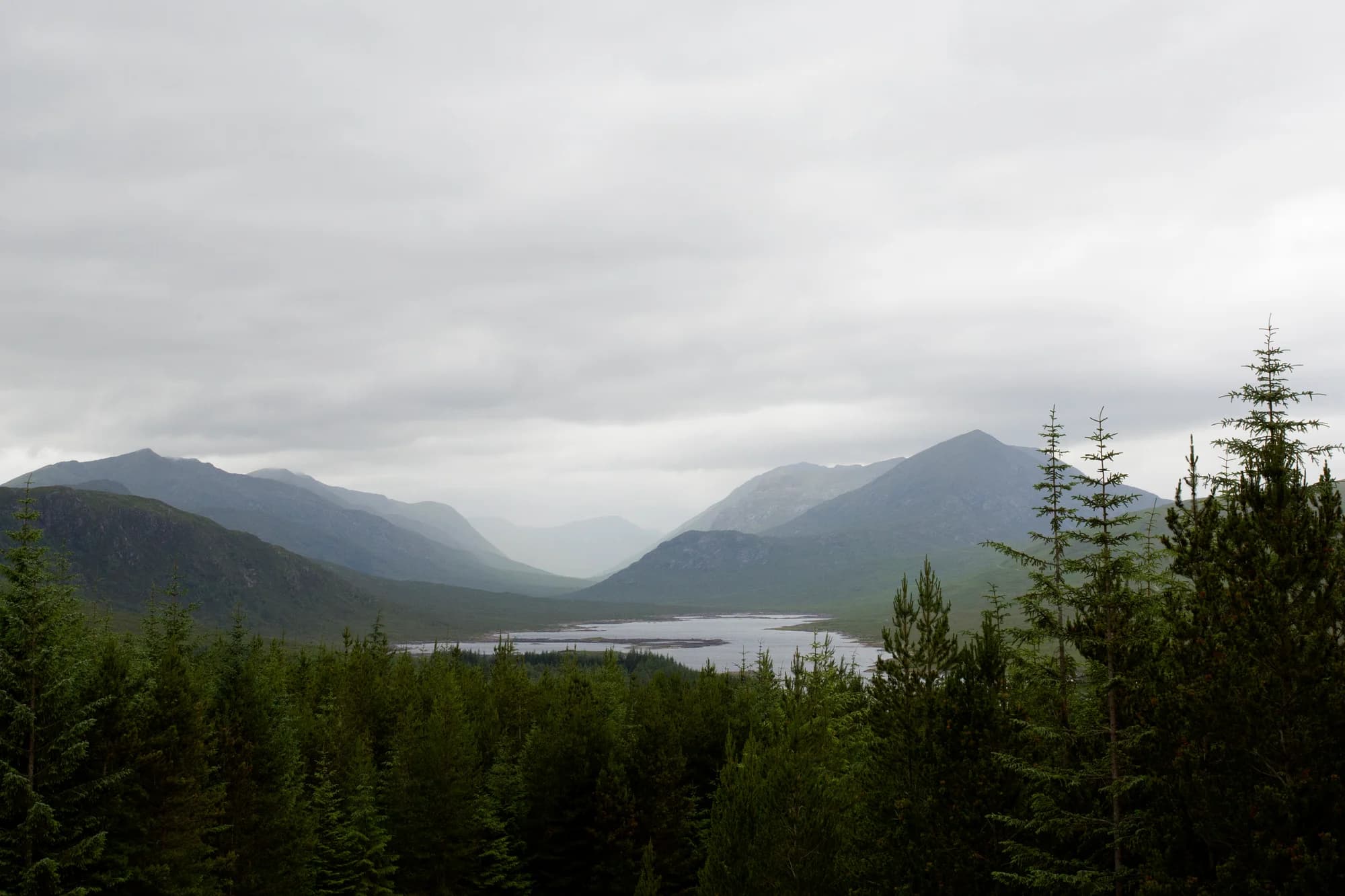
Suilven at sunset — the distinctive sugarloaf mountain of Assynt rising from the Sutherland moorland, its silhouette a dark presence against a sky of gold and violet, the landscape empty of all but the deer, the eagles, and the profound, enduring silence of the oldest rocks on Earth
Suilven's extraordinary profile — a steep-sided ridge rising to a 731-metre summit, often described as 'a sugar-loaf hat sitting on a meeting house' — is the product of differential erosion: the mountain is a remnant of Torridonian sandstone, laid down 1.2 billion years ago, sitting atop a basement of Lewisian gneiss that dates back up to 3 billion years, among the oldest exposed rocks anywhere on the planet. The Gaelic name Sùilebheann possibly means 'pillar mountain,' and its remote two-mile approach across bog and moorland from Glencanisp Lodge ensures one of the most dramatically revealed peaks in the British Isles, set in the wildly beautiful landscape of the North West Highlands Geopark.