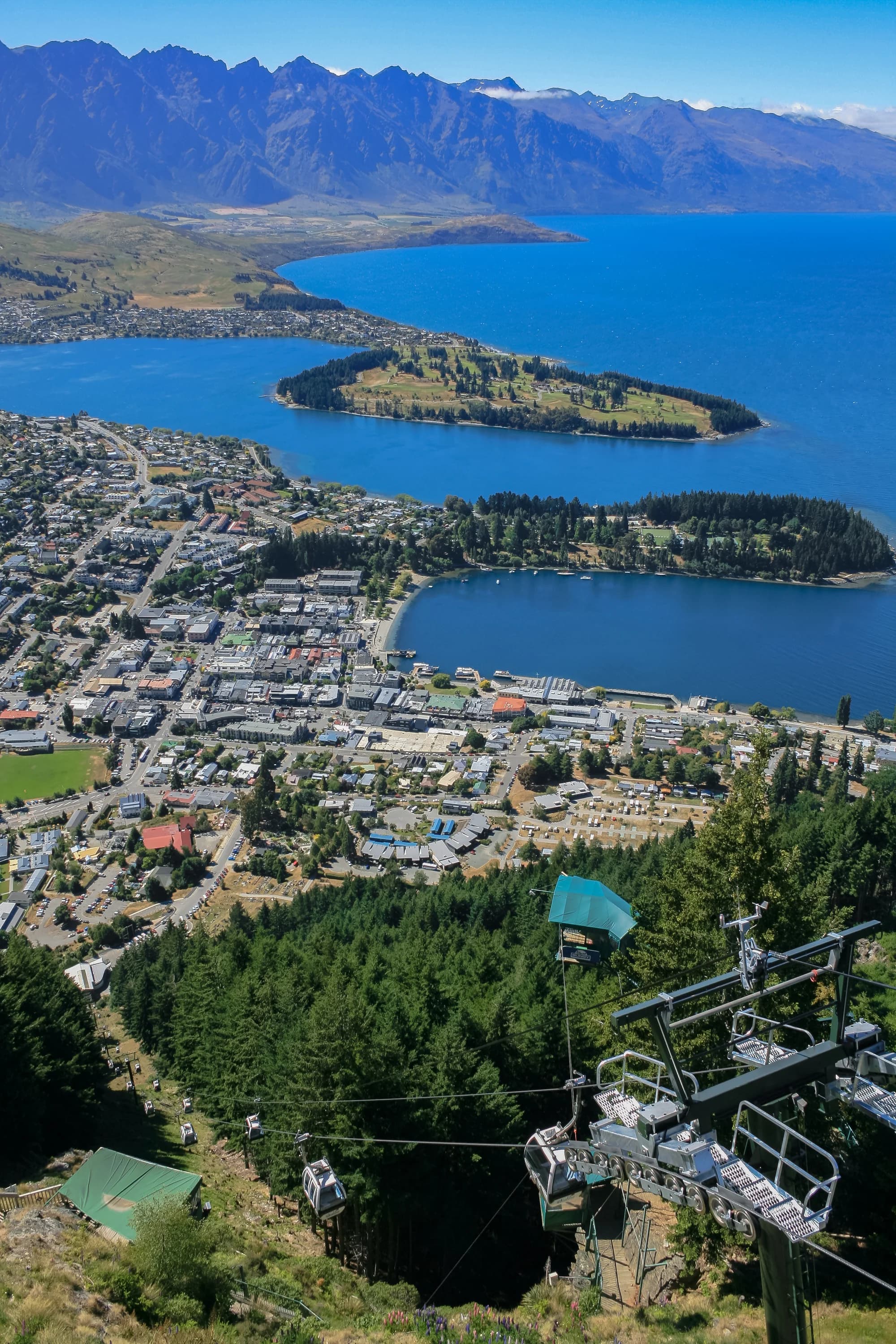
Queenstown, on the shores of Lake Wakatipu in the South Island of New Zealand, is a place whose beauty is so complete, so well-proportioned, and so flattering to the eye that it can, at first encounter, seem almost implausible — a landscape composed by a Romantic painter who was not afraid of the grand gesture. The Remarkables — the mountain range that dominates the view from the town, its serrated peaks named for their geological singularity (the mountains run north-south, perpendicular to every other range in the South Island, as if they did not get the memo about the tectonic alignment of the Southern Alps) — are the most dramatically named mountains in the world and the most dramatically shaped, their snow-dusted summits reflected in the dark water of Lake Wakatipu, a 291-square-kilometre glacial lake whose depth (420 metres at its deepest point) creates a thermal inertia that keeps the lake's water refrigerated in summer and the town slightly warmer in winter.
Queenstown is the adventure capital of the world — the birthplace of commercial bungee jumping (the Kawarau Bridge, where A.J. Hackett opened the world's first commercial bungee operation in 1988, is a twenty-minute drive from the town centre and still the most iconic bungee jump on the planet), the launch point for heli-skiing in the Southern Alps, the base camp for hiking the Routeburn, the Milford, and the Kepler — the three Great Walks that converge on this corner of the South Island and that represent, collectively, the finest multi-day hiking in the temperate world. But Queenstown is also an international luxury destination — a town of excellent hotels, outstanding restaurants, and the small-town intimacy that comes from a permanent population of 16,000 and a visitor population that swells into the tens of thousands at the peak of summer and winter.
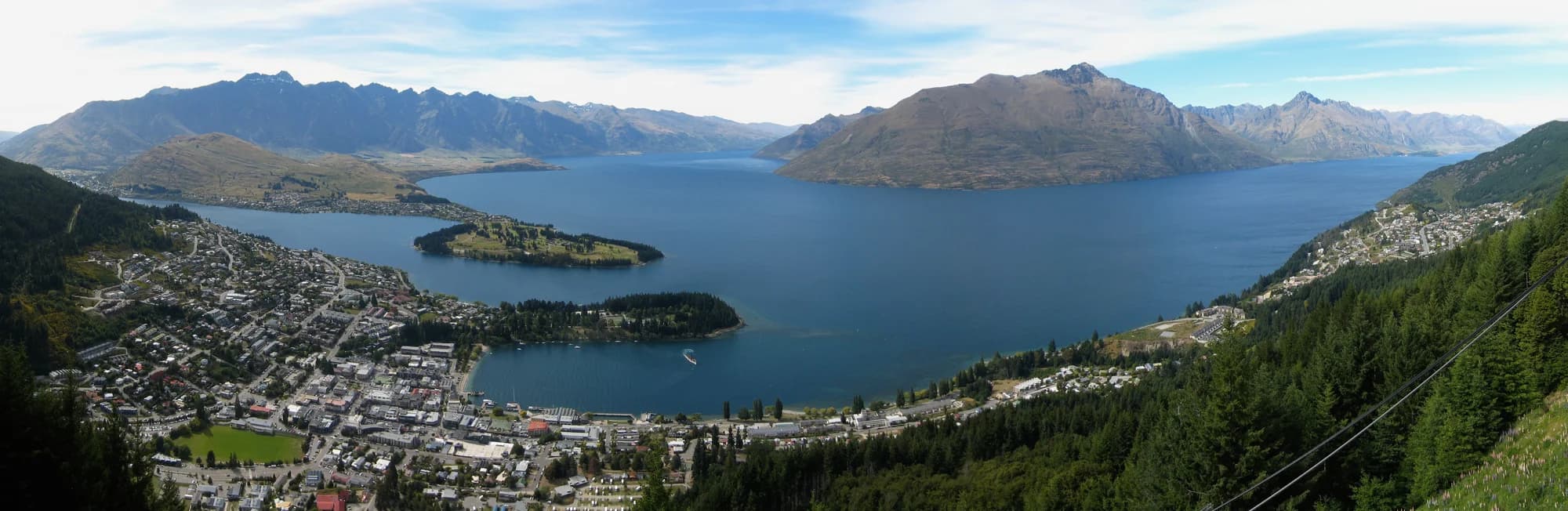
Lake Wakatipu at dawn — the Remarkables reflected in the dark water, their peaks dusted with snow, the TSS Earnslaw (the century-old steamship that has been plying the lake since 1912) at her berth, Queenstown still asleep on the lakeshore, the silence broken only by the cry of a kea (the alpine parrot that is New Zealand's most intelligent, and most mischievous, bird) and the distant beat of a helicopter heading into the mountains
Lake Wakatipu, covering 291 square kilometres, is a glacial lake formed approximately 15,000 years ago during the last ice age when the massive Wakatipu Glacier retreated. The TSS Earnslaw, launched in 1912 the same year as RMS Titanic, was originally built in Dunedin, disassembled, and transported by rail and bullock wagon to be reassembled on the lakeshore — at a time when no road connected Queenstown to the outside world. Māori oral tradition holds that the lake's distinctive 27-minute seiche rhythm is the heartbeat of Matau, a giant who was burned and left in the valley after stealing a chief's daughter.
The Adventure: Bungee, Jet Boats, and the Adrenaline Economy
Queenstown's identity is inseparable from adventure: the town has more adrenaline-fuelled activities per square kilometre than any place on Earth, and the menu of ways to terrify yourself — bungee jumping (the Kawarau Bridge, the Ledge (above the town, 400 metres above the lake), and the Nevis (134 metres, New Zealand's highest, suspended from a cable car over a gorge where the Nevis River carves through the schist bedrock 134 metres below — the freefall is eight seconds long; experiencing eight seconds of absolute terror is, for the person who does it, a transformative experience of a kind that few other activities can deliver)) — is comprehensive.
The Shotover Jet, the jet boat that has been hurtling through the Shotover River Canyon since 1970, is a Queenstown institution: a boat that skims across water barely a few centimetres deep at 85 kilometres per hour, its twin V8 engines producing a sound that is half speedboat, half jet fighter, missing the canyon walls by metres and spinning through 360-degree turns that provoke screams and laughter in roughly equal proportions. The ride takes twenty-five minutes and is, for anyone who has not experienced jet-boating, one of the most purely enjoyable activities in New Zealand. The canyon itself — the narrow slot that the Shotover River has carved through the schist bedrock, the water a startling turquoise (the result of glacial flour, the same suspended silt that gives Lake Wakatipu its colour and its clarity), the walls eighty metres high and barely fifteen metres apart at their narrowest — is as spectacular as the boat that navigates it.
For those who prefer their adventures in the air, the helicopter flight to the top of the Remarkables — a ten-minute journey that delivers views of the lake, the mountains, and the Southern Alps that no other vantage point can match — ends with a snow landing on the glacier that crowns the range, an experience that involves stepping out of a helicopter onto ice and snow in the middle of summer, looking down at a landscape that stretches from the Pacific Ocean in the east to the Tasman Sea in the west, and trying, and failing, to find words.
A bungee jumper suspended above the Kawarau River — the body arched, the bungee cord a blue line against the turquoise water and the schist walls of the canyon, the moment of absolute release, absolute freedom, and absolute terror that has drawn millions of visitors to this bridge since 1988 and that, for the persons who do it, becomes a permanent part of their sense of themselves
The Kawarau Gorge Suspension Bridge, completed in 1880 and now a Category I historic place under Heritage New Zealand, was designed by engineer Harry Higginson to open access to the Central Otago goldfields during the 1860s rush. On 12 November 1988, A.J. Hackett and Henry van Asch founded the world's first commercial bungee operation from this 43-metre-high bridge, a venture inspired by the Pentecost Island land-diving rituals of Vanuatu and Hackett's own 1987 Eiffel Tower stunt that landed him briefly in French police custody. The turquoise colour of the Kawarau River below is produced by glacial flour — finely ground schist rock particles suspended in the meltwater.
“Life is either a daring adventure or nothing at all.”
The Milford Sound: The Eighth Wonder
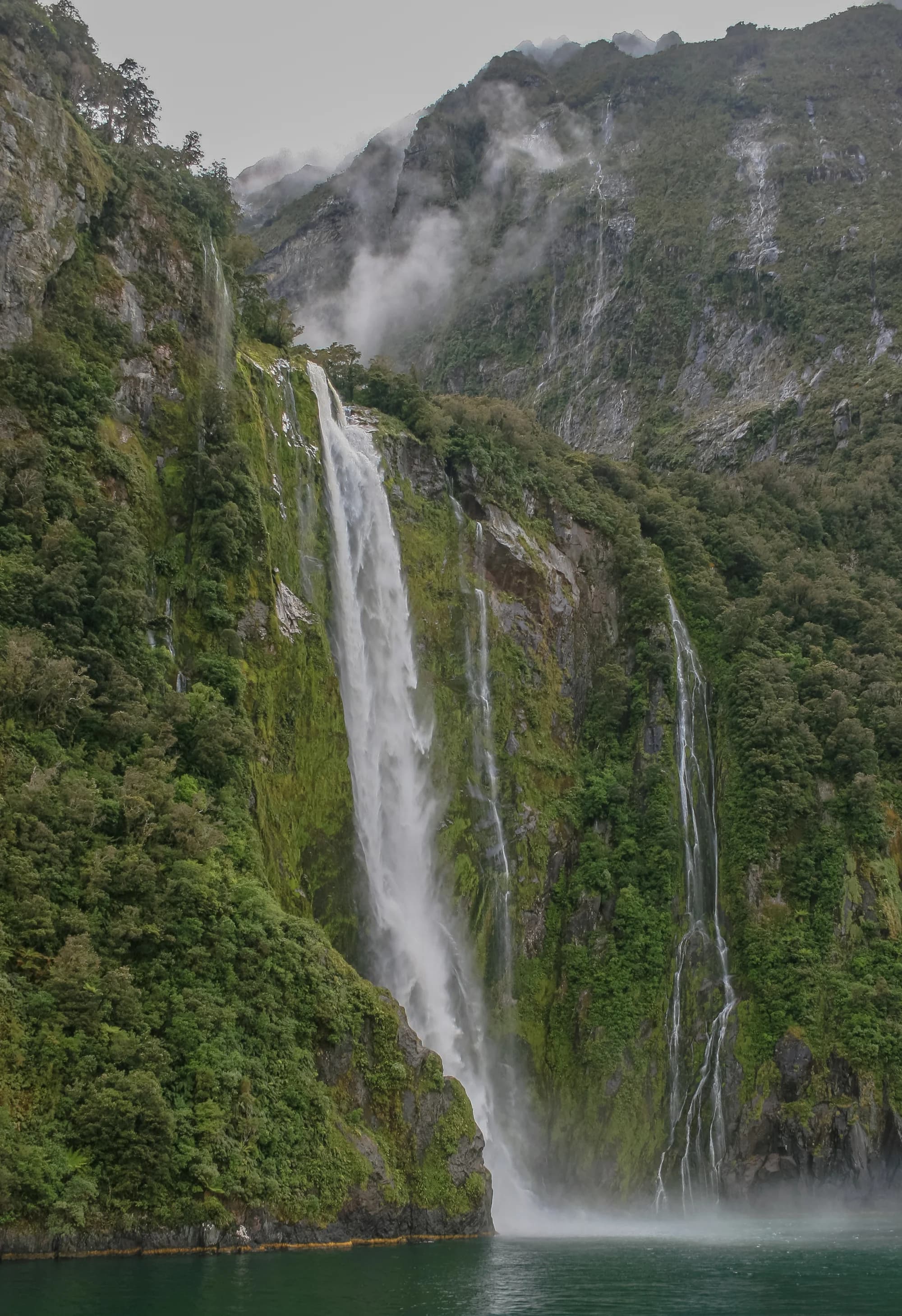
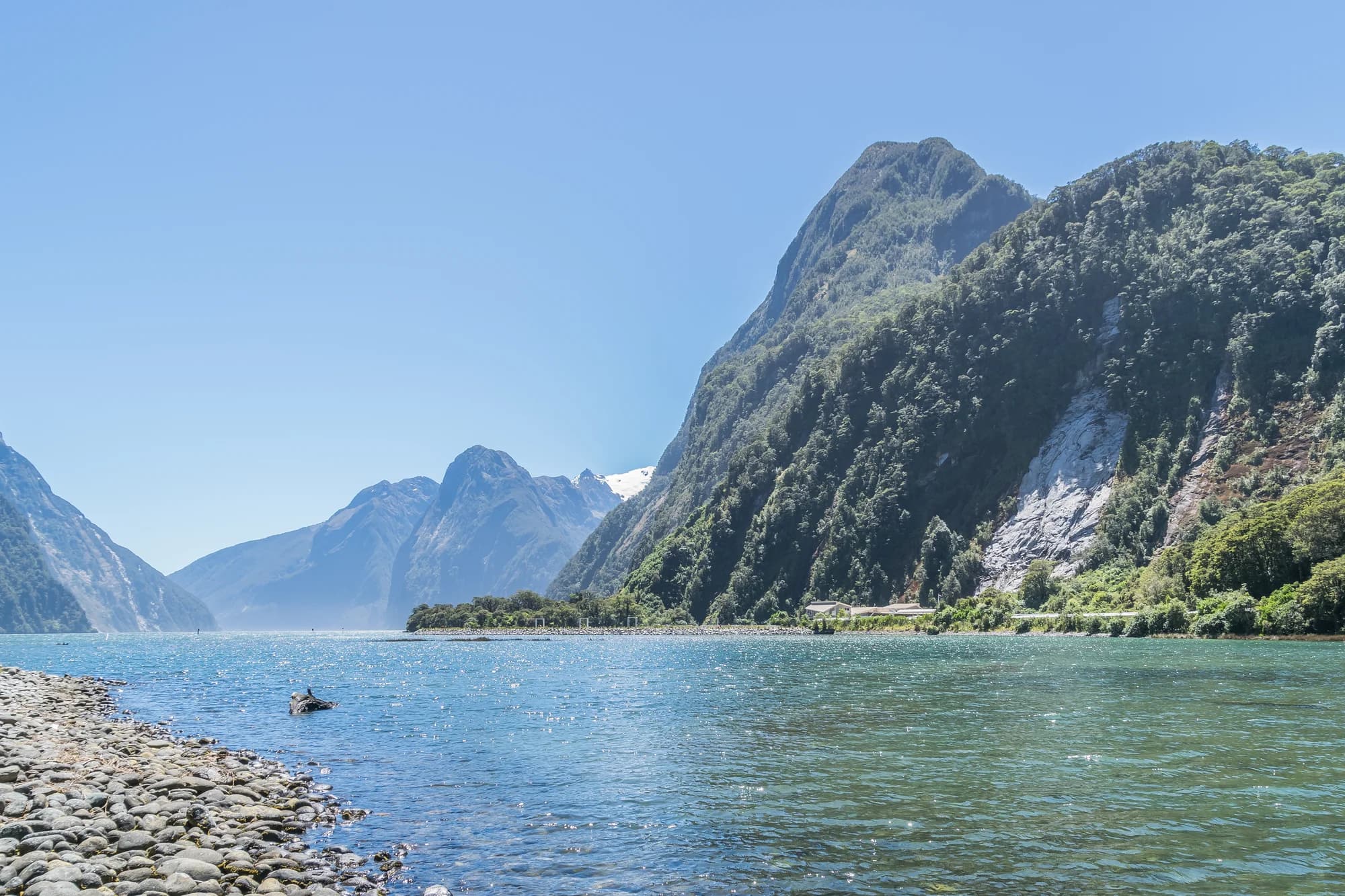
Milford Sound — Piopiotahi in Māori — is not a sound (which is created by river erosion) but a fiord (created by glacial action), and it is, according to Rudyard Kipling, the "eighth wonder of the world," a description that is inaccurate (there are more than seven wonders) but not hyperbolic. The fiord, on the west coast of the South Island a five-hour drive or a forty-minute flight from Queenstown, is a landscape of overwhelming scale: the cliffs rising vertically for 1,200 metres from the dark water of the Tasman Sea, the waterfalls (Stirling Falls, 151 metres, and Lady Bowen Falls, 162 metres — two of the more than 200 permanent waterfalls that line the fiord's walls) tumbling from the rainforest that clings to the rock, the dolphins (bottlenose) and the seals (New Zealand fur seals, basking on the rocks at Seal Point) and the occasional Fiordland crested penguin — one of the rarest penguins in the world, a species that breeds only in Fiordland and on Stewart Island — giving the cruise a wildlife dimension that the scenery does not overshadow.
The road to Milford Sound — State Highway 94, the Milford Road — is one of the world's great drives: 120 kilometres from Te Anau (the gateway town to Fiordland National Park) to Milford, through the Eglinton Valley, the Homer Tunnel (a 1.2-kilometre tunnel carved through the Darran Mountains, opened in 1954 after nineteen years of construction — one of the most remarkable engineering achievements in New Zealand's history), and the descent to the fiord. The landscapes along the way — the Mirror Lakes (where the Earl Mountains are reflected with a perfection that gives the place its name), the Chasm (a cataract of the Cleddau River that has carved a series of water-sculpted rock formations, the water roaring through a slot canyon of polished stone), the alpine meadows and the temperate rainforest and the glacier-capped peaks that frame the road — are as beautiful as the destination.
For the luxury traveller, the essential Milford experience is not the coach tour from Queenstown (a thirteen-hour round trip, the majority of which is spent on a bus) but the fly-cruise-fly: a helicopter or fixed-wing aircraft from Queenstown (forty minutes, the most spectacular scenic flight in New Zealand — the Southern Alps, the glaciers, the fiords, the Tasman Sea, the entire geography of the South Island spread beneath you like a relief map) to Milford, a two-hour cruise on the fiord, and the return flight. The helicopter option, which can include a glacier landing en route, is the most spectacular — and the most expensive. The cruise (choose a small boat, such as Mitre Peak Cruises or Pure Milford, for a more intimate experience; the larger cruise ships carry hundreds of passengers and cannot approach the waterfalls as closely) will take you to the mouth of the fiord (where the Tasman Sea meets its waters, and where, on clear days, the horizon stretches to Australia — a continent that is not visible, but whose proximity is felt) and, weather permitting, beneath the spray of Stirling Falls (the boat will nudge into the waterfall; you will get wet; you will remember it for the rest of your life).
Milford Sound from a helicopter — the fiord a dark ribbon of water between the vertical cliffs of the Darran Mountains, Mitre Peak (the most iconic mountain in New Zealand, 1,692 metres rising directly from the sea) a dark pyramid against the sky, the waterfalls silver threads on the green walls of the fiord, the Tasman Sea a sheet of hammered silver on the western horizon, a landscape of such overwhelming scale and beauty that it reduces even the most articulate visitor to silence
Milford Sound, properly a fiord carved by glacial action rather than river erosion, forms part of Te Wāhipounamu — South West New Zealand UNESCO World Heritage Area, inscribed in 1990 for its outstanding natural values. Mitre Peak, a 1,692-metre mountain that rises directly from the sea floor, was named in 1851 by Captain John Lort Stokes of HMS Acheron for its resemblance to a bishop's mitre; Māori know it as Rahotu. The fiord's 200-plus permanent waterfalls are fed by an annual rainfall averaging 6,813 millimetres — making it one of the wettest inhabited places on Earth — and Māori legend credits its creation to the demigod Tū-te-raki-whānoa, who chiselled the dramatic walls with his adze.
The Wine: Central Otago Pinot Noir
Central Otago, the region of which Queenstown is the gateway, is the world's southernmost wine region and one of its finest — the pinot noir produced here (on the schist-derived soils of the Gibbston Valley, the Bannockburn terraces, the Alexandra basin, the Cromwell plateau) is among the best in the New World, and the experience of tasting it — on the terrace of a cellar door with the Remarkables in the background and the dark fruit on your tongue — is one of the essential pleasures of a Queenstown visit.
The Gibbston Valley, twenty minutes east of Queenstown, is the most accessible wine sub-region: a narrow valley of vines, orchards, and the Kawarau River, where some of Central Otago's oldest and most respected vineyards (Gibbston Valley Winery, Peregrine, Chard Farm) produce pinot noir of elegance and intensity. The cellar doors — the underground cave at Gibbston Valley Winery (a tasting experience in a converted wine cave, the oak barrels stacked along the walls, the temperature permanently cool, the pinot noir served by a somm who has been working with these wines for years), the architecturally striking building at Peregrine (a wing-shaped roof that won an international architecture award), the journey to Chard Farm (a drive along a narrow road carved into the Kawarau Gorge that ends at a homestead overlooking the river — one of the most romantic settings for wine-tasting in New Zealand) — are experiences that transcend the wine.
For the serious wine traveller, the Bannockburn sub-region, an hour east of Queenstown near the town of Cromwell, is the epicentre of Central Otago pinot: the vineyards of Felton Road, Mount Difficulty, and Rippon (on the western shore of Lake Wanaka, an hour north of Queenstown — the most beautiful vineyard site in New Zealand, a slope of vines descending to the lake with the Southern Alps as a backdrop, the pinot noir produced entirely from the estate, the tasting room a converted woolshed, the experience of drinking Rippon pinot noir on the shore of Lake Wanaka one of the most evocative wine moments in the world) produce wines of power, complexity, and ageability that have no equal in the Southern Hemisphere.
The Rippon Vineyard at sunset — the vines descending to Lake Wanaka, the Southern Alps a wall of snow and rock on the eastern horizon, a glass of Rippon pinot noir catching the last light, the sounds of a vineyard at dusk (the birds, the breeze, the quiet murmur of water on the lakeshore) composing a symphony that no concert hall can reproduce, the wine on your tongue tasting of this place, this soil, this light, this particular evening, this specific moment in a landscape that cannot be replicated
Rippon Vineyard, established in 1975 by the Mills family on the shores of Lake Wanaka, is planted on north-facing schist slopes formed during the Haast Schist metamorphic event approximately 200 million years ago, making it one of the oldest geological vineyard sites in Central Otago. The estate has been farmed biodynamically since 2003, earning full Demeter certification, and its remarkable lakeside mesoclimate — moderated by Lake Wanaka's thermal mass — extends the growing season several weeks beyond inland sites at the same latitude of 44°42' South. The property occupies part of the original Wanaka Station pastoral lease, first taken up in the 1850s, and hosted filmmaker David Lean during his scouting of locations for an unrealised epic about HMS Bounty mutineers.
The TSS Earnslaw and Walter Peak
The TSS Earnslaw — the Twin Screw Steamer Earnslaw, "the Lady of the Lake" — has been plying the waters of Lake Wakatipu since 1912, when she was launched in the same year as the Titanic (she was assembled on the lakeshore from parts shipped from Dunedin; there was, at the time, no road connecting Queenstown to the outside world). The Earnslaw is the last remaining coal-fired passenger steamship in the Southern Hemisphere, and the experience of cruising Lake Wakatipu on her decks — the engine room visible through the glass viewing platform (the pistons, the brass gauges, the stokers shovelling coal into the furnace — a piece of working industrial archaeology that is as compelling as the scenery), the red funnel trailing a plume of white steam, the Remarkables reflected in the water — is a journey in time as well as space.
The TSS Earnslaw cruise to Walter Peak, the high-country sheep station on the far shore of the lake, is the essential Queenstown half-day. The cruise (ninety minutes each way) delivers you to a homestead of gardens, a restaurant, and the demonstration of high-country farming traditions (sheep-shearing, sheepdog mustering) that are the living heritage of the South Island's agricultural identity. The dinner cruise — the Earnslaw at sunset, the mountains turning rose and gold, the lake darkening to obsidian, the Walter Peak homestead lit by lanterns and candles, a meal of New Zealand lamb and Central Otago pinot noir on the shores of the most beautiful lake in the South Island — is the most romantic experience Queenstown offers. Book well in advance; the dinner cruise sells out weeks ahead.
Weather and Seasons
The weather in the Southern Alps is among the most changeable in the world, and the traveller who plans a rigid itinerary will be disappointed. The Milford Road closes in snow for much of the winter and after heavy rain (and Milford Sound receives seven metres of rain a year — it is one of the wettest inhabited places on Earth, and the waterfalls, at their most spectacular, require rain; the paradox of Milford is that the experience is best in weather that makes the experience less comfortable). The helicopters do not fly in low cloud. The mountain passes close in blizzards. The traveller's strategy is simple: build flexibility into your itinerary, plan two or three alternative options for each day, and decide, the evening before, which one the weather permits. Queenstown will provide the experience. It will not provide the schedule.
Frequently Asked Questions
When is the best time to visit? Queenstown is a year-round destination. June through September is ski season: the Southern Hemisphere's best skiing (Coronet Peak, The Remarkables, Cardrona, Treble Cone), fresh powder (the New Zealand ski fields receive, on average, two to four metres of snow per season), and the après-ski culture of a small town that takes its recreation seriously. December through February is summer: hiking, jet-boating, bungee, the long days (sunset at 9 pm, the light golden and soft), and the Milford Sound at its most accessible. March and April bring the autumn colours — the poplars and the willows along the lakeshore turning gold and crimson, the air crisp, the crowds thinning, the pinot noir harvest in progress — and are, for many, the most beautiful season in Queenstown.
How many days do I need? Four full days is the minimum: one for bungee/jet boat/paragliding, one for the wine region (Gibbston Valley, Bannockburn), one for the TSS Earnslaw and the high country, and one for Milford Sound (fly-cruise-fly, a full day). Five to seven days allows for a second day in the mountains (heli-hiking on a glacier, a scenic flight around Mount Aspiring, the Matterhorn of the South at 3,033 metres) and a day trip to Wanaka (an hour's drive, a town of lower-key but comparable beauty, and the Rippon Vineyard, which is worth the journey alone).
How do I get there? Queenstown Airport receives direct flights from Auckland, Wellington, Christchurch, and (from June to October) the east coast of Australia. The approach to the airport, between the Remarkables and the lake, is one of the world's most spectacular landings. The drive from Christchurch (six hours, through the Mackenzie Country, the Lindis Pass, and the Kawarau Gorge — one of the great road trips in the world) is an experience in itself.
Is Queenstown expensive? Yes, by New Zealand standards, to which the international traveller, accustomed to London or New York prices, will find it reasonable. A luxury hotel (Matakauri Lodge, Eichardt's, The Rees) costs NZ$800-2,500 per night. A bungee jump: NZ$200-275. A scenic flight: NZ$400-1,200 per person. A pinot noir tasting at a Gibbston Valley cellar door: NZ$10-25. A coffee and a scone at a lakeshore café: NZ$12. The luxury is in the landscape, and the landscape is free.
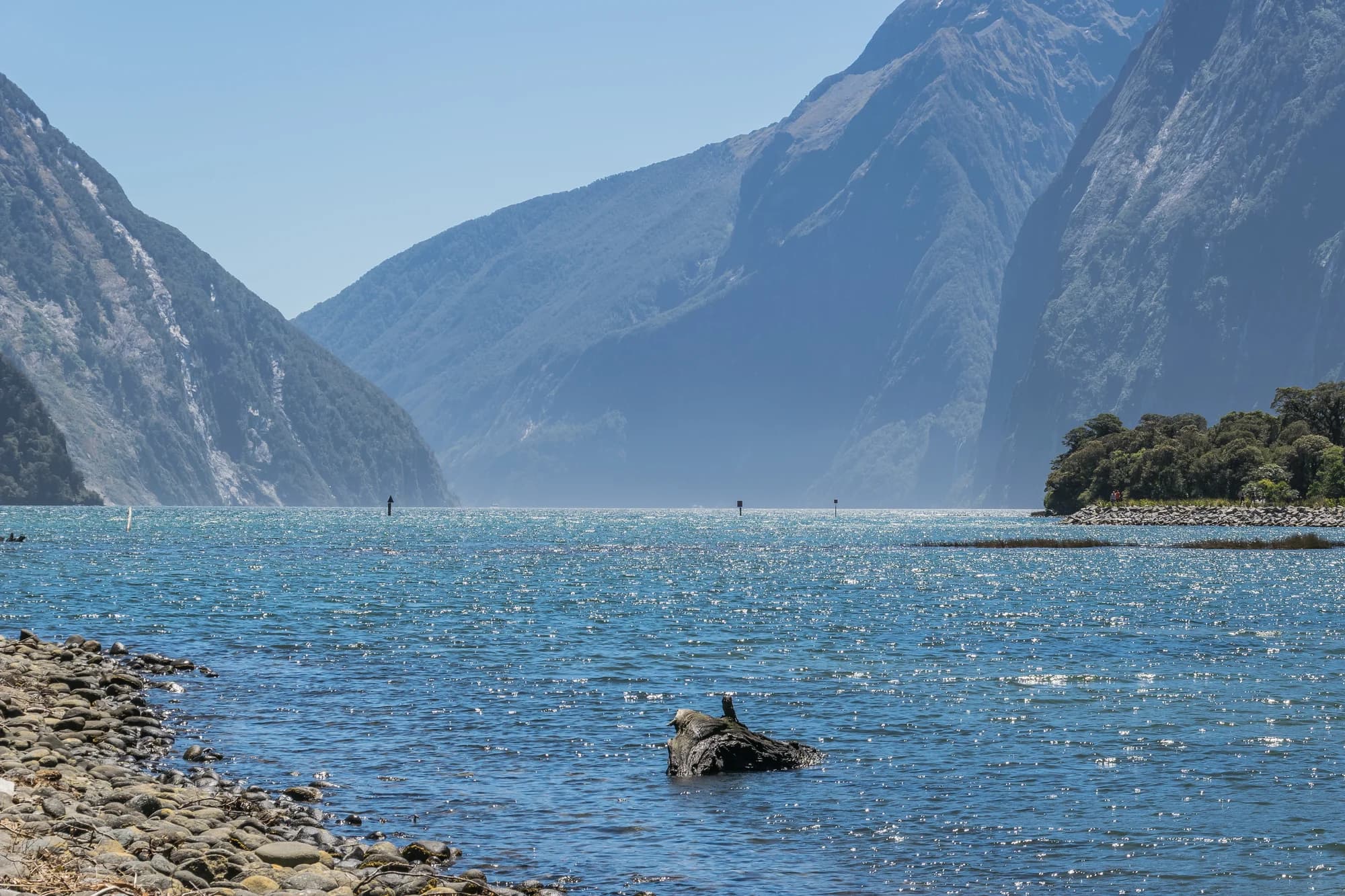
The Remarkables at sunset, seen from the shores of Lake Wakatipu — the mountains reflected in the still water as if the lake were a mirror created specifically for this purpose, the sky a palette of rose and gold and the deepest blue, the silence broken only by the lap of water on the shingle and the distant cry of a kea, the landscape of the South Island doing what it has done for seventy million years — being the most beautiful place on Earth that you have not yet seen
The Remarkables range is a classic tilted fault-block mountain system, uplifted along the active Nevis-Cardrona Fault during the Kaikōura orogeny beginning approximately two million years ago, with schist bedrock dating to the Permian-Triassic period over 250 million years old. The range was named by surveyor John Turnbull Thomson in 1857 for its striking north-south orientation — it runs perpendicular to every other major range in the Southern Alps, a geological anomaly caused by local fault patterns deviating from the regional Alpine Fault strike. Lake Wakatipu below, which reflects the Remarkables with mirror-like clarity on calm evenings, was carved by a glacier that at its maximum extent extended 120 kilometres, leaving a fjord-like trench that reaches 420 metres in depth — so deep that the lake bed sits below sea level.