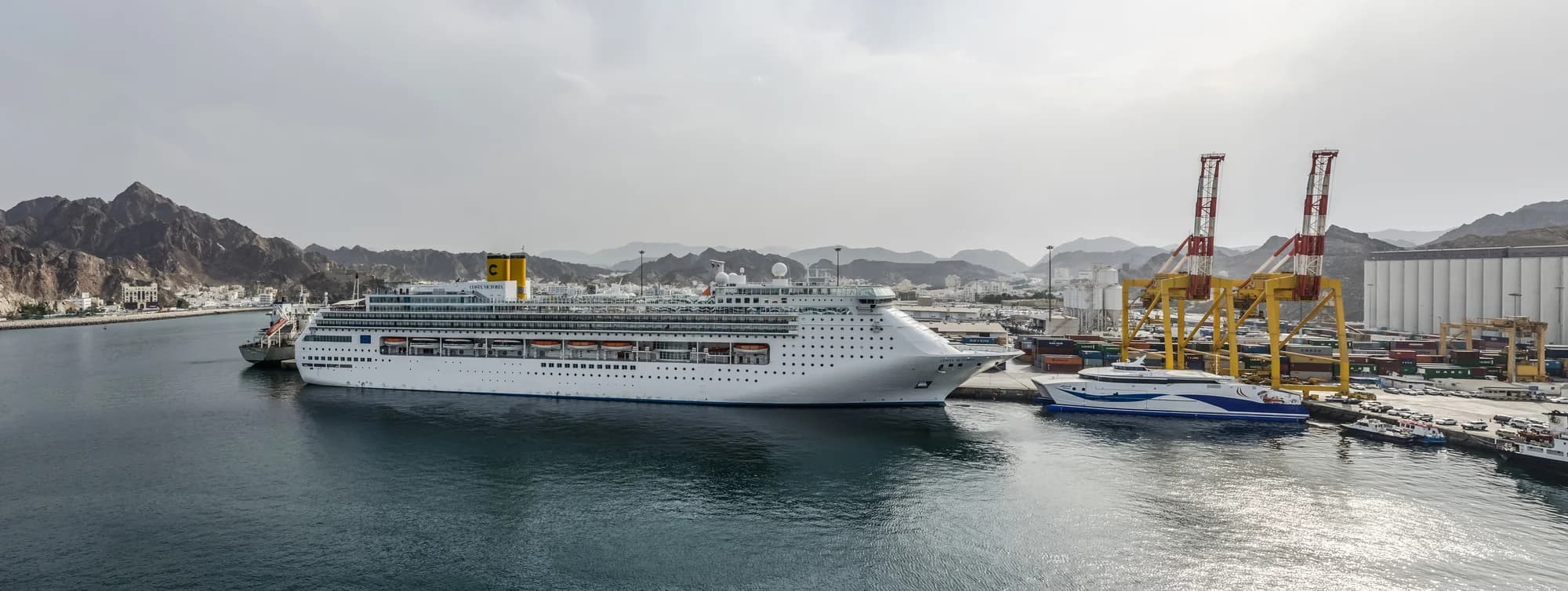
Muscat is the capital that the Gulf forgot to ruin — a city of low, white buildings that cling to the coast between the Al Hajar mountains and the Gulf of Oman, its architecture governed by a building code that prohibits structures taller than seven storeys (in most districts) and mandates traditional Islamic design elements (arches, mashrabiya screens, the whitewashed walls that give the city its luminous quality). The result is a capital that feels like a collection of villages that have grown together rather than a metropolis that has exploded — and in a region where Dubai's glass towers and Doha's skyline compete for superlatives, Muscat's restraint is a kind of luxury, a deliberate rejection of the vertical imperative in favour of the horizontal, the human, the quietly beautiful.
Oman is a country of extraordinary landscapes — mountains, deserts, wadis, and a coastline of 3,165 kilometres that stretches from the Strait of Hormuz in the north to the border with Yemen in the south — and a culture of such profound, ancient graciousness that it can take the visitor, accustomed to the transactional tourism economies of the region, several days to adjust. The Omanis, whose maritime empire stretched from the Swahili Coast to the Makran Coast of Pakistan in the seventeenth and eighteenth centuries (Zanzibar was the Omani capital for much of the nineteenth century; the sultanate's palace there, the Beit al-Ajaib, still stands), are cosmopolitan, tolerant, and possessed of a national pride that has not curdled into chauvinism. Their country — the oldest independent state in the Arab world, and one of the most stable — is the hidden luxury destination of the Middle East.
The Mutrah Corniche at sunset — the whitewashed buildings of Muscat's historic harbour reflecting the golden light, the Al Hajar mountains a dark wall on the western horizon, the Sultan's Yacht at anchor in the bay, the evening call to prayer echoing from the minarets of the Mutrah Souk, the air soft and warm and perfumed with frankincense and the salt of the Gulf of Oman
Mutrah, Muscat's historic harbour district, has been a port of trade for over 2,000 years, serving as the principal commercial gateway between Oman, India, East Africa, and the Persian Gulf. The Al Hajar Mountains, which rise dramatically from the coastal plain to heights exceeding 3,000 metres at Jebel Shams, were formed by the collision of the Arabian and Eurasian tectonic plates approximately 70 million years ago and contain some of the world's most spectacular exposed ophiolite sequences — sections of oceanic crust thrust onto the continent, studied by geologists worldwide. Frankincense, the aromatic resin harvested by scoring the bark of Boswellia sacra trees native to the Dhofar region of southern Oman, made the sultanate one of the wealthiest trading powers of the ancient world; the incense was valued by Egyptian pharaohs for embalming, by Romans for imperial ceremonies, and by the Christian tradition as a gift of the Magi.
The Sultan Qaboos Grand Mosque: A Monument of Tolerance
The Sultan Qaboos Grand Mosque, completed in 2001, is the third-largest mosque in the world by area and the most beautiful — a building of such breathtaking scale and refinement that it can hold its own against any mosque in the Islamic world, from the Sheikh Zayed Mosque in Abu Dhabi to the Badshahi Mosque in Lahore to the Blue Mosque in Istanbul. The mosque, built of 300,000 tonnes of Indian sandstone in a palette of cream, beige, and white, was the gift of the late Sultan Qaboos bin Said to his people, and it embodies the values — tolerance, scholarship, the Ibadhi tradition of Islam (a moderate, non-sectarian school, distinct from both Sunni and Shia, that has shaped Omani culture for over a millennium) — that he spent his forty-nine-year reign cultivating.
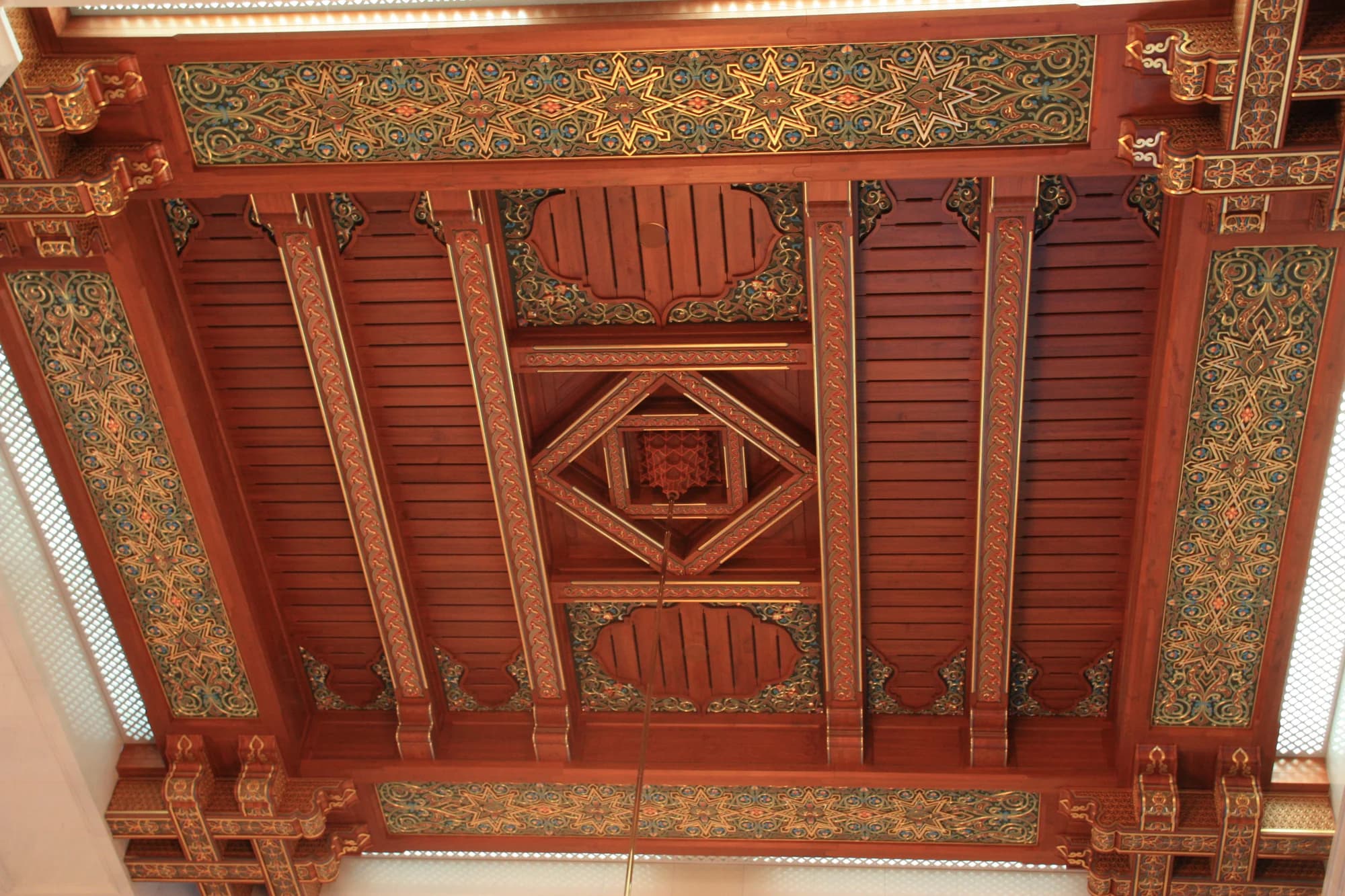
The prayer hall — a space of such extraordinary beauty that it can reduce visitors to silence — is covered by a single carpet: the second-largest hand-loomed carpet in the world (70 by 60 metres, 1.7 billion knots, 21 tonnes of wool and cotton, woven by 600 Iranian women over four years), a masterpiece of Persian carpet-weaving that contains twenty-eight colours and patterns drawn from the traditions of Isfahan, Kashan, and Tabriz. The chandelier, fourteen metres in diameter and weighing eight tonnes, is made of Swarovski crystal and gold-plated metalwork, and it hangs from a central dome whose interior is decorated with a Quranic inscription rendered in gold mosaic. The combination — carpet, chandelier, dome, the scale of the room (it accommodates 6,500 worshippers, and the total mosque complex 20,000), the quality of the light filtering through the stained-glass windows — is overwhelming, in the best sense of the word.
Non-Muslims are welcome to visit (modest dress: women must cover their hair, arms, and legs; men must cover their shoulders and knees; abayas and scarves are provided at the entrance), and the guided tours, led by Omani volunteers who speak with passion and knowledge about their faith and their culture, are among the best cultural experiences in the Gulf. The mosque is open to visitors from Saturday to Thursday, 8-11 am. Go early, and go on a weekday; the crowds are thinner, and the light — the morning sun streaming through the arched windows of the arcades — is at its most theatrical.
The prayer hall of the Sultan Qaboos Grand Mosque — the 1.7-billion-knot carpet a sea of turquoise, gold, and cream, the Swarovski crystal chandelier glowing in the filtered light, the mihrab (the niche indicating the direction of Mecca) a chamber of blue mosaic tiles, a space that, for all its scale and splendour, manages to feel intimate, sacred, and profoundly peaceful
The Sultan Qaboos Grand Mosque, completed in 2001 after six years of construction using 300,000 tonnes of Indian sandstone, was a gift from Sultan Qaboos bin Said to mark his 30th year of reign and stands as the largest mosque in Oman and the third-largest by area in the world. The hand-loomed prayer carpet — measuring 70 by 60 metres, weighing 21 tonnes, and containing 1.7 billion knots — was woven by 600 Iranian women over four years in the workshops of the Iran Carpet Company, using designs drawn from the classical traditions of Isfahan, Kashan, and Tabriz, and held the Guinness World Record as the world's largest single-piece carpet from 2001 until 2016. The central chandelier, 14 metres in diameter and weighing 8 tonnes, incorporates over 600,000 Swarovski crystals suspended beneath a dome whose interior is inscribed with gold calligraphy of Quranic verses, and the mosque's total capacity of 20,000 worshippers reflects Oman's tradition of Ibadi Islam — a moderate school distinct from both Sunni and Shia, practised in Oman since the 7th century.
“Oman is the only country I know where the people smile at you on the street not because they want something, but because they are genuinely pleased to see you.”
Mutrah and the Souk: The Historic Heart
Mutrah, the harbour district of Muscat, is the most atmospheric neighbourhood in the city: a crescent of whitewashed buildings facing the Gulf of Oman, the Mutrah Souk at its centre, the Mutrah Fort (a Portuguese construction of the 1580s, one of the many fortresses that the Portuguese built to control the Indian Ocean trade routes, which the Omanis ejected them from in the 1650s — the only indigenous power to defeat the Portuguese empire militarily in the Indian Ocean) on the hill above. The corniche — the seafront promenade — is the essential Muscat walk, and an hour on it at sunset, with the mountains turning rose and gold to the west, the harbour filling with the lights of the fishing boats, and the scent of frankincense (the dried resin of the Boswellia tree, native to the Dhofar region of southern Oman, that has been the sultanate's most valuable export for millennia — the Three Wise Men brought it to the infant Christ; the Romans burned it at the funerals of emperors; the pharaohs of Egypt used it in their embalming rituals; and the luxury spas and fragrance houses of the twenty-first century still prize it above almost any other botanical) drifting from the souk, is one of the most purely pleasurable urban experiences in the Arabian Peninsula.
The Mutrah Souk — a warren of narrow alleys covered by a roof of traditional palm-frond construction, lit by the glow of lanterns and the light filtering through the roof's gaps — is the best souk in the Gulf. The merchandise — frankincense, myrrh, Omani silver (the traditional silver jewellery of the interior, the Bedouin silver of the deserts, the khanjar (the curved dagger that is the national symbol of Oman, its silver scabbard decorated with floral and geometric patterns)), textiles, antiques, the gold of the Deira — is of a quality that the more touristic souks of the region cannot match. The vendors, almost all Omani, are friendly, relaxed, and comparatively unpushy — a transaction in the Mutrah Souk is a conversation, not a confrontation. The frankincense — the highest quality (hojari), from the Dhofar region, the silver-green tears of resin that are burned in Omani homes and offices as a gesture of hospitality and purification — is the essential purchase. A small bag of the finest hojari costs a few rials and, burned in a traditional Omani incense burner (mabkhara), fills your home with a fragrance that evokes, immediately and inescapably, the place you bought it.
The Mutrah Souk in the evening — the alleys a labyrinth of lanterns and perfume and the smoke of frankincense, the merchants seated in their shops amid piles of silver jewellery and textiles and the dried resin of the Boswellia tree, the architecture a centuries-old pattern of palm-frond roofs, carved wooden doors, and the particular intimacy of a space designed for the transaction of goods and the exchange of humanity
The Mutrah Souk, one of the oldest marketplaces in the Arab world, occupies a warren of narrow alleys whose traditional palm-frond roofing (barasti) provides natural insulation against the Gulf heat — a construction technique used across the Arabian Peninsula for millennia. The souk's frankincense trade dates back to the incense routes of antiquity, when caravans of up to 3,000 camels transported the precious resin from Dhofar in southern Oman to the Mediterranean, a journey of over 2,500 kilometres that took approximately 100 days. Omani silver craftsmanship, concentrated in the souk's jewellery quarter, is distinguished by intricate filigree, granulation, and the distinctive khanjar — the curved ceremonial dagger that appears on the Omani national emblem — whose design varies by region, with the Royal Khanjar of the Al Bu Sa'id dynasty featuring an ornate seven-ringed silver scabbard.
The Royal Opera House and the Cultural Renaissance
The Royal Opera House Muscat, opened in 2011, is the most beautiful performance space in the Middle East — a building of such refinement and elegance that it would be a landmark in any city in the world, and in Muscat it is a statement: that Oman, the traditional society that has embraced modernity without losing its identity, values culture as highly as commerce. The architecture — white Omani limestone, carved wood, mashrabiya screens, the gardens of palms and roses that surround the complex — is a contemporary reinterpretation of Omani palace architecture, and the interior — the auditorium of teak and leather, the lobbies of marble and geometric inlay, the grand staircase that sweeps up from the entrance hall — is as beautiful as any opera house in the world.
The Royal Opera House presents a season of opera, ballet, classical music, and Arab music from September to May, and its productions — which have included Plácido Domingo, Yo-Yo Ma, the Mariinsky Ballet, and the Cairo Symphony Orchestra — are of a standard that accommodates the most demanding aficionado. Book tickets online (the website, rohmuscat.org.om, is comprehensive and functional) weeks in advance for the most desirable performances. Even if you are not attending a performance, the opera house offers guided tours (Saturday through Thursday, 8:30 am-5:30 pm; check the website for times), and the tour — of the auditorium, the lobbies, the gardens, and the behind-the-scenes spaces — is the essential introduction to Muscat's cultural ambitions.
The Bait Al Zubair museum, in Old Muscat, is the repository of Omani heritage: a private collection of weapons, jewellery, costumes, and household objects housed in a restored traditional Omani residence. The collection — the silver khanjars of the interior, the gold jewellery of the coast, the costumes of the Bedouin women of the Wahiba Sands (the elaborate face masks, the embroidered dresses, the silver anklets that chimed as the women walked), the model of a traditional Omani falaj (the irrigation system, some 3,000 of them across Oman, many dating from the pre-Islamic period, that carry water from the mountain aquifers to the date palm plantations and the villages of the interior — a UNESCO World Heritage system that embodies the ingenuity and the collective spirit of Omani civilisation) — tells the story of a culture that has adapted, over five thousand years, to one of the harshest environments on Earth. The café, in the museum's courtyard garden, serves the best Omani coffee (kahwa — lightly roasted, flavoured with cardamom and rose water, served with dates) in Muscat.
The Mountains, the Desert, and the Sea
The landscapes of northern Oman, within a two-hour drive of Muscat, are among the most dramatic in Arabia. The Al Hajar Mountains — the "Rocky Mountains" — rise from the coastal plain to a height of 3,009 metres at Jebel Shams, the "Mountain of the Sun," whose summit plateau, the Saiq Plateau, is a landscape of terraced agriculture, ancient villages, and the damask roses that have been cultivated here for centuries (the rose water of Jebel Akhdar, the "Green Mountain," is the finest in the Gulf, and the distillation season, March through May, fills the villages with the scent of a million roses). The Anantara Al Jabal Al Akhdar Resort, perched on the edge of the Saiq Plateau at 2,000 metres, is the the most dramatic hotel in Oman — the rooms and villas cantilevered over the canyon floor a kilometre below, the views of the Al Hajar Mountains stretching to the horizon, the infinity pool a blade of turquoise against the brown and grey of the mountain landscape. The resort is not the reason to visit Jebel Akhdar — the villages, the terraces, the rose gardens, the silence are the reason — but it is an extraordinarily comfortable base from which to explore.
The Wahiba Sands, two hours south of Muscat, are the classic desert landscape of Arabia — a sea of dunes, some rising to 100 metres, stretching for 200 kilometres from the Eastern Hajar Mountains to the Arabian Sea. The Bedouin families who live in the Wahiba Sands welcome visitors — sometimes to their tents, for coffee and dates and a conversation that requires a translator — and the experience of sitting in a Bedouin tent, the coffee brewing on the fire, the sand stretching to the horizon, the desert at night a sky full of stars that no city-dweller has ever seen, is the essential encounter with the Arabia that existed before the oil. The Desert Nights Camp, the most established of the desert camps, offers tents of varying luxury and the full programme of desert activities: dune bashing (a four-wheel-drive roller-coaster across the dunes that is either thrilling or terrifying, depending on one's tolerance for motion), camel trekking (at dawn, the camels lurching across the sand in a rhythm that has not changed since the first Bedouin domesticated the dromedary), and the desert silence that is the rarest, and the most precious, of the Wahiba's gifts.
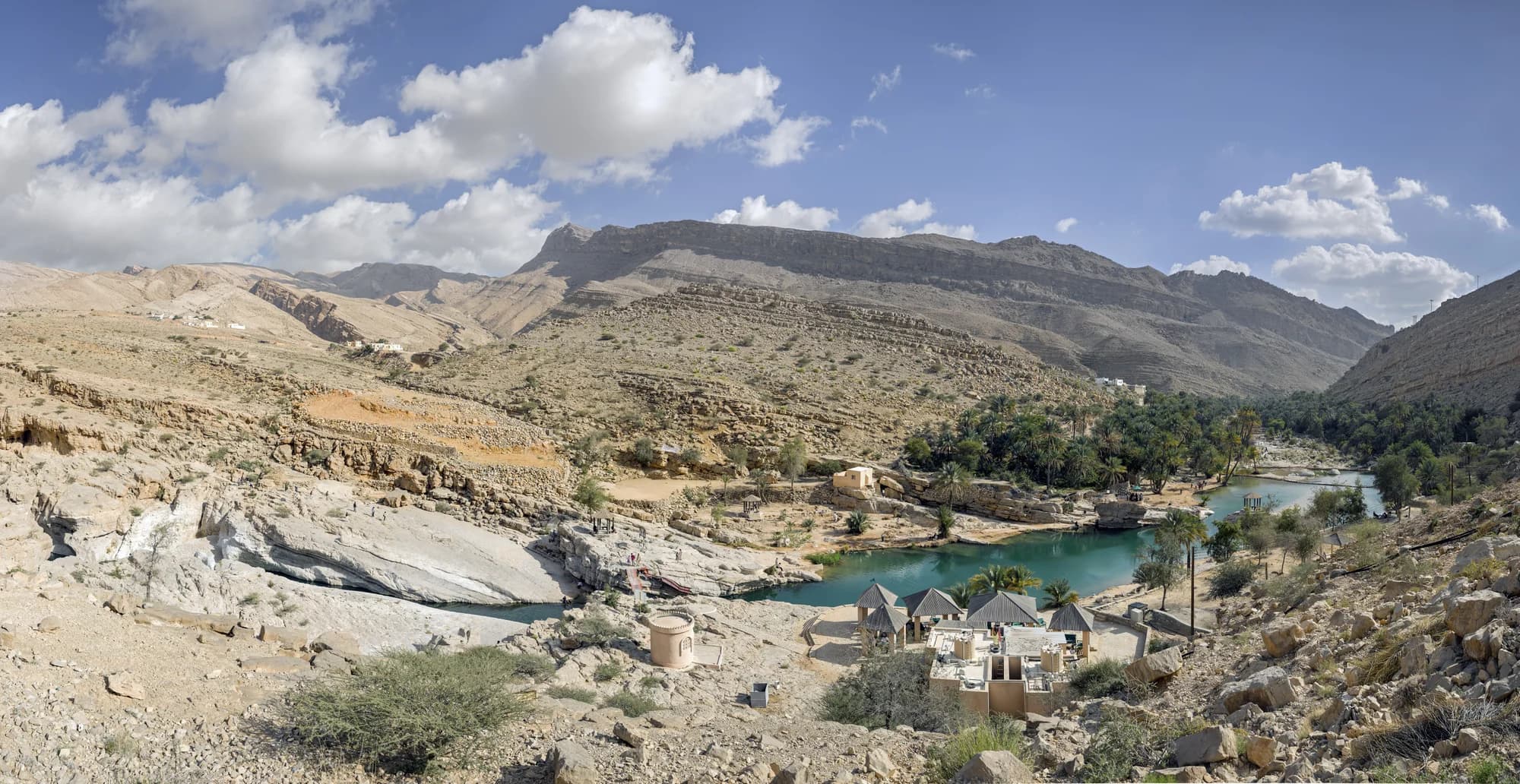
The Bimmah Sinkhole, an hour south of Muscat on the coastal road to Sur, is a geological marvel — a limestone sinkhole filled with turquoise water, 40 metres in diameter, surrounded by a park of palms and flowering shrubs. The sinkhole is a popular swimming spot, and the water — a mix of fresh and salt water, the former from the mountain aquifer, the latter filtering through the limestone from the Gulf of Oman, forty metres distant — is clear enough to see the small fish that live in it. The experience of swimming in the Bimmah Sinkhole, the mountains on one side and the sea on the other, the light filtering through the palms, is one of those travel memories that returns, unbidden, on grey days.
The Omani Code
Oman is a conservative Muslim country, and its social codes are stricter than those of the more cosmopolitan Gulf states. Dress modestly in public (shoulders, knees, and chest covered for both men and women). Public displays of affection are not acceptable (hand-holding is tolerated among married couples; anything beyond that is not). The consumption of alcohol is permitted in licensed hotels and restaurants, but public intoxication is a criminal offence, and the tolerance that exists in Dubai or Bahrain does not apply here. The Omanis are among the most gracious and welcoming people in the Arab world, and the traveller who reciprocates this respect — who dresses, behaves, and speaks with the same courtesy they would expect in any conservative country — will be rewarded with hospitality that is the defining characteristic of Omani culture.
Frequently Asked Questions
When is the best time to visit? November through March: daytime temperatures of 24-30°C, cool evenings, and the landscapes (the mountains, the wadis, the desert) at their most accessible. The peak tourist month is December, when the Khareef season (the monsoon in the Dhofar region — a phenomenon that turns the desert landscape of Salalah green and misty for three months of the year, June through August) is over. April and October are shoulder months with warm weather and fewer crowds. May through September is summer — 38-48°C and humidity that makes outdoor activity impossible between 10 am and 4 pm, and the Khareef in Salalah, if you can tolerate the heat, a unique spectacle.
How many days do I need? Four full days at a minimum: one for Muscat (the Grand Mosque, the Mutrah Souk, the corniche), one for the mountains (Jebel Akhdar or Jebel Shams), one for the desert (the Wahiba Sands, with an overnight at a desert camp), and one for the coast (the Bimmah Sinkhole, Wadi Shab — the most beautiful of the Omani wadis, a canyon of turquoise pools and waterfalls and the caves — and the turtle reserve at Ras Al Jinz, where green turtles nest on the beaches year-round). Five to seven days allows for a more leisurely pace.
Is Oman expensive? Yes, by regional standards. A luxury hotel (the Al Bustan Palace, a Ritz-Carlton Hotel; the Chedi Muscat; the Anantara Al Jabal Al Akhdar) costs $300-800 per night. A mid-range hotel: $100-200. A restaurant dinner: $30-60 per person. A bag of the finest Omani frankincense: a few rials. Oman is not a budget destination, and the traveller who approaches it as one will miss the point — which is that the country has deliberately positioned itself as a luxury destination, not to exclude visitors but to ensure that the quality of the experience (for them, for the local communities, for the fragile mountain and desert environments) is high.
Jebel Shams at dawn — the Grand Canyon of Arabia revealing itself as the night withdraws, the limestone cliffs plunging 2,000 metres to the Wadi Ghul below, the villages of the Saiq Plateau still asleep on the canyon rim, the silence broken only by the call of a distant bird and the sound of the wind through the junipers, the mountains of Oman the most beautiful landscape in the Arabian Peninsula and one of the most beautiful landscapes anywhere, and the fact that so few travellers have seen them — the fact that Muscat, an hour away, is unknown to the global tourism caravan that queues for the Burj Khalifa — is a gift that the country, with characteristic discretion, does not advertise but will happily share
Jebel Shams ('Mountain of the Sun'), at 3,009 metres, is the highest peak in Oman and the Al Hajar range, its north face forming what is often called the Grand Canyon of Arabia — a precipice dropping nearly 2,000 metres to Wadi Ghul (also known as Wadi Nakhr), one of the deepest gorges in the world. The Al Hajar Mountains were pushed upward by the collision of the Arabian Plate with Eurasia and contain the Semail Ophiolite — a massive slab of oceanic crust and upper mantle that was thrust onto the continental margin approximately 90 million years ago, now recognised as the world's largest and best-exposed ophiolite complex, a UNESCO-recognised geological treasure that draws researchers from across the globe. The Saiq Plateau, at roughly 2,000 metres, supports terraced agriculture that has been practised for at least 2,000 years using the ancient falaj irrigation system — underground and surface channels that distribute water from mountain aquifers to villages and date palm groves via gravity alone, with approximately 3,000 such systems still functioning across Oman, five of which are collectively inscribed as a UNESCO World Heritage Site.