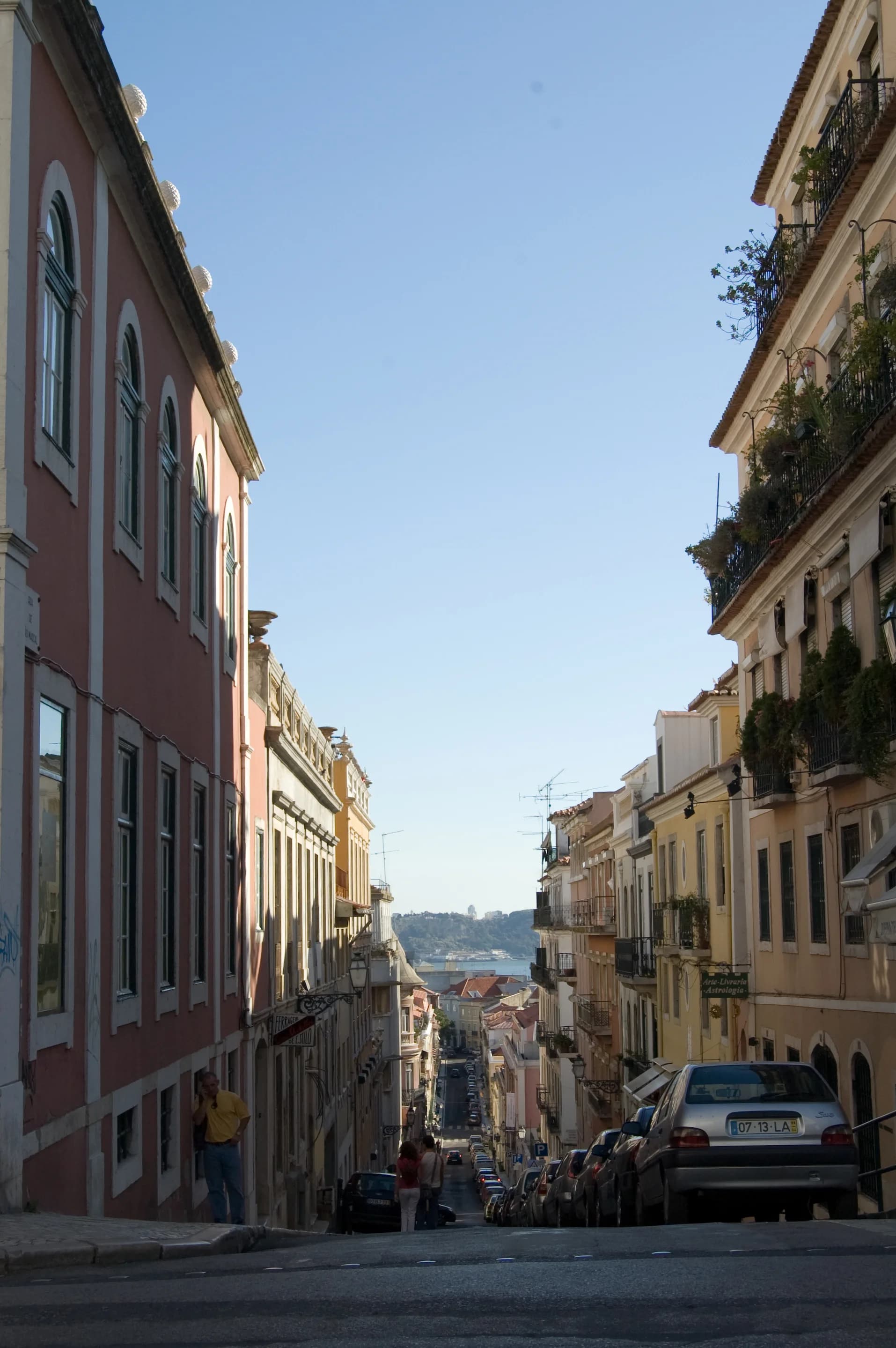
Lisbon arrives at the eye as a sequence of astonishments. The city — built across seven hills, each steeper than the last — presents itself in vertical layers: the river at the bottom, the rooftops rising in terraces, the castle on the summit, the sky above. The colour palette is exclusive to this city: white limestone, terracotta tiles, the particular blue of the Portuguese sky, the deeper blue of the Tagus estuary where it meets the Atlantic. There is nowhere else in Europe that looks like Lisbon, and the reason is simple: the 1755 earthquake, which destroyed eighty-five per cent of the city and killed perhaps 60,000 of its inhabitants, created a blank canvas on which the Marquês de Pombal, the prime minister who oversaw the reconstruction, drew one of the world's first planned cities — a grid of elegant, earthquake-resistant buildings that became the Baixa Pombalina, the downtown that is the city's commercial and geometric heart.
Lisbon today is the beneficiary of an extraordinary historical irony. The city that was Europe's richest and most powerful during the Age of Discovery — when the Portuguese empire stretched from Brazil to Macau and the wealth of the Indies flowed through this port — declined for two centuries and was largely forgotten. The result: a capital of extraordinary beauty that was never demolished and rebuilt by the modernising impulses of the twentieth century. The trams still clatter through the Alfama. The azulejos — the blue-and-white ceramic tiles that cover churches, palaces, railway stations, and ordinary apartment blocks — still glint in the afternoon sun. And the light — the famous Lisbon light, a particular quality of Atlantic reflection and southern latitude that turns the sky to silver at sunrise and the river to gold at sunset — is the same light that seduced the great navigators into believing that the world was larger, and stranger, and more beautiful than anyone had yet imagined.
Lisbon from the Miradouro da Senhora do Monte at golden hour — the terracotta rooftops cascading down to the Tagus, the 25 de Abril Bridge spanning the estuary like a smaller, redder Golden Gate, the Cristo Rei statue a white presence on the southern shore, the city's seven hills visible in the gentle Mediterranean light
The Miradouro da Senhora do Monte, at 104 metres the highest natural viewpoint in Lisbon, sits beside the tiny Chapel of Our Lady of the Mount, founded in 1147 on the site where tradition holds that St Gens — the city's legendary first bishop — was martyred by the Moors. The 25 de Abril Bridge, completed in 1966 by the American Bridge Company — the firm that built San Francisco's Golden Gate — spans 2,277 metres across the Tagus and was originally named the Salazar Bridge until renamed after the date of the 1974 Carnation Revolution that restored Portuguese democracy.
Belém: The Monuments of Empire
Belém, the riverside district from which Vasco da Gama departed for India in 1497, is the monumental heart of Lisbon's imperial memory — a concentration of architecture so magnificent that UNESCO declared it a World Heritage Site in 1983. The Mosteiro dos Jerónimos, the monastery built by King Manuel I to commemorate da Gama's voyage and to give thanks for its success, is the supreme achievement of the Manueline style — a uniquely Portuguese architectural language that fuses late Gothic with maritime motifs, so that the stone seems to writhe with carved ropes, anchors, coral, and the armillary spheres that were the symbol of Portugal's global ambition. The cloister, a two-storey masterpiece of carved limestone, is one of the most beautiful enclosed spaces in Europe, and the tomb of Vasco da Gama, just inside the church's western entrance, is a pilgrimage site for anyone interested in the history of exploration — which is to say, the history of the world.
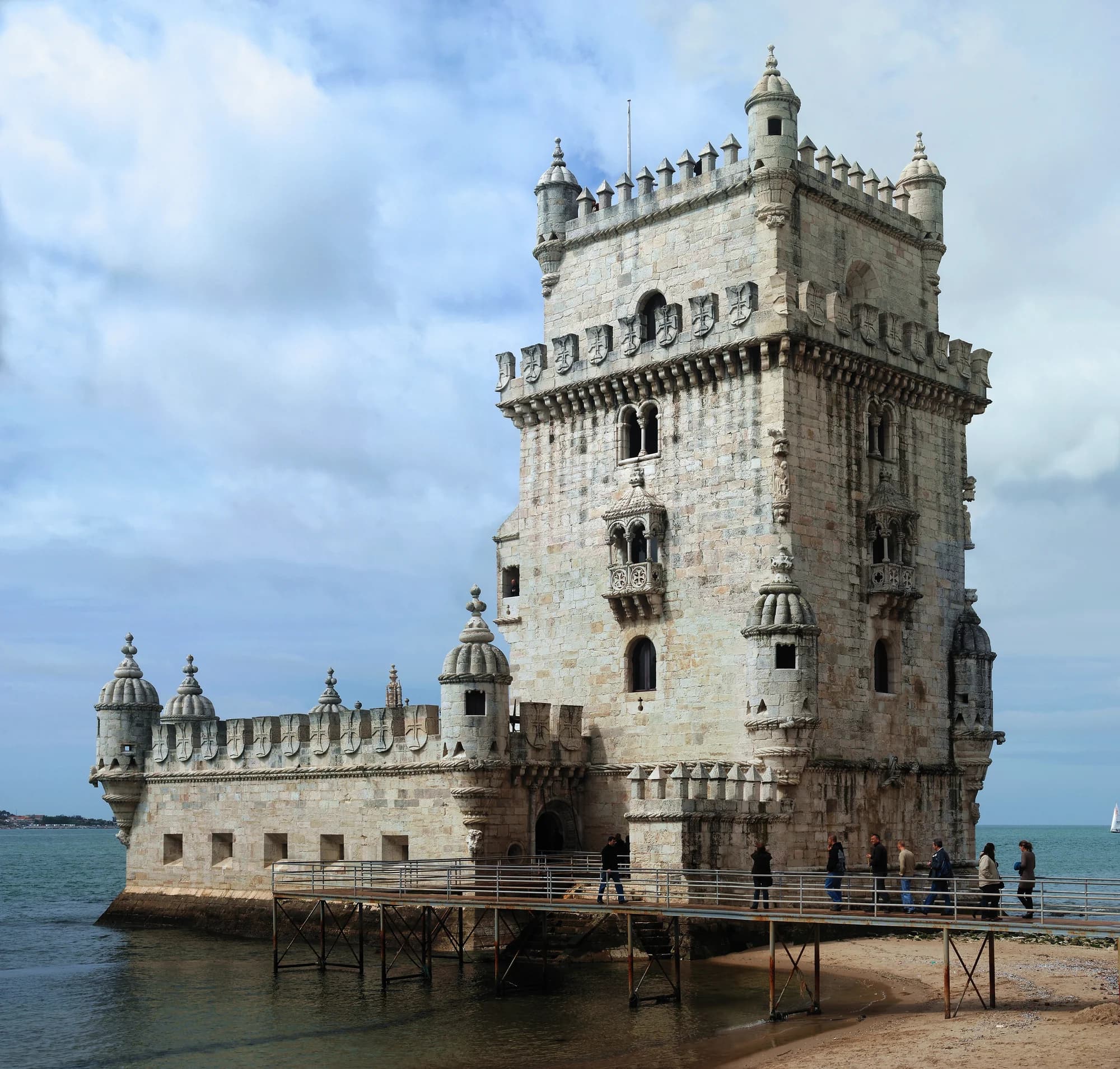
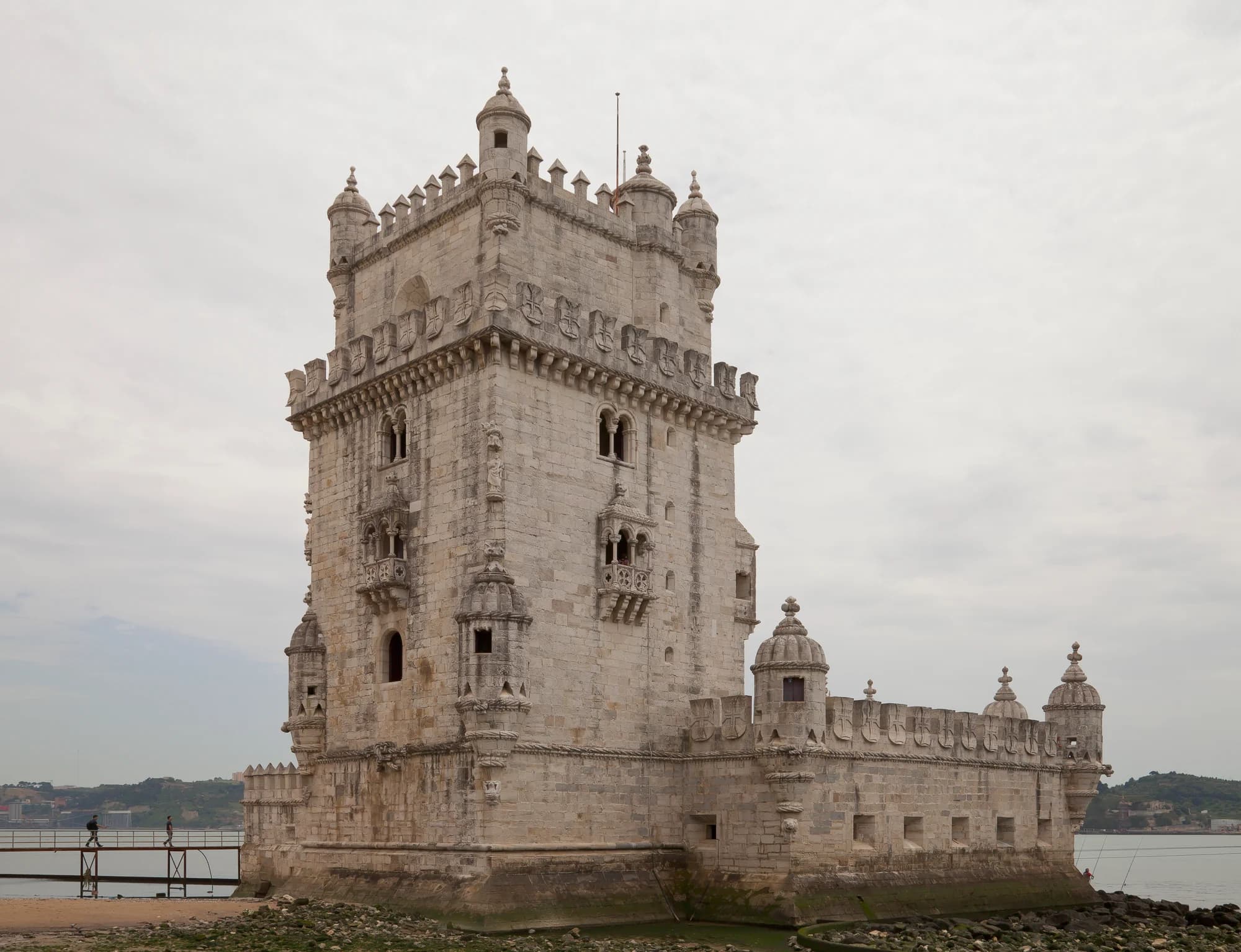
The Torre de Belém, a fortified tower that stands in the Tagus a short walk from the monastery, is the iconic image of Lisbon — a four-storey structure of honey-coloured limestone, its battlements and turrets and carved stone balconies a fantasy of medieval fortification rendered in the language of the Renaissance. It was built to guard the entrance to the harbour, and its dungeons held political prisoners; it is now the most photographed building in Portugal, and the view from its rooftop terrace — the monastery to the west, the 25 de Abril Bridge to the east, the Tagus spreading into the Atlantic on the southern horizon — is a reminder of why Lisbon, for a brief, brilliant century, was the capital of the world.
The Pastéis de Belém, the pastry shop that has been selling the same custard tart — pastel de nata — since 1837, is a Lisbon institution of a different order. The recipe was developed by the monks of the Jerónimos monastery and sold to the shop when the monastery was dissolved in 1834. The tarts — flaky pastry, creamy custard, a dusting of cinnamon — are served warm from the oven to a queue that stretches down the street, and the experience of eating one, standing in the tiled interior of the bakery with a bica (Portuguese espresso) in hand, is as essential to a Lisbon visit as the monastery itself. The queue moves quickly. Do not be discouraged.
The cloister at Mosteiro dos Jerónimos — carved limestone in the Manueline style, ropes and armillary spheres and sea monsters writhing in stone, the light filtering through the arcades in patterns that have not changed since the sixteenth century, a silence that belongs simultaneously to a monastery and an empire
Commissioned by King Manuel I in 1501 to commemorate Vasco da Gama's 1498 discovery of the sea route to India, the Jerónimos Monastery was funded by a five-percent tax on spices — pepper, cinnamon, cloves, and nutmeg — from the newly conquered Indian Ocean trade routes. The architect Diogo de Boitaca pioneered the Manueline style here, a uniquely Portuguese late Gothic that weaves maritime motifs into stone: twisted ropes, coral branches, armillary spheres (Manuel's personal emblem), and botanical forms from the newly discovered tropics. The south portal, completed by João de Castilho in 1518 and standing 32 metres high, is arguably the most elaborate church doorway ever carved in Western Europe.
“O que for soará. — What will be, will sound.”
The Alfama: Lisbon Before the Earthquake
The Alfama, the oldest district of Lisbon, is what survived the earthquake — a labyrinth of narrow streets, steep staircases, and whitewashed houses that climbs from the river to the castle in a series of vertical contortions. This was the Moorish quarter, then the Jewish quarter, then the fishermen's quarter; today it is the most atmospheric neighbourhood in Lisbon, and to wander through it without a map — because a map is useless here, the streets having evolved over a millennium without reference to any plan — is to experience the city as it was before Pombal's rational grid replaced the organic chaos of the medieval streets.
Fado, the music of the Portuguese soul, was born in the Alfama, and it still echoes through the district's narrow streets at night — the sound of a woman's voice, accompanied by the twelve-string Portuguese guitar, singing of saudade, the untranslatable Portuguese word that means something like a longing for something that has been lost and may never have existed. The fado houses of the Alfama — Clube de Fado, Parreirinha de Alfama, Mesa de Frades — offer dinner and a performance in rooms of tiled walls and candle-lit tables, and the combination of the music, the wine, and the accumulated melancholy of centuries is potent. The fado singer begins her set after dinner, usually around 10 pm, and the room, which has been full of chatter and the clink of glasses, falls silent in an instant. The Portuguese take fado seriously. So should you.
The Castelo de São Jorge, on the summit of the Alfama's hill, has been a fortress since the Iron Age — the Romans, the Visigoths, the Moors, and the Christian kings of Portugal have each occupied and modified it — and the view from its battlements is the essential Lisbon panorama: the city spread beneath you in a jumble of rooftops and church towers, the Tagus glittering beyond, the 25 de Abril Bridge and the Cristo Rei statue on the southern shore. The peacocks that strut through the castle gardens are an unexpected, and unreasonably decorative, addition.
The Alfama at dusk — a tangle of whitewashed houses and terracotta roofs, laundry on lines stretching between windows, the sound of fado drifting from a tavern unseen, the Tagus a silver expanse in the distance, the feeling that you have stepped into a Lisbon that existed before the earthquake and has chosen, stubbornly, to continue existing
The Alfama — its name derives from the Arabic al-hamma, meaning 'the hot springs' — was the only Lisbon neighbourhood substantially spared by the 1755 earthquake, its bedrock geology and the density of its compact medieval street pattern absorbing seismic waves that flattened the grid-planned Baixa below. Settled by the Moors as early as the 8th century, the district retains the irregular layout of Islamic medina planning: the narrow, winding streets provided natural shade and defence, and many of the stepped pedestrian lanes were originally water channels leading to the Roman baths that gave the district its enduring Arabic name. Fado, the soul music of Portugal recognised by UNESCO as Intangible Cultural Heritage in 2011, was born in these streets.
Sintra: Lord Byron's Glorious Eden
Sintra, thirty kilometres northwest of Lisbon, is a garden of architectural delirium — a town of palaces, castles, and extravagant gardens set among the wooded hills of the Serra de Sintra, a microclimate of perpetual mist and moss and the smell of damp earth. Lord Byron, who spent time here in 1809, declared it "perhaps in every respect the most delightful in Europe," and two centuries of tourism have confirmed his judgement. The Palácio Nacional da Pena, the fantasy castle that crowns the highest hill, is the architectural equivalent of the Manueline style in a fever dream — a riot of turrets, battlements, domes, and crenellations painted in yellow, red, and mauve, as if a medieval castle had been redecorated by a Romantic painter with an immoderate love of colour. It was built by King Ferdinand II, a German prince who married the young Queen Maria II, fell in love with Portugal, and spent the rest of his life creating this extravagant monument to his adopted homeland's history and landscape. The view from its terraces — the Atlantic, Lisbon, the Tagus, the Sintra hills, the Palácio Nacional de Sintra (the royal palace in the town below, whose two enormous conical chimneys are the most recognisable silhouette in Portuguese architecture) — is one of the great panoramas of Europe.
The Quinta da Regaleira, a neo-Manueline estate built by a Brazilian coffee magnate at the turn of the twentieth century, is Sintra's most mysterious attraction — a garden of grottoes, tunnels, wells, and symbolic architecture that encodes references to alchemy, Masonry, the Knights Templar, and the Rosicrucian tradition. The initiation well — a subterranean tower lined with spiral stairs that descend into the earth, the final destination of a symbolic journey of death and rebirth — is one of the most extraordinary things you will ever see, and the experience of descending its spiralling staircase into the darkness is one of the most potent architectural experiences in Europe. Go early, before the tour buses, to experience it in the solitude it requires.
Pena Palace at dawn — the yellow, red, and mauve turrets emerging from the morning mist, the Atlantic visible on the western horizon, the Sintra hills still wrapped in the cloud that gives them their peculiar, enchanted atmosphere, the whole fantastical creation looking like a castle from a story that has not yet been written
King Ferdinand II — a German-born prince consort who married Portugal's Queen Maria II in 1836 — acquired the ruined 16th-century Hieronymite monastery on Pena's summit in 1838 and spent the remainder of his life transforming it into a fantasy synthesis of medieval, Manueline, Islamic, and Gothic Revival styles. Completed in 1854 under the German architect Baron Wilhelm Ludwig von Eschwege, it is among the earliest expressions of 19th-century Romanticism in architecture, its polychromatic terraces and crenellated watchtowers deliberately designed to provoke the ecstatic awe that the Romantics called Sturm und Drang. The surrounding Parque da Pena spans 200 hectares planted with species from five continents, Ferdinand's vision of a microcosm of the Portuguese Empire in a single private garden.
The Food: Bacalhau, Pastéis, and the Sea
Portuguese cuisine is the most underrated in Europe. It has the Atlantic and the Mediterranean, a spice route that reaches back to the Age of Discovery, and a tradition of simplicity that elevates ingredients rather than technique. Bacalhau — salt cod, the national ingredient — is said to be prepared in 365 different ways, one for each day of the year, and the best versions (bacalhau à Brás, with scrambled eggs, potatoes, and olives; bacalhau com natas, baked with cream and potatoes) are available at any of the city's tascas — the unpretentious neighbourhood restaurants where three courses cost less than a cocktail at a luxury hotel.
The Time Out Market, in the Mercado da Ribeira in Cais do Sodré, is the most accessible introduction to Portuguese food — a food hall where some of the country's best chefs operate stalls alongside traditional butchers and fishmongers. The selection — Marlene Vieira's contemporary Portuguese, Alexandre Silva's Frade dos Mares, the pastéis de nata at Manteigaria — is comprehensive, and the location, a ten-minute walk from the Baixa, is unbeatable.
For the luxury diner, Belcanto, in Chiado, is Lisbon's only restaurant with two Michelin stars — chef José Avillez's cooking (the golden egg with truffle; the suckling pig with orange and coriander; the tangerine with olive oil and basil) is a tour of Portuguese ingredients and traditions refracted through the sensibility of a chef who trained at elBulli and returned to Lisbon with a mission: to prove that Portuguese food belongs in the first rank of world cuisines. The room — a converted monastery refectory, intimate and hushed — is the perfect setting for a meal that will change your understanding of what Portuguese cooking can be.
The Lisbon Light
The light in Lisbon is a phenomenon, not a metaphor. The city's position at the mouth of the Tagus estuary, where the river meets the Atlantic, creates a reflectivity that turns the entire city into a giant light box, particularly in the late afternoon. Photograph the city from a miradouro at sunset — the Miradouro da Senhora do Monte, the Miradouro de Santa Luzia, or the Miradouro de São Pedro de Alcântara — and you will understand why the Portuguese call their capital a Cidade das Sete Colinas, the City of Seven Hills, and why every hill offers a different angle on the same miraculous light.
Frequently Asked Questions
When is the best time to visit? March through May and September through October offer the most pleasant weather (18-25°C) and the fewest crowds. June brings the Feast of Santo António (the 12th and 13th), when the Alfama transforms into a street party of grilled sardines, beer, and dancing that lasts until dawn. July and August are hot, crowded, and expensive. Winter is mild and quiet — the light is still stunning, and the pastéis de nata taste just as good in January.
How many days do I need? Four full days is the minimum for a satisfying visit: one for Belém (Jerónimos monastery, Belém tower, pastéis de nata), one for the Alfama and the castle, one for Sintra, and one for the Chiado, the Baixa, and a fado evening. Five to six days allows for a day trip to Cascais and the Estoril coast, or a leisurely exploration of the Museu Nacional do Azulejo and the Gulbenkian Museum, whose collection of art from antiquity to the twentieth century is one of the finest private collections in the world.
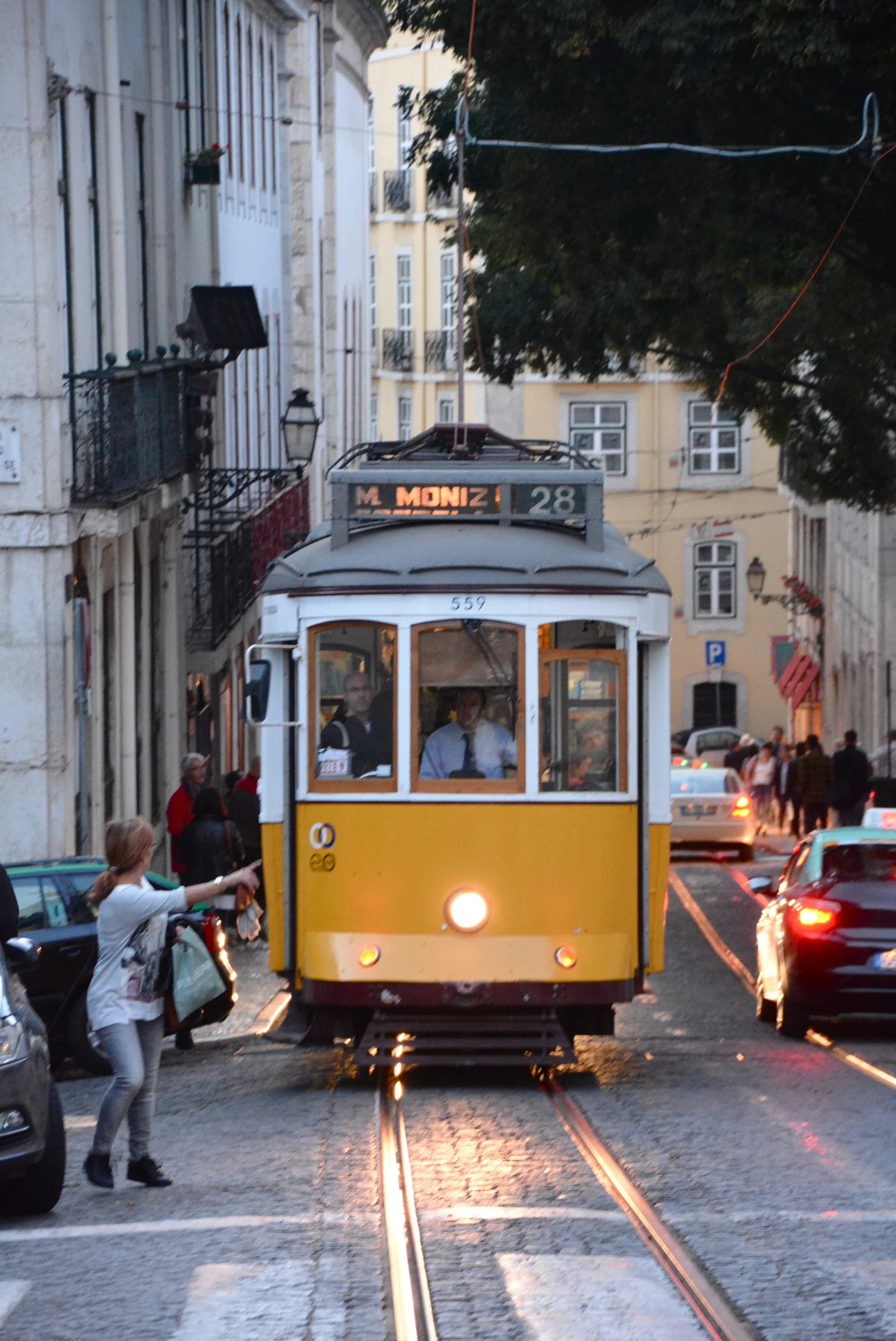
How do I get around? Lisbon is a city of hills, and walking it requires good shoes and a tolerance for stairs. The trams — particularly the 28, which winds through the Alfama, the Graça, the Chiado, and the Estrela — are a city institution, but they are also the target of pickpockets; keep your valuables secure and your awareness high. The metro is modern and efficient but does not serve the historic centre. Taxis and ride-hailing services are inexpensive by European standards.
Is Lisbon expensive? No — Lisbon is among the best-value capitals in Western Europe. A three-starred meal: €150-300. A superb tasca dinner: €25-40. A pastel de nata: €1. A glass of vinho verde: €3-5. The luxury traveller accustomed to Paris or London prices will find Lisbon almost disconcertingly affordable.
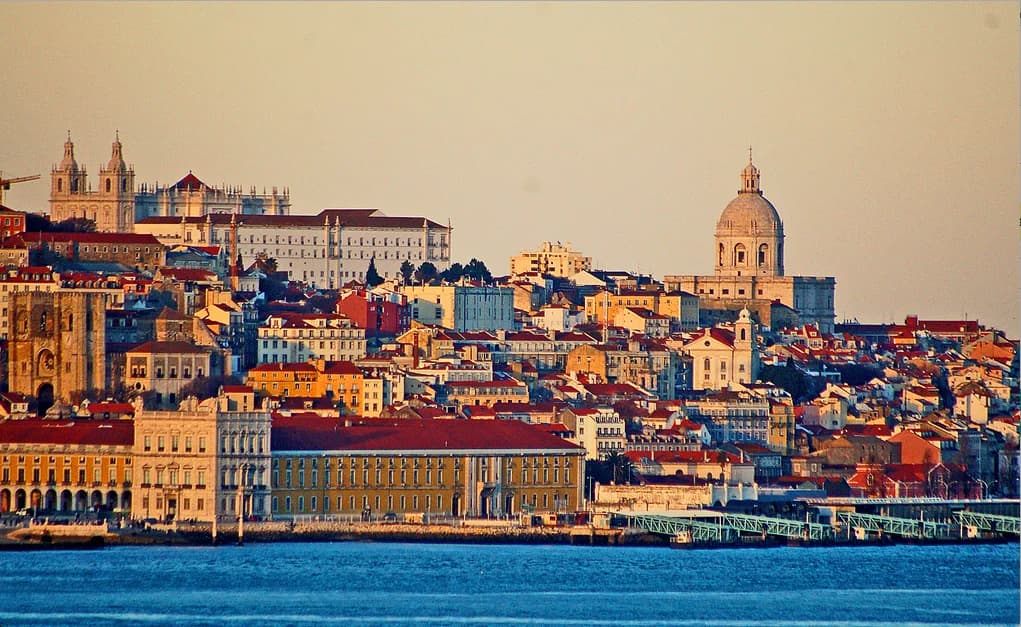
The view from the Miradouro de Santa Luzia at sunset — the red rooftops of the Alfama, the Tagus a sheet of hammered gold, the dome of Santa Engrácia rising in the middle distance, the bougainvillea on the miradouro's pergola framing the scene in purple and magenta, the last light turning the entire city into a painting by an artist who has taken, perhaps, a little too much pleasure in the colours
The Miradouro de Santa Luzia was built in the 18th century as a formal belvedere adjoining the 12th-century Church of Santa Luzia, whose azulejo-tiled facade depicts Lisbon's Praça do Comércio as it appeared before the 1755 earthquake — one of the city's most important surviving pictorial documents of the lost Baroque city. The dome of the National Pantheon — Santa Engrácia — visible in the middle distance was begun in 1681 and completed only in 1966, a construction span of 284 years that gave Portuguese the expression 'obras de Santa Engrácia,' meaning any interminably delayed project. The bougainvillea was introduced to Europe from Brazil by the French navigator Louis Antoine de Bougainville in 1768 and thrives in Lisbon's 2,800 annual hours of sun.