Barcelona is the city that Gaudí built — or rather, the city that Gaudí transformed, with seven buildings now on the UNESCO World Heritage list, a cathedral-sized church that has been under construction for 140 years, and a visual language so distinctive that it has become, for millions of visitors, synonymous with the city itself. But Gaudí was the product of Barcelona, not its creator, and the city that produced him — the capital of Catalonia, the Mediterranean's great mercantile power of the medieval period, the crucible of Modernisme and the most dynamic urban experiment in contemporary Europe — is a force that no single genius, however prodigious, can exhaust.
The luxury Barcelona experience spans centuries: the Gothic labyrinth of the Barri Gòtic, where Roman walls stand beside medieval palaces; the Eixample, the nineteenth-century grid where Gaudí, Domènech i Montaner, and Puig i Cadafalch competed to produce the most extravagant apartment buildings in the history of architecture; the Barceloneta, the fishermen's quarter where the Mediterranean laps at the city's edge; and the food — the markets, the tapas bars, the restaurants that have made Barcelona one of the world's most important dining destinations. This is a city that demands more than a weekend. Give it at least four days, and it will reward you with a lifetime of memories.
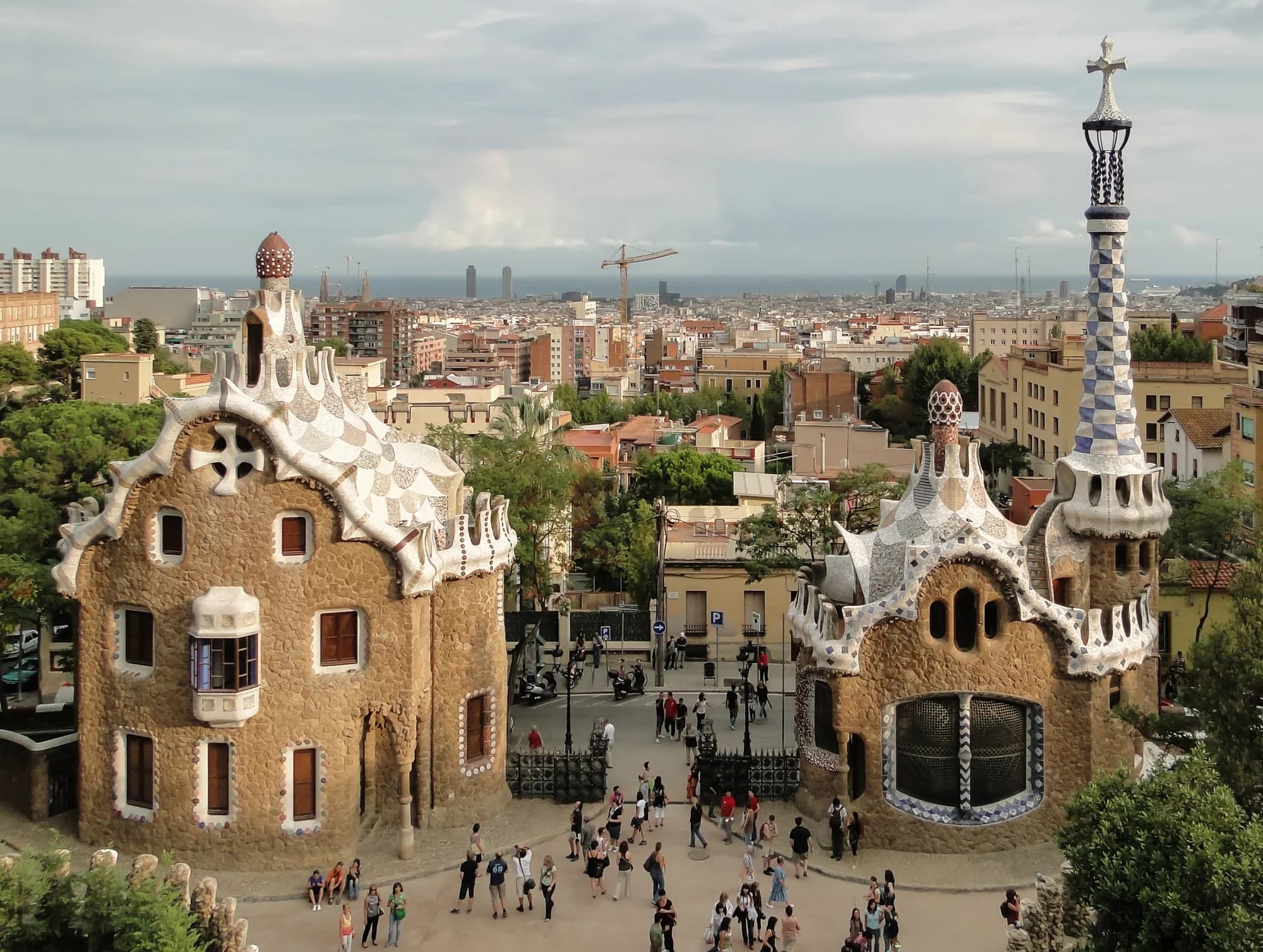
Barcelona from the towers of the Sagrada Família — the city spread beneath you in a grid of chamfered blocks (Eixample), the Mediterranean a band of brilliant blue on the eastern horizon, the mountains of Montjuïc and Tibidabo framing the city to the south and west, Gaudí's masterpiece still rising beneath cranes and scaffolding, the most audacious work of architecture of the modern era still, after a century and a half, unfinished
The Eixample grid below was designed by Ildefons Cerdà in 1859, a visionary socialist utopia of 113-metre-square blocks with chamfered corners to accommodate the turning radius of horse-drawn trams and internal gardens for every block. Gaudí took over the Sagrada Família in 1883 at age 31 and devoted his final 43 years exclusively to the project, living on-site from 1914 and dying tragically in 1926 — struck by a tram on the Gran Via, his shabby clothing causing him to be mistaken for a beggar. When completed, the church will feature 18 towers, the tallest — the Tower of Jesus Christ at 172.5 metres — will sit one metre shorter than Montjuïc hill, as Gaudí believed no work of man should exceed the work of God.
The Sagrada Família: Gaudí's Testament
The Basílica de la Sagrada Família is the most extraordinary building on Earth. This is not a statement of opinion; it is a description of the facts. No other structure combines such radical structural innovation (the branching columns, modelled on trees, that distribute weight with an efficiency that no Gothic cathedral could achieve; the hyperboloid vaults; the ruled surfaces derived from the geometry of nature) with such overwhelming symbolic ambition — a church that tells the story of Christianity in stone, from the Nativity façade (Gaudí's own work, a riot of sculptural detail that depicts the birth of Christ in a language drawn from nature, from the cypress tree above the Holy Family to the turtles supporting the columns of the portal) to the Passion façade (Subirachs's severe, angular counterpoint to Gaudí's organic vision) to the Glory façade, still under construction, which will be the main entrance when the church is completed — the target date, 2026, the centenary of Gaudí's death, may or may not be met.
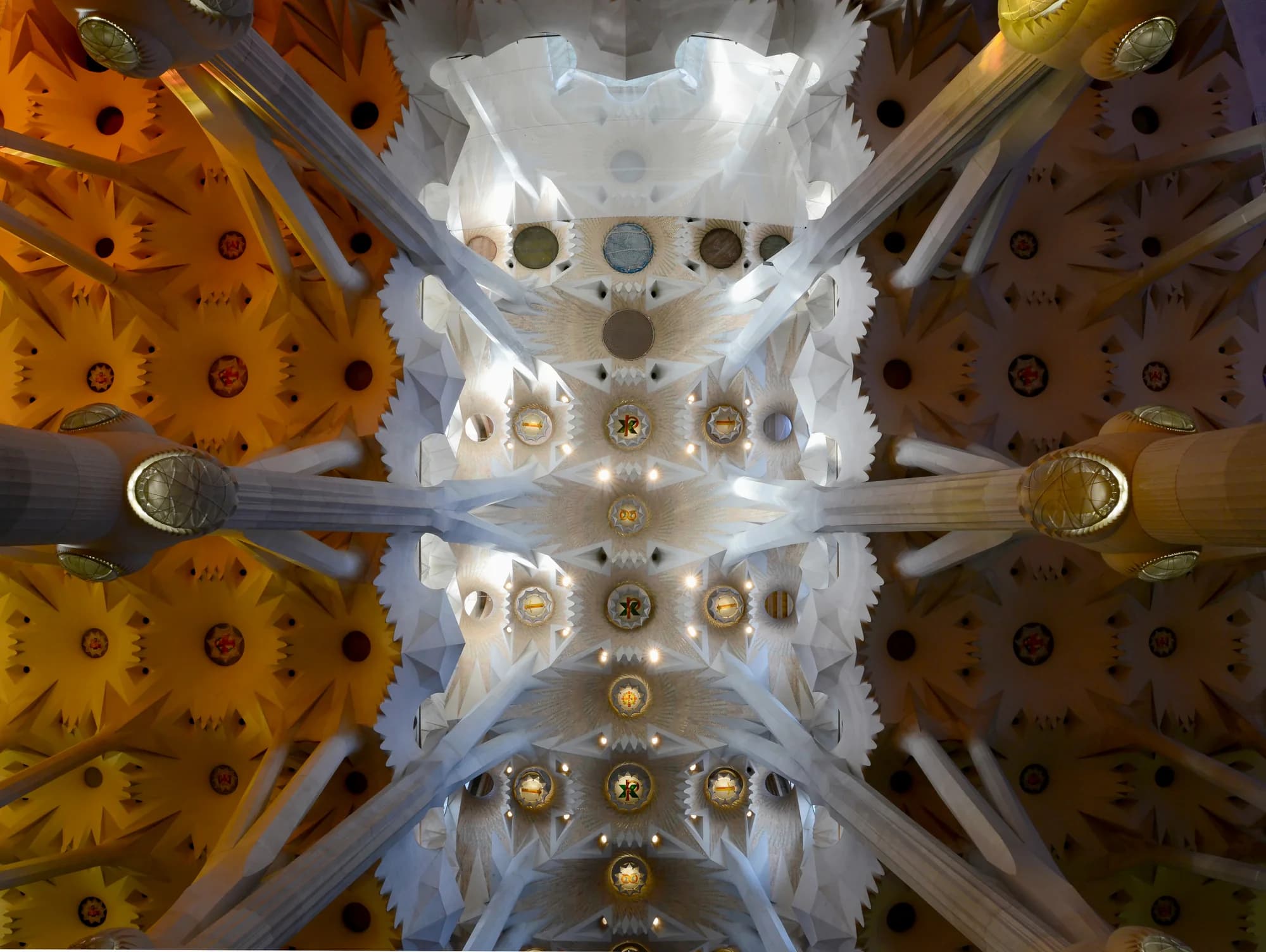
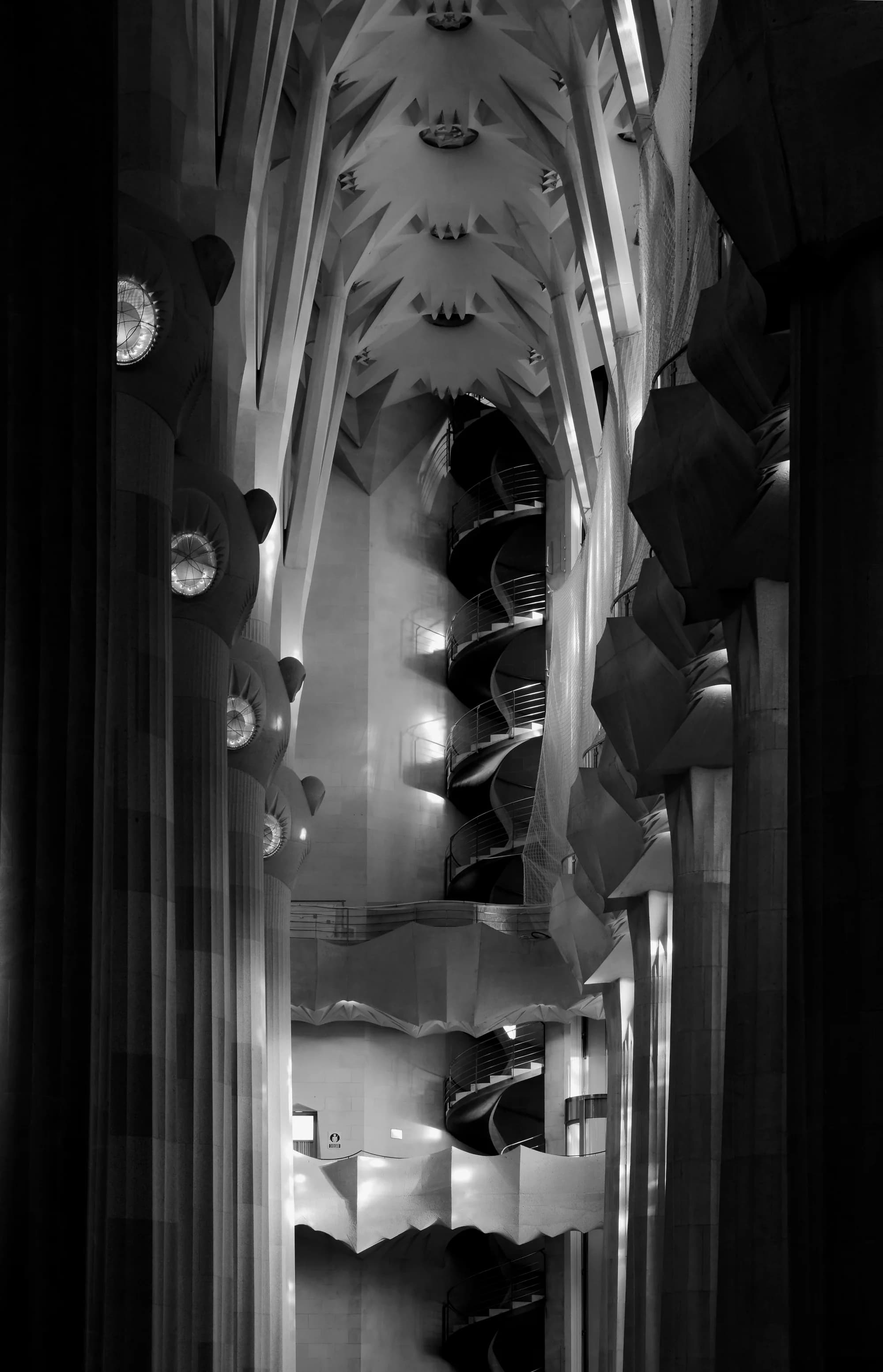
The interior, completed in 2010 and consecrated as a basilica by Pope Benedict XVI, is the greatest surprise — a forest of branching stone columns that rise to a ceiling of extraordinary lightness and colour, the light filtering through stained-glass windows that turn the space into a kaleidoscope of red, blue, green, and gold. The effect, at certain times of day, is of standing inside a prism. Gaudí, who was deeply religious, conceived the Sagrada Família as a Bible rendered in stone — a catechism that could be read by anyone, regardless of literacy, regardless of language. The result is a building that moves even those who are immune to architecture — and, in the case of the atheists and the agnostics who make up a significant portion of its five million annual visitors, even those who are immune to Christianity.
Book your tickets online, weeks in advance, for the first time slot of the morning (9 am), when the light is at its most theatrical and the crowds are at their thinnest. The tower visit — by elevator, with a walk down the spiral staircase — is optional but recommended, particularly the Nativity tower, which offers views of the Mediterranean and the city that are worth the vertigo. The museum, in the basement, explains Gaudí's structural system with models and photographs that make the audacity of his engineering comprehensible even to those who have never thought about the structural properties of a catenary arch.
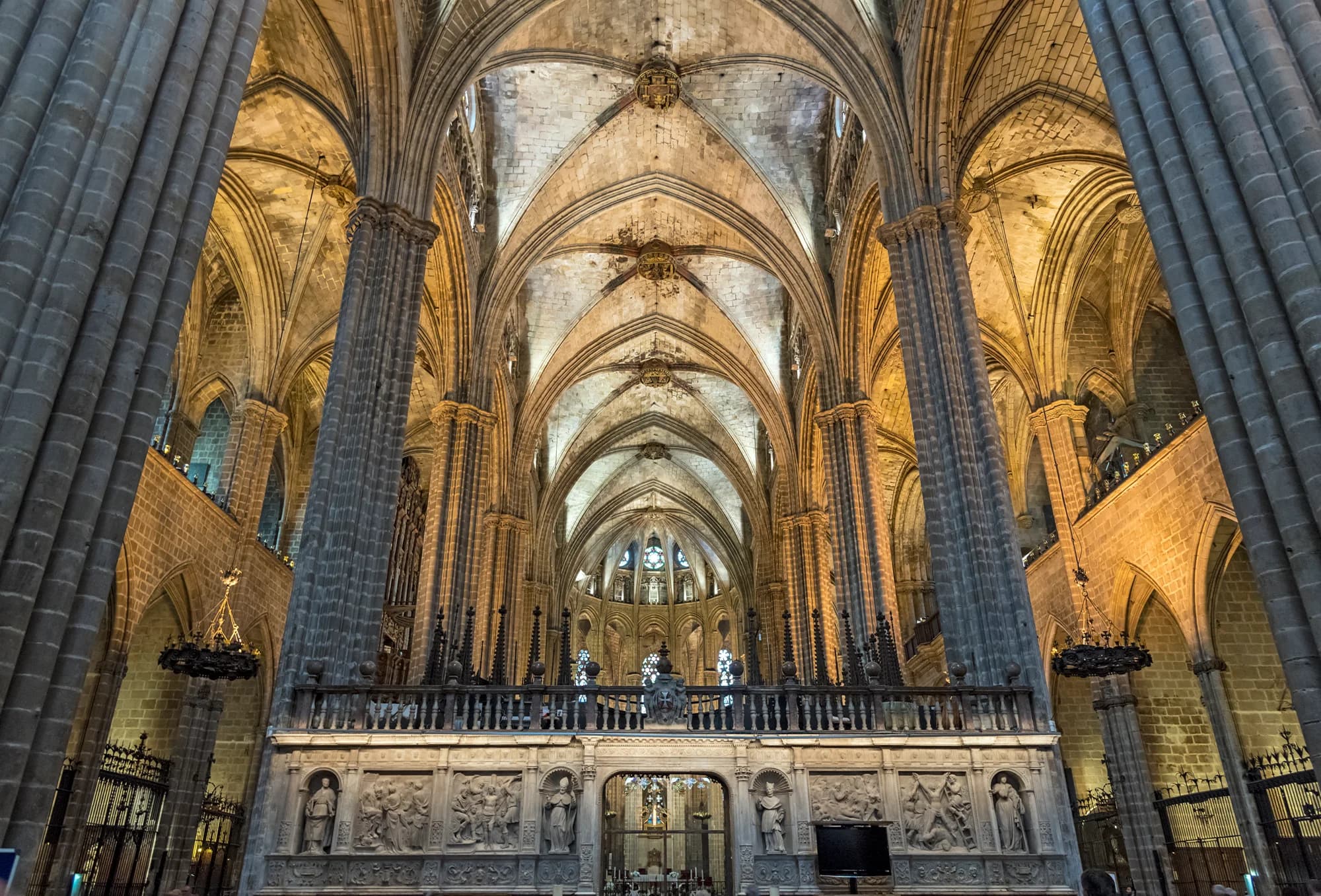
The interior of the Sagrada Família — the branching columns rising like a stone forest to a ceiling of extraordinary lightness, the stained-glass windows casting patterns of red, blue, and gold across the floor, the effect of standing inside a prism, inside a prayer, inside the imagination of a genius who dedicated his life to a building he knew he would never see completed
Gaudí revolutionised structural engineering with his branching column system — the columns incline inward at precisely calculated angles to redirect lateral loads directly to the foundations, eliminating the need for flying buttresses and allowing the clerestory windows to flood the nave with natural light. The stained glass, designed by Joan Vila-Grau and installed between 1999 and 2017, follows a deliberate chromatic progression: cool blues and greens on the sunrise-facing Nativity side warm to reds, oranges, and golds on the sunset-facing Passion side, tracing the daily arc of the Mediterranean sun as a liturgical calendar in light. The interior was consecrated as a basilica by Pope Benedict XVI on 7 November 2010.
“My client is not in a hurry.”
Modernisme: The Route of the Block of Discord
The Passeig de Gràcia, the grand boulevard that connects the Plaça de Catalunya with the Gràcia district, is the great showcase of Modernisme — the Catalan Art Nouveau movement that transformed Barcelona's architecture at the turn of the twentieth century. The Manzana de la Discordia — the "Block of Discord," so named because its buildings compete for the visitor's attention (and, in their day, for the approval of the city's bourgeoisie, who commissioned them as statements of wealth and taste) — contains three masterpieces in a single block: Gaudí's Casa Batlló, Domènech i Montaner's Casa Lleó Morera, and Puig i Cadafalch's Casa Amatller.
Casa Batlló, the most famous of the three, is Gaudí's most complete residential work — a remodelling of an existing building that the architect transformed into a work of such organic fluidity that it barely seems to be architecture at all. The facade, a shimmer of broken ceramic tiles in blues and greens, is said to represent the legend of Saint George (Sant Jordi, the patron saint of Catalonia) slaying the dragon — the roof is the dragon's back, the tower the saint's lance, the balconies the skulls of the dragon's victims. The interior — the central light well, clad in blue tiles that darken as they ascend to compensate for the increasing light at the top; the attic, a forest of whitewashed parabolic arches that Gaudí called "the belly of the beast" — is a total work of art, and the audio guide (included with admission) is unusually good.
Casa Milà — La Pedrera, "the stone quarry," as Barcelonians called it when it was built, a nickname that has stuck — is Gaudí's other great residential building, an apartment block of undulating stone that seems to have been grown rather than constructed. The rooftop, a landscape of chimneys and ventilation towers transformed into abstract sculptural forms — warriors, sentinels, the helmeted figures of an alien guard — is one of the most extraordinary spaces in architecture, and the view of the Sagrada Família from among these chimneys, the city's two most famous landmarks in a single frame, is the essential Barcelona photograph. The attic, a forest of 270 parabolic brick arches that support the weight of the roof, houses the Espai Gaudí, a museum of the architect's life and work that explains the structural principles underlying all his buildings.
The rooftop of Casa Milà at sunset — the chimneys of La Pedrera standing like helmeted warriors against a sky of rose and gold, the Sagrada Família visible in the distance between their sculptural forms, the city of Barcelona spread beneath, the Mediterranean a band of silver on the horizon, the whole scene a surrealist painting rendered in stone and sky
Casa Milà's 28 sculptural chimneys — each unique, built from brick and covered in Gaudí's signature trencadís mosaic of broken ceramic shards — were revolutionary in 1912 as integrated architectural sculpture rather than applied decoration. The rooftop's undulating surface, which Salvador Dalí described as resembling 'petrified waves,' is supported by 270 parabolic brick arches in the attic below, a structural system based on Gaudí's experiments with hanging chain models weighted by lead shot, photographed and inverted to calculate the optimal compressive curve for every arch and vault — a technique predating computer-aided design by nearly a century.
The Barri Gòtic and El Born
The Barri Gòtic — the Gothic Quarter — is the medieval heart of Barcelona, a labyrinth of narrow streets, hidden squares, and buildings that date from the Roman period (the Temple of Augustus, whose four surviving columns stand in a courtyard off the Carrer del Paradís) through the medieval (the Catedral de Barcelona, the Palau Reial Major, the Plaça del Rei) to the modern (the Plaça Reial, a neoclassical square of palm trees, Gaudí lamp posts, and the best people-watching in the city). The cathedral, with its cloister of palm trees and thirteen white geese (one for each year of Saint Eulàlia's life, the city's co-patron saint), is a Gothic masterpiece that is overshadowed, like every other church in Barcelona, by the Sagrada Família — but the cloister, at dusk, with the geese honking in the fading light and the palm trees casting long shadows across the flagstones, is one of the city's most atmospheric spaces.
El Born, the neighbouring district to the east, is the Barri Gòtic's cooler, more contemporary sibling — a neighbourhood of medieval streets that has become, in recent decades, Barcelona's creative quarter, full of independent boutiques, galleries, wine bars, and the Museu Picasso, housed in a series of five connected medieval palaces. Picasso lived in Barcelona from ages 14 to 23, and the museum — though it does not contain his most famous works — traces his development from precocious teenage realist (the early academic paintings are astonishing in their technical mastery) to the revolutionary who would change the course of art history. The Las Meninas series, his obsessive, year-long reworking of Velázquez's masterpiece, is the museum's highlight.
The Mercat de Santa Caterina, in El Born, is the city's most beautiful market — a renovation by Enric Miralles that covered the existing market hall with a wave-like roof of coloured ceramic tiles, a contemporary homage to the Modernista tradition that produced the Palau de la Música Catalana (Domènech i Montaner's concert hall in El Born, a riot of stained glass, ceramic, and sculpture that is one of the world's most beautiful music venues). The market's produce — fish from the Mediterranean, charcuterie from the Pyrenees, cheese from across Spain, the finest jamón ibérico de bellota — is as spectacular as its architecture, and the restaurants in and around the market offer some of the best-value eating in the city.
The Plaça Reial at night — the palm trees casting shadows across the flagstones, the Gaudí lamp posts illuminating the scene, diners at the restaurants beneath the arcades, the fountain at the centre a gathering point for the young and the beautiful and the not-yet-ready-to-go-home, the Gothic Quarter's liveliest square doing what it has done for two centuries — being the place where Barcelona comes to celebrate
Plaça Reial was built between 1848 and 1860 on the site of a Capuchin convent demolished after the 1835 desamortización — the Spanish state's seizure of church properties — and its neoclassical arcades were inspired by the contemporary arcaded squares of Paris. The 24-year-old Antoni Gaudí won the commission for the square's ornate cast-iron lamp posts in 1878, his first public commission for Barcelona, their six-armed design crowned with a winged helmet of Mercury — the god of commerce — a nod to the square's intended role as a market. The central Three Graces fountain, cast by the Durenne foundry of Paris, dates from 1876.
The Food: Tapas, Markets, and the Catalan Kitchen
Barcelona's food scene is one of the world's great culinary destinations, and its range — from three-Michelin-starred temples to tapas bars where you eat standing at the counter — is a reflection of a city that takes food seriously without fetishising it. The Boqueria, the great market on the Rambla, is the essential introduction — a riot of colour, noise, and the finest produce of Catalonia, from the Pyrenean mushrooms to the Mediterranean fish to the jamón ibérico that hangs from hooks in glossy, marbled hams. The market's bars — El Quim, Pinotxo (recently reopened under new management after the death of its legendary proprietor, Juanito) — serve some of the best food in the city, and the experience of eating a plate of chipirones (baby squid) and a glass of cava at a counter that dates from the nineteenth century is essential Barcelona.
Cal Pep, in El Born, is the most famous tapas bar in the city — a counter of perhaps fifteen stools, a menu that changes daily, and a proprietor (Pep Manubens) who has been serving fried artichokes, clams with garlic and parsley, and the famous "trifàsic" (squid, whitebait, and prawns fried in olive oil, sea salt, and nothing else) for decades. Arrive early (1 pm for lunch, 8 pm for dinner) or be prepared to queue. The counter is the only place to sit — the tables at the back are for tourists who don't know better.
For the luxury diner, Disfrutar — opened in 2014 by three chefs who worked together at elBulli — is Barcelona's most celebrated restaurant, with three Michelin stars and a tasting menu of 25 courses that reimagines the culinary avant-garde through a Mediterranean lens. The dishes — a carbonara that contains no cream or egg, just the flavour of carbonara captured in a technique that the chefs spent years perfecting; a "dragon breath" dessert that involves frozen meringue and liquid nitrogen and a theatrical puff of smoke — are as playful as they are technically accomplished, and the room, bright and contemporary, is the antithesis of the stuffy fine-dining temple. Book two months in advance, at midnight when reservations open, and treat the meal as the cultural experience it is — a three-hour performance of gastronomic theatre that will recalibrate your understanding of what food can be.
The Barcelona Strategy
Barcelona is a city of distinct neighbourhoods, each with its own character and its own rhythm. The Eixample for architecture and shopping. The Barri Gòtic and El Born for history, galleries, and the best tapas. Gràcia for a village-within-the-city atmosphere and the independent boutiques. Barceloneta for the beach, the seafood, and the Mediterranean at your feet. Montjuïc for the Fundació Joan Miró, the Olympic legacy, and the view from the castle at sunset. Plan one or two neighbourhoods per day, and leave time for the unplanned — the square you discover, the bar where you end up, the Mediterranean light that turns an ordinary afternoon into something approaching the sublime. Barcelona rewards the curious. It does not reward the rushed.
Frequently Asked Questions
When is the best time to visit? April through June and September through October offer the most pleasant weather (20-28°C), the best light, and fewer crowds. July and August are hot, humid, and overwhelmed with cruise-ship passengers. May brings the Primavera Sound music festival; September brings La Mercè, Barcelona's biggest street party, five days of concerts, parades, and the correfoc (fire run), where participants dressed as devils run through the streets with fireworks.
How many days do I need? Four full days is the minimum: one for the Sagrada Família and Modernista architecture (Casa Batlló, Casa Milà), one for the Barri Gòtic, El Born, and the Picasso Museum, one for Gaudí's Park Güell and the Gràcia district, and one for Montjuïc, the Fundació Miró, and a paella lunch in Barceloneta by the sea. Five to six days allows for a day trip to the Costa Brava (Cadaqués, the Dalí Theatre-Museum in Figueres) or to the monastery of Montserrat, whose serrated mountain (its name means "saw mountain") is Catalonia's most sacred site and one of Spain's most dramatic landscapes.
Is Barcelona safe? Yes, by any urban standard, but pickpocketing — particularly on the Rambla, in the metro, and around the Sagrada Família — is an industry. Keep your valuables in a front pocket or a secure bag. The thieves are skilled and they work in teams. A little vigilance goes a long way.
What about the language? Barcelona is proudly bilingual: Catalan is the language of the street, the schools, and the institutions; Spanish (Castellano) is universally spoken. English is common in the luxury and tourism sectors, less so in the neighbourhood tapas bars and markets. A "bon dia" (Catalan) or "buenos días" (Spanish) is appreciated. Catalans are proud of their language, their culture, and their identity. Respect it.
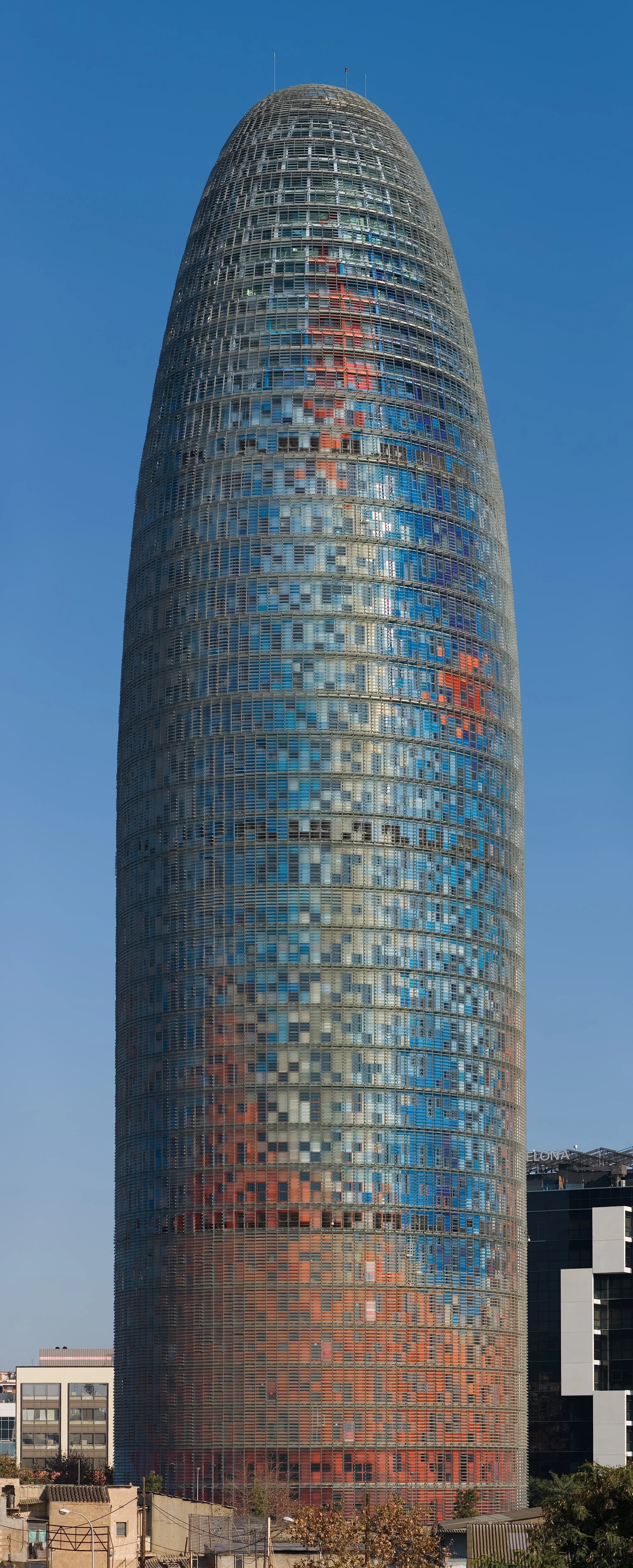
The view from the Bunkers del Carmel at sunset — Barcelona spread beneath you in a panorama that stretches from the Mediterranean to the mountains, the Sagrada Família rising from the Eixample grid like a stone forest, the Torre Glòries (formerly Torre Agbar) a glittering column in the distance, the sun setting over the city that Gaudí built, the sky doing things with colour that no photograph can adequately capture, the city preparing for another night of food, music, and the particular energy — creative, chaotic, carpe diem — that makes Barcelona, for all its crowds and its challenges, one of the most irresistible cities on Earth
The Bunkers del Carmel — officially the Turó de la Rovira — was a Republican anti-aircraft battery during the Spanish Civil War, its guns positioned 262 metres above sea level to defend Barcelona against bombing raids by Franco's Italian and German allies between 1937 and 1939. After the war, the site became an informal shantytown — the Barri dels Canons — where some 600 people lived without running water or electricity until 1990. The Barcelona History Museum's sensitive 2011 restoration preserved both the concrete gun emplacements and the excavated shantytown foundations, creating a layered memorial to Barcelona's multiple histories and one of the city's finest free viewpoints.