Beyond Charity: Heritage as Economic Capital
In the conventional economic models of the twentieth century, historic preservation was treated as a charitable luxury — an expensive, non-productive line item funded by government grants or philanthropic largesse. When cities expanded or industrial developers scouted land, ancient stepwells, traditional stone havelis, and historic handloom quarters were routinely bulldozed to make way for glass-and-steel commercial towers.
Today, in the face of planetary climate crisis and structural resource depletion, that extractive worldview has collapsed. Institutional investors, sovereign wealth funds, and multilateral development banks are discovering that cultural heritage is not a nostalgic luxury; it is high-performing economic, social, and ecological capital.
When managed with intelligent custodianship, heritage assets generate superior long-term yields, create high-multiplier local employment, and provide irreplaceable solutions to the urgent challenges of decarbonisation and social cohesion.
“The greenest building is the one that is already built: adapting a 500-year-old fortress eliminates the massive carbon footprint of modern concrete and steel.”
Embodied Carbon: The Greenest Building Is the One Already Built
In modern architectural discourse, the most critical climate metric is no longer operational energy efficiency, but 'embodied carbon' — the colossal volume of greenhouse gases emitted during the extraction, manufacture, transport, and assembly of building materials like concrete, steel, and glass.
Constructing a new modern commercial hotel produces thousands of metric tons of upfront carbon emissions before a single guest checks in. In stark contrast, when a 16th-century sandstone fortress or palace is adapted for reuse, that embodied carbon debt has already been amortised over centuries. As the famous axiom of architect Carl Elefante states: 'The greenest building is the one that is already built.'
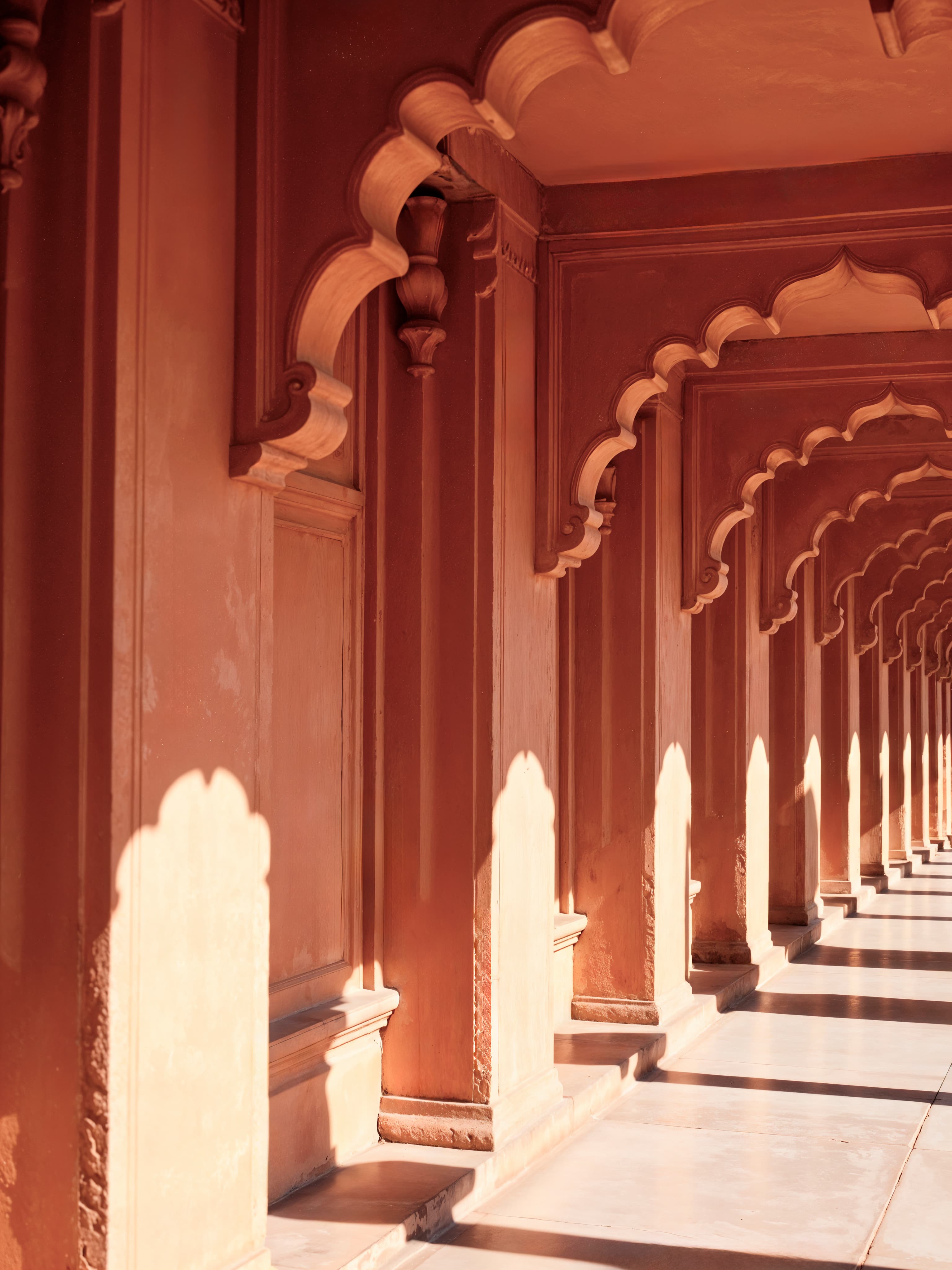
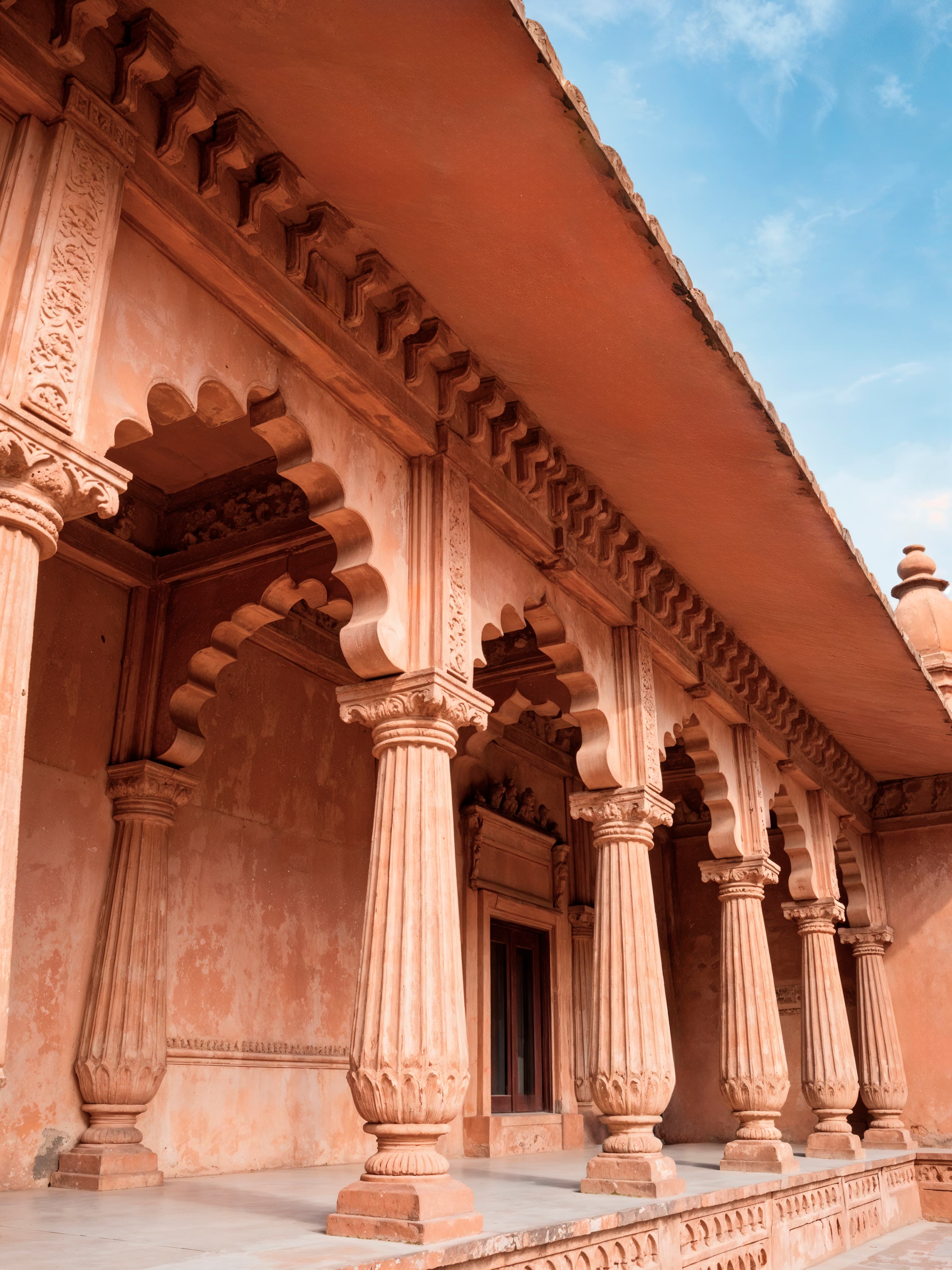
Furthermore, historic Indian architecture was engineered with extraordinary vernacular bioclimatic intelligence. Thick sandstone masonry, lime plaster walls (*chuna*), deep courtyard verandas, and ornate stone lattice screens (*jaalis*) act as natural heat-sinks and wind-tunnels, keeping palace interiors 8 to 10 degrees cooler than the outside ambient desert temperature without requiring power-hungry central HVAC compressors.
Indigenous Craft as Zero-Waste Circular Economy
The sustainability of heritage extends beyond physical architecture into the artisanal traditions that dwell within it. For thousands of years, India's craft guilds operated on strict circular principles long before Western business schools invented the phrase.
Traditional block printers, natural dyers, and handloom weavers use locally sourced, renewable, biodegradable materials: wild organic cottons, cruelty-free silks, natural mineral salts, and plant-derived pigments like indigo, turmeric, and pomegranate rind. Water used in dyeing processes is filtered through natural sand and charcoal pits, returning cleanly to regional aquifers without polluting local rivers.
By investing in these generational artisan communities, luxury brands do not merely fulfill corporate social responsibility checklists. They support a regenerative micro-economic network that keeps rural families on their ancestral lands, preventing urban migration and preserving indigenous botanical knowledge that took centuries to cultivate.
The New ESG Frontier: Cultural Impact Investing
Global capital markets are recognizing this reality. Environmental, Social, and Governance (ESG) funds are expanding their mandates to include 'Cultural Heritage & Craft Sovereignty' as key pillars of their social investment criteria.
Heritage tourism accounts for an estimated 40 percent of all international tourism worldwide, and studies show that cultural tourists stay longer, spend more per day, and distribute their economic spending more equitably among local communities than mass resort tourists. When private equity and luxury hospitality brands invest in the authentic restoration of palace heritage, they are creating self-funding engines that preserve history while generating robust, inflation-hedged commercial returns.
The Royal Gallerys Perspective
To preserve heritage is not to stand against progress. It is to recognize that genuine progress cannot occur without memory.
In an age characterized by disposable consumption and ecological fragility, our ancestral monuments and crafts are our greatest teachers. They demonstrate that human beings are capable of building things that last for centuries — structures and traditions that live in harmony with the earth, celebrate the human hand, and grow more beautiful with every passing year.
THE ROYAL GALLERYS is the international magazine for heritage, culture and luxury — documenting the people, places and ideas shaping the worlds of royalty, jewellery, design, travel and contemporary life. Our editorial authority rests on deep engagement with India's cultural ecosystem and a commitment to telling the stories that matter.
For editorial inquiries, story proposals, and partnership discussions, contact our editors at hey.theroyalgallerys@gmail.com.
Ananya Sen Gupta
Sustainability & Economics Editor. THE ROYAL GALLERYS is the international magazine for heritage, culture and luxury — editorial authority on the people, places and ideas shaping our world.
Part of Futures
This article is part of THE ROYAL GALLERYS Futures section — our international editorial destination for futures, heritage and luxury.
Explore All Futures Stories →