The Metallurgy of Kansa: 78:22 Bell Metal
In the vast treasury vaults of Indian princely states, one could find services of solid 24-carat gold and hallmarked silver commissioned from Garrard and Christofle. Yet for daily dining and sacred courtly feasts, the Maharajas consistently chose a humble-looking, golden-hued alloy known as kansa (bronze or bell metal).
Documented in the ancient Ayurvedic treatises of Charaka Samhita and Sushruta Samhita, authentic kansa is strictly defined by an unvarying metallurgical proportion: 78% pure copper and 22% pure tin. Unlike brass (which contains zinc and can react toxically with acidic foods) or raw copper, kansa is completely non-reactive when pure. It is forged by hand through repeated heating and hammering by hereditary metal artisans (kansaris), whose hammer marks create a subtle, dappled surface that catches the light like hammered amber.
“While European courts dined on gold, the Maharajas of India chose kansa—an alloy calibrated to calm the nervous system and alkalise the body.”
Thermal Conductivity and Dosha Equilibrium
In Ayurvedic medicine, the act of eating is not merely fuel intake; it is the ignition of Jatharagni—the digestive fire. Kansa possesses remarkable thermal conductivity that retains the heat of cooked foods gently without shocking the stomach. Furthermore, drinking water stored overnight in a kansa tumbler naturally balances all three biological doshas (Vata, Pitta, and Kapha), gently alkalises the system, and supports healthy gut microbiome balance.
Additionally, the ringing acoustic frequency of pure kansa—often referred to as bell metal because of its clear, bell-like chime when struck—was believed to emit vibrations that calm the nervous system and induce a mindful, unhurried eating state.
The Mandala of Twelve Katoris
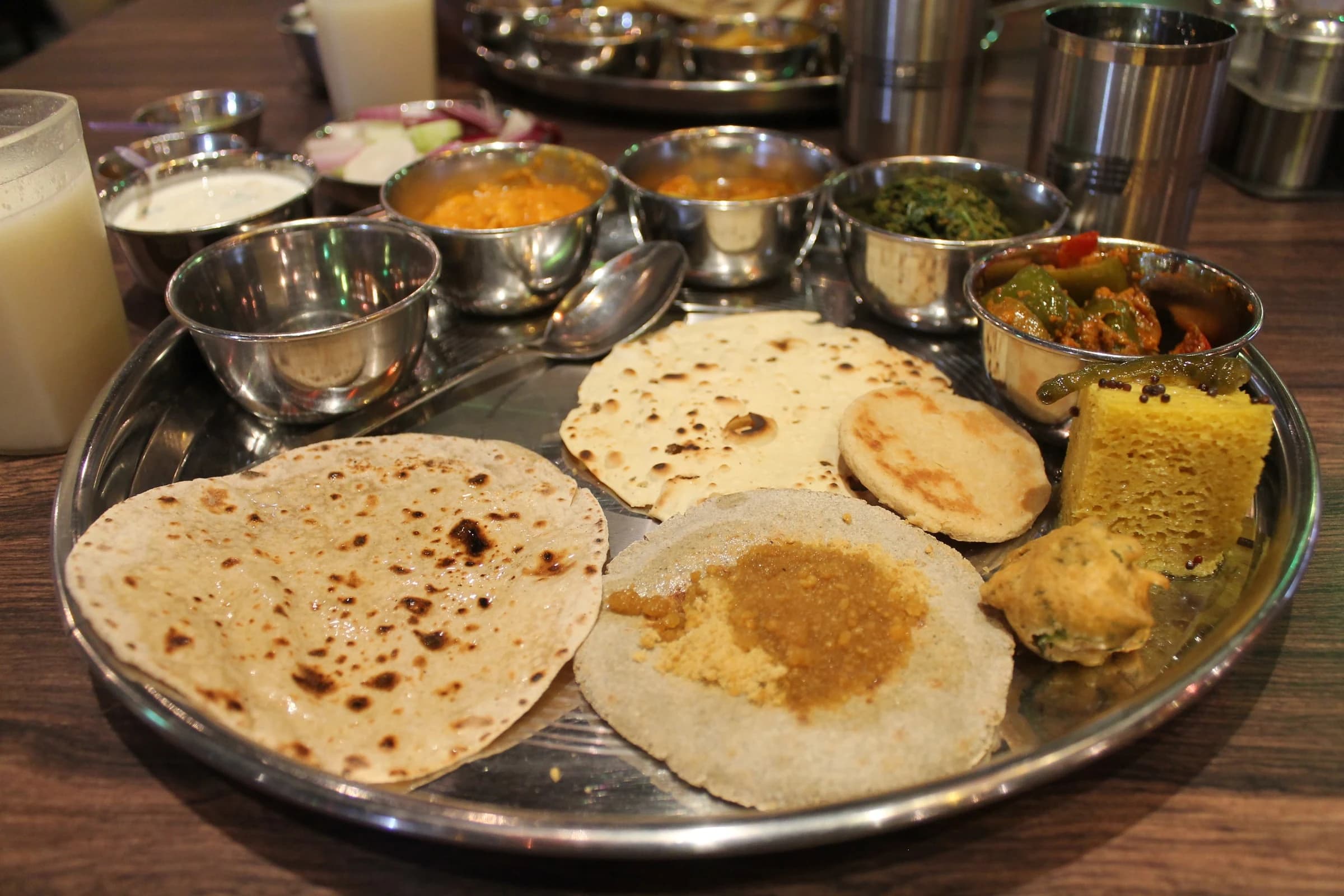
A royal thaal service was an exercise in sacred geometry. The large circular platter, often measuring 14 to 18 inches in diameter with a gently raised rim, was surrounded by six to twelve small bowls called katoris, arranged in an unyielding sequence.
According to courtly etiquette, salt and bitter digestives were placed at the top left; cooling raitas and yogurt at the bottom left; lentils and slow-simmered vegetables at the center top; rich meat curries or paneer at the right; and sweets at the bottom right. In the center lay the fragrant mound of basmati rice, flanked by folded rotis or tikkars. This circular mandala guided the diner through the six tastes (shad-rasa)—sweet, sour, salty, pungent, bitter, and astringent—ensuring sensory completeness and digestive harmony.
“The arrangement of twelve katoris around the thaal formed a sacred mandala guiding the diner through the six Ayurvedic tastes.”
The Royal Gallerys Perspective
In an age dominated by disposable ceramics and mass-manufactured dinnerware, the kansa thaal stands as a beacon of artisanal integrity and holistic wellness. It proves that ancient luxury was grounded in an intimate, scientific understanding of material, medicine, and beauty.
THE ROYAL GALLERYS is the international magazine for heritage, culture and luxury — documenting the people, places and ideas shaping the worlds of royalty, jewellery, design, travel and contemporary life. Our editorial authority rests on deep engagement with India's cultural ecosystem and a commitment to telling the stories that matter.
For editorial inquiries, story proposals, and partnership discussions, contact our editors at hey.theroyalgallerys@gmail.com.
Countess Marina von Walderdorff
Tablescaping & Decorative Arts Critic. THE ROYAL GALLERYS is the international magazine for heritage, culture and luxury — editorial authority on the people, places and ideas shaping our world.
Part of Dining
This article is part of THE ROYAL GALLERYS Dining section — our international editorial destination for dining, heritage and luxury.
Explore All Dining Stories →