Noor-Us-Sabah — the Light of the Dawn — rises from a hilltop above Bhopal, its white facade catching the first rays of the Central Indian sun with a radiance that justifies its name. This is the palace of the Begums of Bhopal, the remarkable dynasty of Muslim women who governed one of India's most progressive princely states for over a century, and it is one of the least-known treasures of India's heritage hotel landscape. Bhopal itself, a city of lakes and mosques and a vibrant contemporary culture, is not on the standard tourist circuit, and Noor-Us-Sabah, a twenty-five-room palace hotel of quiet elegance, rewards those travellers who have learned that the best discoveries lie off the beaten path.
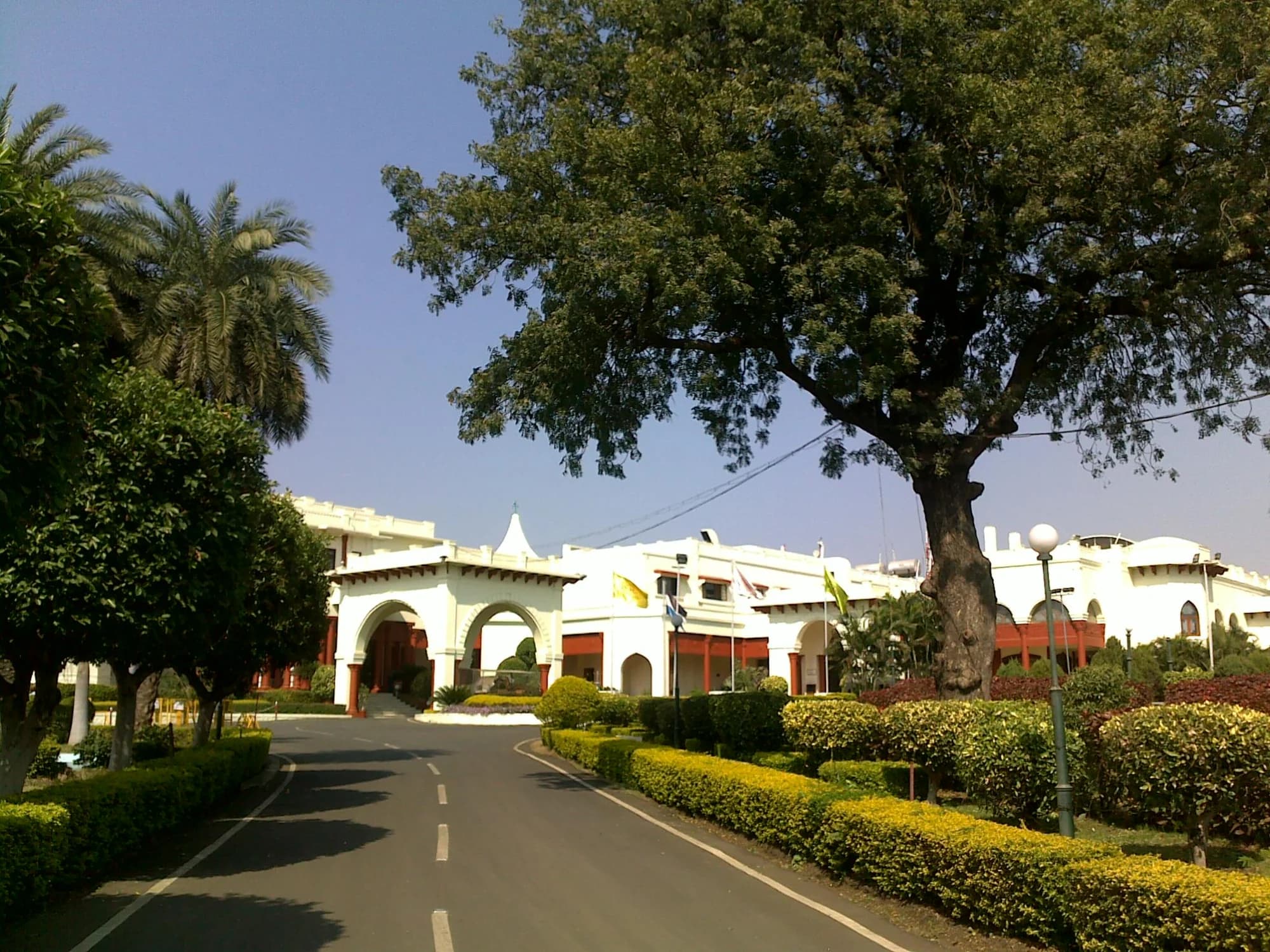
Noor-Us-Sabah Palace at dawn — the white facade catching the first light, its arches and domes glowing against the green of the surrounding hills, the lakes of Bhopal shimmering in the valley below
Built in the 1920s by the Begums of Bhopal — the extraordinary dynasty of Muslim women who ruled the princely state for over a century — Noor-Us-Sabah, meaning 'Light of the Morning', was conceived as a private residence befitting one of India's most progressive royal families
The story of the Begums of Bhopal is one of the most extraordinary chapters in Indian history — and one of the least celebrated. In 1819, Qudsia Begum became the first female ruler of Bhopal, following the assassination of her husband. She was eighteen years old. She had no formal education, no experience of administration, and every reason to fail. Instead, she governed for eighteen years with a wisdom and competence that silenced her critics and established a precedent for female rule that would define Bhopal for the next century. Her daughter, Sikandar Begum, succeeded her and became the first Indian ruler to make the Hajj pilgrimage to Mecca. Her granddaughter, Shah Jahan Begum, was a poet, an architect, and a patron of the arts who endowed Bhopal with some of its finest buildings. And her great-granddaughter, Sultan Jahan Begum, was a reformer who advanced women's education, public health, and modern administration, and who represented Indian Muslims at the first Round Table Conference in London.
Four generations of women, governing a strategically important princely state through the collapse of the Mughal Empire, the rise of the British Raj, and the gathering storm of Indian nationalism. Noor-Us-Sabah, built in the early twentieth century under Sultan Jahan Begum's patronage, was the private residence where the last of these remarkable women lived, worked, and received visitors from across the subcontinent.
The Palace: Understated Elegance
Noor-Us-Sabah's architecture reflects the refined, cosmopolitan taste of the Begums who built it. The style is Indo-Islamic with strong European influences — a fusion that was characteristic of Bhopal's ruling elite, who maintained close ties with both the Mughal traditions of Delhi and the colonial culture of British India. The white facade, with its arched windows and balconied terraces, has the restrained elegance of a Mediterranean villa, while the interior details — the carved wooden screens, the inlaid marble floors, the arched doorways that frame views from room to room — belong unmistakably to the Islamic architectural tradition of Central India.
The 25 rooms are distributed across two floors, and the best of them — the Begum Suites on the upper level — feature high ceilings, antique furniture from the Bhopal royal collection, and views across the city's lakes. The decor is a study in understated luxury: white walls, polished stone floors, hand-knotted carpets in the muted colours of traditional Bhopali weaves, and the occasional antique — a carved wooden screen, a brass lamp, a miniature painting — that reminds you this was once a royal residence.
The bathrooms are modern but simple — rainfall showers, good water pressure, quality toiletries. This is not a property that competes on amenities. It competes on atmosphere, on history, on the ineffable quality of inhabiting a space that was once home to one of India's most remarkable ruling dynasties.
A Begum Suite at Noor-Us-Sabah — white walls and high ceilings, antique furniture from the Bhopal royal collection, French windows opening onto a private balcony overlooking the city's lakes, the afternoon light filtered through carved wooden screens
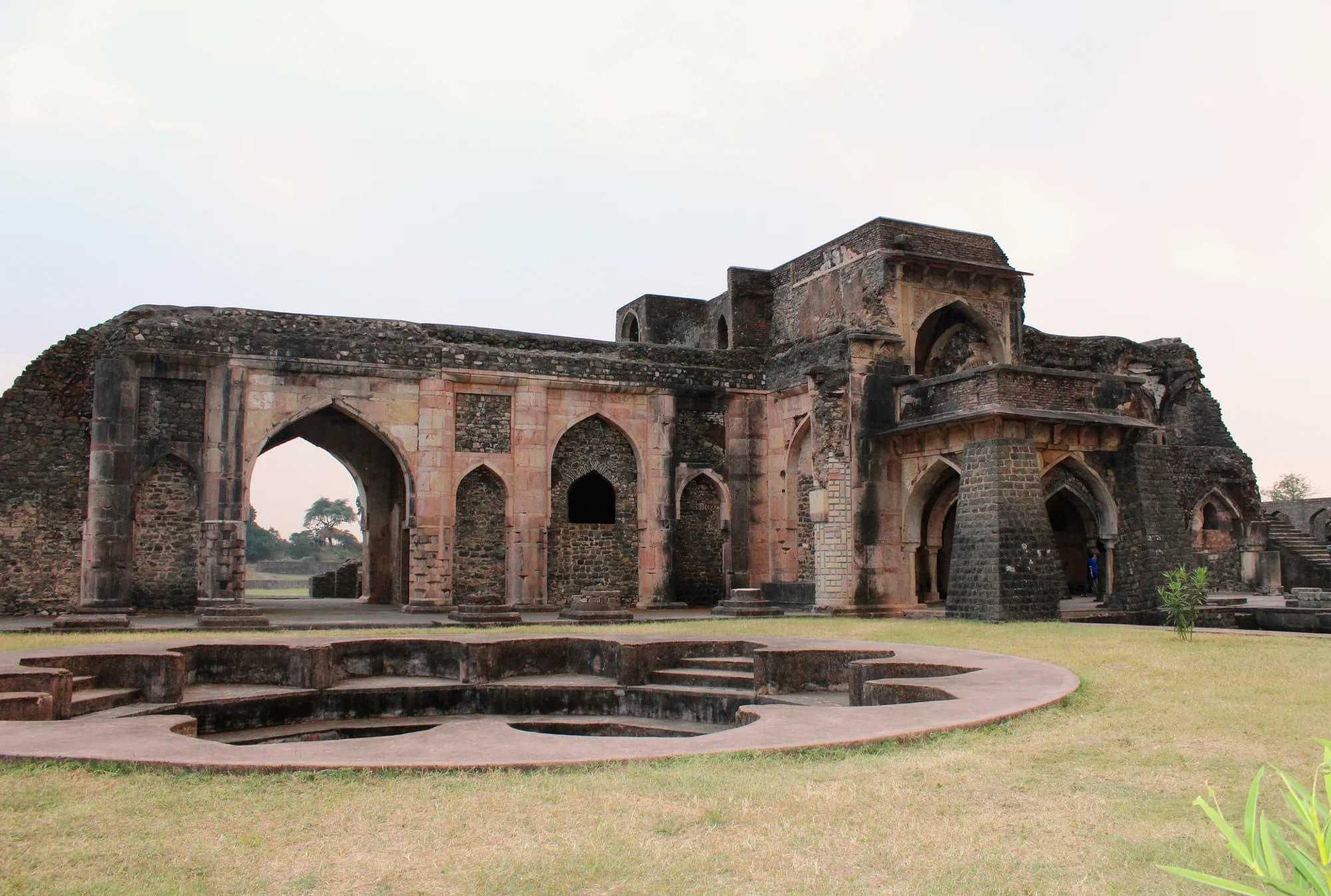
The Begums of Bhopal were remarkable patrons of architecture and culture — under their rule, Bhopal acquired its distinctive Islamic-influenced skyline of mosques, minarets, and palaces, of which Noor-Us-Sabah is among the most elegant surviving examples
The Lakes of Bhopal
Bhopal is known as the City of Lakes, and the water is the city's defining geographical feature. The Upper Lake — Bhojtal — is a vast sheet of water created by Raja Bhoj in the eleventh century, and it remains one of the largest artificial lakes in Asia. The Lower Lake, smaller and more intimate, was added in the eighteenth century by a minister of the Begums. Together, they provide Bhopal with a setting that no other city in Central India can match — a city of hills and water, mosques and minarets, that reminds some visitors of a miniature Istanbul.
Noor-Us-Sabah occupies a hilltop overlooking the lakes, and the views — particularly from the terrace restaurant at sunset — are the property's greatest asset. The sun drops behind the western hills, the water turns from blue to gold to silver, the call to prayer rises from the city's mosques, and the evening breeze, cooled by its passage across the lake, makes the terrace the most pleasant spot in Bhopal.
Boat rides on the Upper Lake, arranged by the hotel, offer a different perspective on the city. The boatman navigates past the historic ghats, the illuminated mosques, and the green islands that dot the lake's surface, while the city — a million and a half people going about their evening — provides a living backdrop that no museum could replicate.
The Upper Lake at sunset — the water turning gold beneath a pink sky, the mosques and minarets of Bhopal silhouetted on the far shore, a boatman poling his craft across the still surface, the call to prayer drifting across the water
Bhopal's Upper Lake, commissioned by Raja Bhoj in the 11th century, is one of India's oldest man-made lakes — the palace overlooks its northern shore, offering the finest sunset views in the city
“Bhopal is the most underrated city in India. Lakes, history, and the most extraordinary dynasty of women rulers the subcontinent has ever produced — and the world has barely heard of them.”
Dining: The Flavours of Bhopal
Bhopal's cuisine is one of India's best-kept culinary secrets. The city's Muslim heritage — a legacy of the Begums and the Nawabs who preceded them — has produced a meat-centric cuisine of extraordinary refinement, while the surrounding region, the fertile Malwa plateau, supplies some of the finest produce in Central India. Bhopali cuisine is distinct from the Mughlai cooking of Delhi or Lucknow: it is spicier, more robust, less reliant on cream and more confident in its deployment of chilli and aromatic spices.
The signature dishes include Bhopali korma — a lamb curry enriched with yoghurt and almonds, spiced with cardamom and white pepper rather than chilli; rezala, a mutton preparation in a thin, fiery gravy that is the city's most characteristic dish; and the street food for which Bhopal is famous: seekh kebabs, keema pav, and the legendary poha-jalebi breakfast that is the city's morning ritual. The hotel's restaurant serves a curated selection of these dishes, and the kitchen, under the guidance of cooks who have spent decades mastering Bhopali cuisine, delivers them with the confidence of long practice.
The terrace restaurant, open for dinner in the cooler months, is the most atmospheric dining option. The menu changes seasonally, the view across the lakes is magical at night, and the silence — broken only by the distant sound of the city and the occasional call to prayer — is a reminder of how far you are from the tourist circuit.
Beyond the Palace: Bhopal's Hidden Riches
Bhopal rewards exploration. The Taj-ul-Masajid, one of the largest mosques in Asia, was begun by Shah Jahan Begum in the nineteenth century and completed only in the 1980s — a construction period of over a hundred years that produced a building of extraordinary scale and grace. The pink sandstone facade, the enormous courtyard capable of holding 175,000 worshippers, and the three white domes that dominate the skyline are a testament to the architectural ambition of the Begums.
The Bharat Bhavan, a multi-arts complex on the banks of the Upper Lake designed by the renowned architect Charles Correa, is one of India's most important cultural institutions — a museum of contemporary Indian art, a theatre, a library, and a centre for the performing arts, all housed in a building whose concrete terraces cascade down to the water. The collection of tribal art from Madhya Pradesh — Gond, Bhil, and other indigenous traditions — is particularly strong, and the building itself, with its series of courtyards and its integration with the lakeside landscape, is a masterclass in modern Indian architecture.
The old city, with its narrow lanes, its bazaars, and its unexpected architectural treasures — a carved wooden balcony here, a painted mosque there — rewards those who explore on foot. The hotel can arrange a guided walk with a local historian, and the experience, threading through alleyways that tourists rarely enter, is a vivid introduction to the living culture of Bhopal.
When to Visit
October through March offers the most comfortable climate. The lakes are full after the monsoon, the gardens are green, and the evenings are cool enough for the terrace restaurant. December and January are the peak months for Indian domestic tourism — book ahead. Avoid April through June unless you are comfortable with Central Indian summer temperatures (40°C+).
The Bhopal Story
Before you visit, read a biography of the Begums of Bhopal — Siobhan Lambert-Hurley's *Muslim Women, Reform and Princely Patronage* provides excellent context. The palace experience is richer when you understand who built it and why. Alternatively, ask the hotel staff — many of them have worked for the family for decades, and their informal stories are often more illuminating than any published history.
Frequently Asked Questions
Is Bhopal safe? Yes. The city is one of India's most liveable state capitals, with a low crime rate and a relaxed, friendly atmosphere. Standard urban precautions apply — keep valuables secure, avoid isolated areas after dark, and dress modestly to respect local sensibilities.
How many nights should I stay? Two nights is the minimum to see the city's highlights and absorb the palace's atmosphere. Three nights allow for a more leisurely exploration — the lakes, the mosques, the museums, and the old city — and time for the terrace restaurant, the lake boat rides, and an afternoon of reading in the gardens.
How do I get to Bhopal? Bhopal has an airport (BHO) with direct flights from Delhi, Mumbai, and several other Indian cities. The palace is a twenty-minute drive from the airport. Taxis and auto-rickshaws are readily available, though the hotel can arrange a private pickup.
Is the hotel suitable for children? Yes, though the property's quiet, adult-oriented atmosphere is better suited to families with older children. The gardens provide space for younger ones to run, and the staff are welcoming toward families. The city's lakes and parks offer additional outlets for youthful energy.
What is the dress code? Relaxed during the day, smart casual in the evening. Bhopal is more conservative than Mumbai or Delhi — modest clothing (covered shoulders and knees) is appropriate when visiting mosques or walking in the old city.
Noor-Us-Sabah Palace at twilight — the white facade glowing against a sky of deepening violet, the lakes of Bhopal silver mirrors in the valley below, the call to prayer rising from the city's mosques, the palace terrace filling with guests taking their pre-dinner drinks, the spirit of the Begums — cultured, refined, timeless — still inhabiting every stone
The Begums of Bhopal — Shah Jahan, Sultan Jahan, and Sikandar — presided over a golden age of Bhopali culture, building hospitals, railways, and universities, and their palace remains the city's most refined address