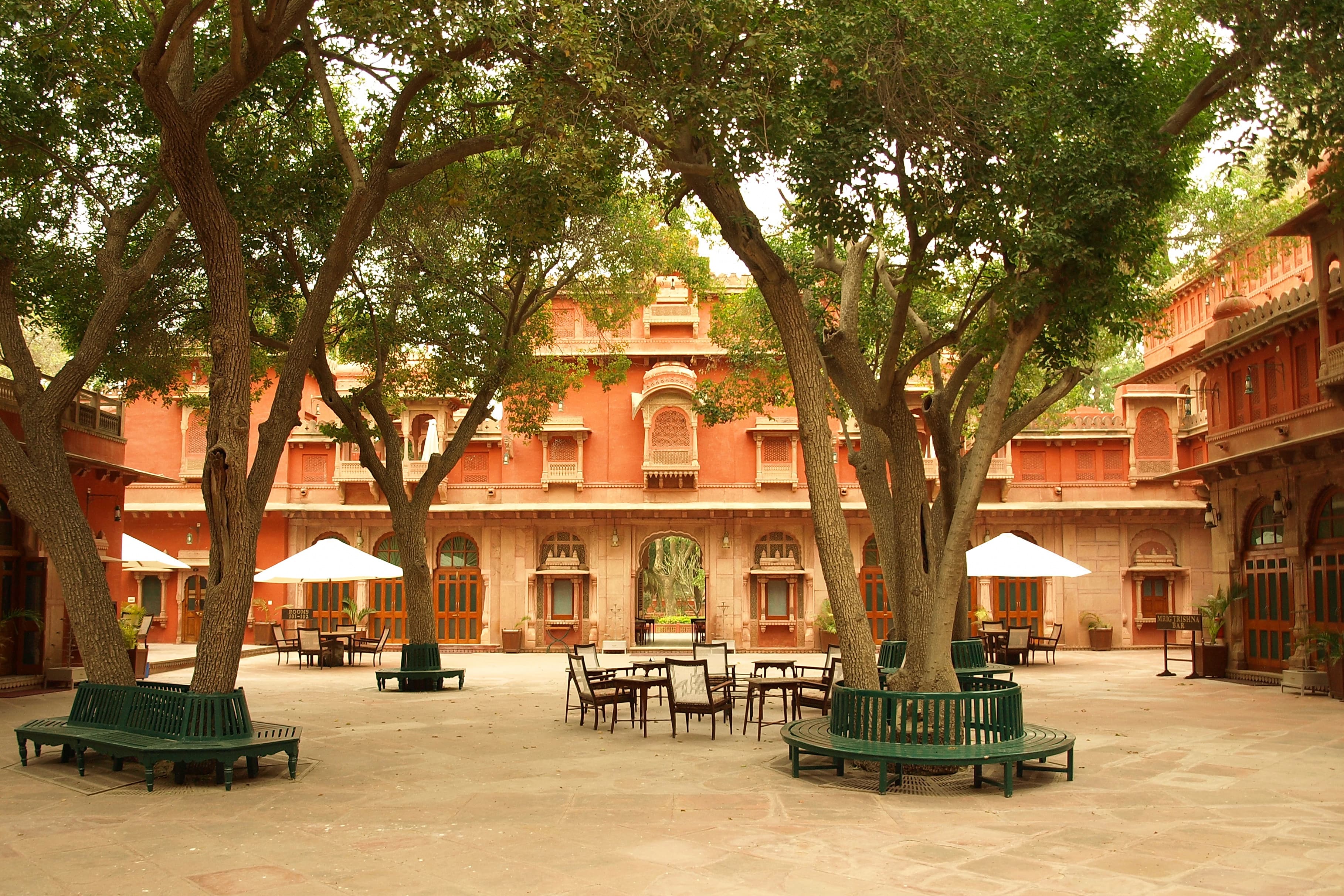
Gajner Palace occupies a position that seems, at first glance, geographically improbable: a red sandstone palace on the shore of a desert lake, surrounded by a wildlife sanctuary, thirty-two kilometres from the city of Bikaner in the heart of the Thar Desert. The lake — Gajner Lake — is not a mirage, though it has that quality about it, especially at sunset, when the water turns to copper and the migratory birds descend in their thousands. The palace was the hunting lodge of the Bikaner maharajas, a place where the rigours of statecraft were exchanged for the rigours of the chase, and where visiting viceroys, generals, and maharajas were entertained with a style that blended desert informality with Rajput grandeur.
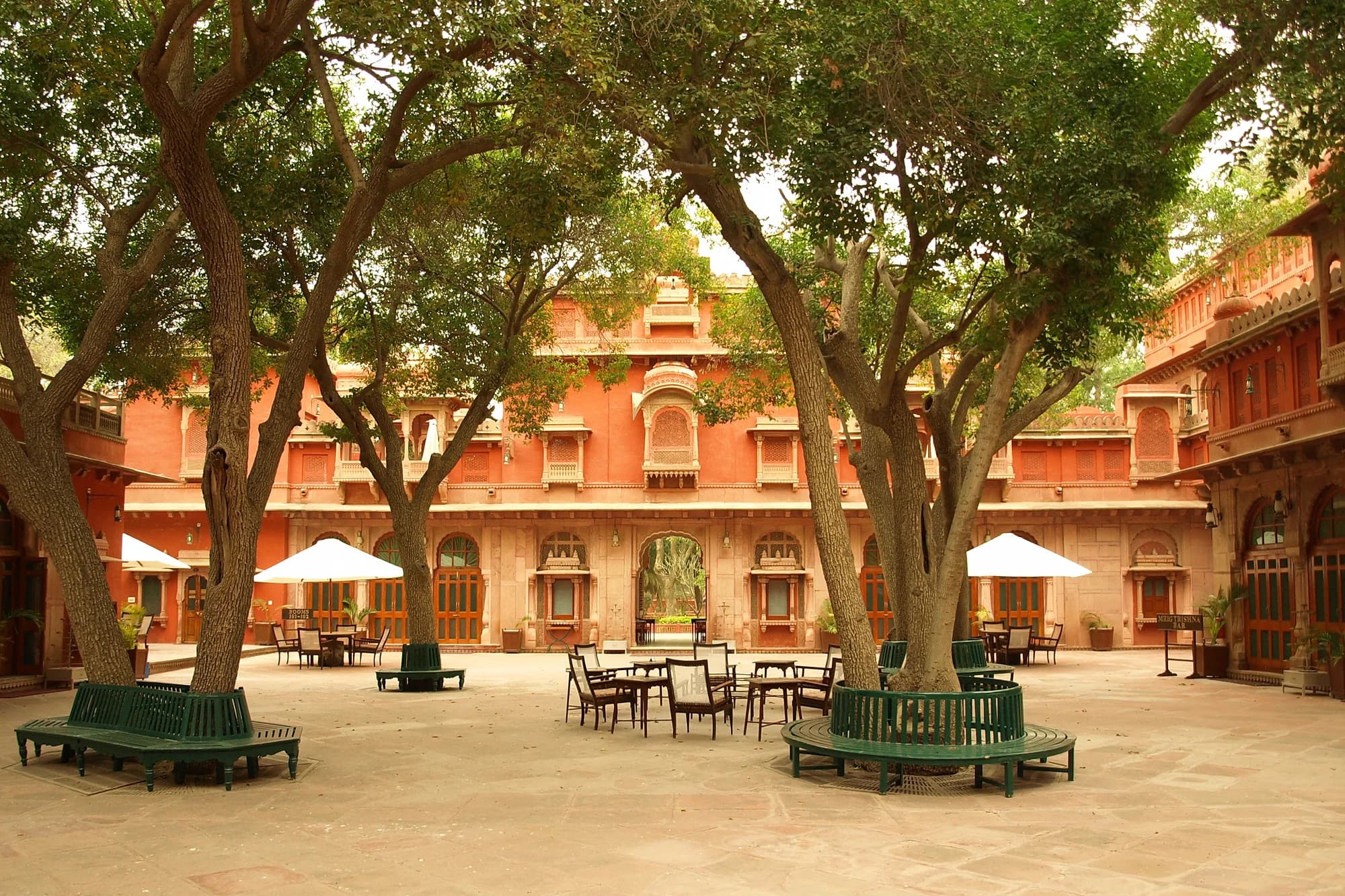
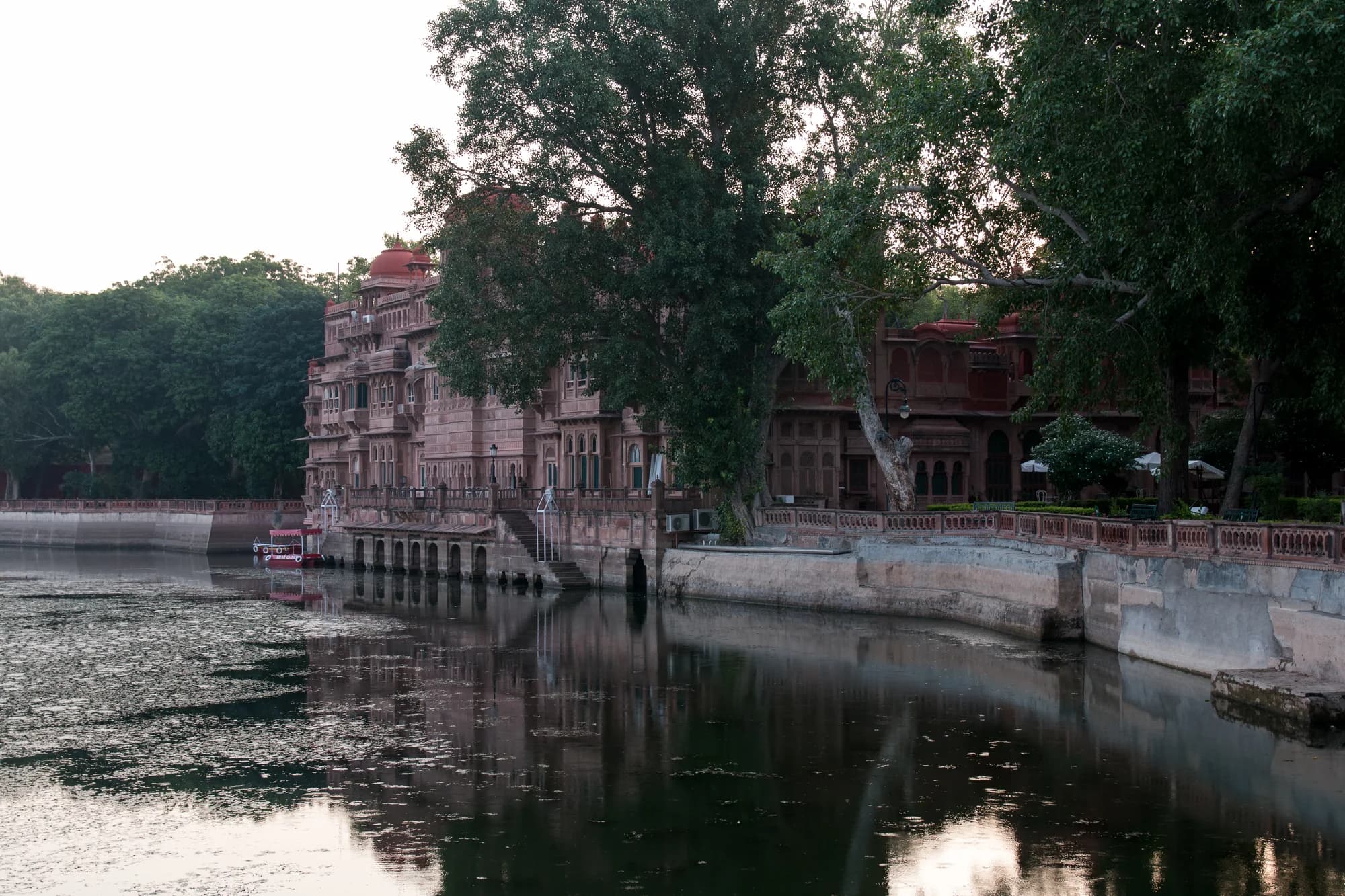
Gajner Palace at sunset — the red sandstone facade reflected in the still waters of Gajner Lake, cranes and flamingos flocking to the shore, the silence of the Thar broken only by the call of peacocks
Built by Maharaja Ganga Singh of Bikaner as a hunting lodge, Gajner Palace sits on the shores of a 5,000-acre lake in the Thar Desert — a red sandstone jewel surrounded by a wildlife sanctuary that hosts over 150 species of migratory birds
Photo: jokertrekker, CC BY 3.0
Maharaja Ganga Singh of Bikaner — the great moderniser who also gave the city its magnificent Lalgarh Palace — commissioned Gajner in the early twentieth century as a retreat from the desert heat and the burdens of administration. The site was carefully chosen: the lake, a natural depression fed by a canal from the Ghaggar River, created a microclimate several degrees cooler than the surrounding desert, and the surrounding scrub forest supported a population of game — wild boar, blackbuck, chinkara, imperial sand grouse, and the migratory waterfowl that made the lake their winter home. For the maharajas of Bikaner, who were passionate huntsmen, Gajner was paradise.
The Architecture: Red Sandstone by the Water
Gajner Palace is built in the Indo-Saracenic style that Sir Swinton Jacob perfected at Lalgarh Palace — a fusion of Rajput, Mughal, and European elements rendered in the characteristic red sandstone of the Bikaner region. The palace spreads along the lakefront in a sequence of wings and pavilions connected by colonnaded walkways, the red stone glowing warm against the blue water. The scale is more intimate than Lalgarh — this was, after all, a hunting lodge rather than a state palace — and the atmosphere is correspondingly more relaxed.
The interiors have been carefully restored. The public rooms feature high ceilings with carved wooden beams, floors of polished stone, and walls decorated with photographs and hunting trophies from the Bikaner royal family's archives. The tiger skins and antelope heads that once covered every wall have been largely removed — a concession to contemporary sensibilities — but enough remain to convey the lodge's original character. The bar, in particular, retains something of the atmosphere of a Raj-era shikar camp: dark wood, leather armchairs, and photographs of hunting parties from the 1920s, the maharajas and their British guests posed with rifles, elephants, and the day's bag.
The bar at Gajner Palace — dark wood panelling, leather armchairs, sepia photographs of royal hunting parties from the 1920s, the red sandstone walls glowing warm in the lamplight
The bar was once the trophy room of the Bikaner maharajas — the walls still bear photographs of royal shikar expeditions, when hunting parties would return to the palace after days tracking game in the Thar Desert
“Gajner is where the maharajas of Bikaner came to escape being maharajas. The informality of the place — the sense that even kings need a holiday — survives in every courtyard and corridor.”
The Rooms: Colonial Simplicity, Modern Comfort
The 42 rooms and suites at Gajner are distributed across the palace's various wings and pavilions, many of them overlooking the lake. They are simpler than the rooms at Bikaner's Lalgarh Palace — deliberately so, in keeping with the lodge's identity as a retreat rather than a showpiece. The furniture is colonial-era reproduction: four-poster beds, writing desks, cane armchairs. The bathrooms are functional rather than luxurious, though recent renovations have improved the plumbing and installed modern fixtures. The best rooms — the Lake View suites on the upper floor — offer private balconies that seem to float above the water, and the experience of taking morning tea on one of these balconies, watching the lake stir to life, the water birds beginning their daily business, the desert sunrise painting the sandstone in shades of rose and gold, is the property's most compelling argument for an upgrade.
The palace does not aspire to the luxury standards of a Taj or an Oberoi property. It aspires to something different: authenticity. You are staying in a former royal hunting lodge, not a five-star hotel, and the experience — the slightly uneven floors, the doors that don't quite close, the plumbing that occasionally protests — is part of the charm. Guests who arrive expecting seamless luxury will be disappointed. Guests who arrive expecting character, atmosphere, and a genuine connection to Bikaner's royal heritage will be delighted.
A Lake View suite at Gajner Palace — a four-poster bed with crisp white linens, colonial-era furniture, French windows opening onto a private balcony above Gajner Lake, the red sandstone walls catching the golden light of late afternoon
The suites in the palace's lake-facing wing offer the finest views — the vast expanse of Gajner Lake stretching to the horizon, migratory birds arriving at dusk in their thousands
The Lake and the Sanctuary
The lake is Gajner's centrepiece, and the wildlife it supports is the property's principal attraction. The Gajner Wildlife Sanctuary, covering some thirty-two square kilometres of desert scrub and deciduous forest, was established by Maharaja Ganga Singh in 1922 as a private hunting reserve. Today it is a protected area, and the animals that were once hunted — blackbuck, chinkara, nilgai, wild boar — now enjoy the sanctuary's protection. The birdlife is the main draw: over 200 species have been recorded, including the imperial sand grouse (for whose hunting the area was particularly famous), demoiselle cranes, flamingos, pelicans, and several species of eagle and vulture.
The sanctuary offers jeep safaris in the early morning and late afternoon, guided by naturalists who know the terrain intimately. The safaris are not in the same league as the great wildlife reserves of central India — you will not see tigers here — but the experience of driving through desert scrub at dawn, spotting blackbuck through binoculars, watching a flock of demoiselle cranes take flight against a sky of pale gold, has its own quiet magic.
The lake itself is best experienced by boat. The palace maintains a small fleet of rowing boats, and a guided circuit of the lake at sunset — the water turning from blue to silver to copper, the birds settling for the night, the palace's red sandstone glowing against the darkening desert — is Gajner's essential experience.
Gajner Lake at dawn — cranes and flamingos reflected in the still water, the red sandstone palace a warm presence on the shore, the desert beyond awakening to another day of infinite light
The lake is part of the Gajner Wildlife Sanctuary, a refuge for blue bulls, blackbucks, wild boar, and over 150 species of migratory birds including the endangered Siberian crane
The Kitchens: Bikaneri Cuisine
The restaurant at Gajner serves a menu that draws on the distinctive culinary traditions of Bikaner — a cuisine that is, by desert standards, surprisingly rich in snacks and sweets. Bikaner's most famous export is Bikaneri bhujia, the crisp, spiced gram-flour snack that has conquered India, but the city's royal kitchens were equally renowned for their savoury dishes: the Laal Maas, made with the even fierier chillies of the Bikaner region (hotter than Jodhpur's Mathania chillies); the safed maas, a delicate white mutton curry; and the vegetarian preparations of the desert — Ker Sangri, Gatte ki Sabzi, and the region's exceptional dal preparations, slow-cooked overnight over charcoal.
The dining room, overlooking the lake, serves breakfast, lunch, and dinner, with a buffet of Rajasthani and Continental dishes at each meal. The quality is honest rather than haute — this is the food of a hunting lodge, meant to satisfy appetites sharpened by a morning in the field — but the ingredients are fresh, the recipes are authentic, and the view from the window elevates every meal.
For a special evening, the palace can arrange a private dinner on the lakeside terrace, with the water lapping at the shore and the stars of the Thar Desert — unpolluted by city lights — spread across the sky in their full, astonishing density. This is the dinner to book. The food, the setting, the silence — it is Gajner at its best.
Timing Your Visit
The best months are November through February, when the weather is ideal and the migratory birds are present in their greatest numbers. December and January are peak season for birdwatchers — book well in advance. March and October are pleasant but warmer, with fewer birds. Avoid April through September unless you are comfortable with desert heat, though the palace's position on the lake provides some relief.
Combining Gajner with Lalgarh Palace
The two Bikaner palaces, separated by thirty-two kilometres, complement each other perfectly. Spend two nights at Lalgarh Palace for the architectural grandeur, the city proximity, and the Junagarh Fort; then two nights at Gajner for the wildlife, the lake, and the desert silence. The same royal family owns both properties, and the staff can arrange seamless transfers.
Frequently Asked Questions
Is Gajner Palace worth the journey from Jodhpur or Jaipur? If you are a birdwatcher, a fan of Raj-era atmosphere, or a traveller who prefers the offbeat to the obvious — yes, emphatically. The palace is not on the standard Rajasthan tourist circuit, and it is all the better for it. You will share the property with Indian families on holiday, birdwatchers with formidable telephoto lenses, and very few international tourists.
How does it compare to Lalgarh Palace in Bikaner? Lalgarh is grander, more architectural, more of a statement. Gajner is more relaxed, more natural, more of a retreat. They are different experiences, and a visit to Bikaner that includes both is richer than one that includes only one.
What facilities does the palace offer? Restaurant, bar, swimming pool (seasonal), boat rides, jeep safaris, guided bird walks, and a small spa offering basic treatments. There is no gym. The WiFi is functional but not fast.
Is the property suitable for children? Yes — the lake, the boats, the sanctuary safaris, and the open spaces make Gajner one of the more family-friendly heritage properties in Rajasthan. The staff are welcoming toward young guests, and the informal atmosphere accommodates the unpredictability of family travel.
What should I pack? Binoculars, even if you are not a serious birdwatcher — the lake and sanctuary demand them. Comfortable walking shoes for the sanctuary trails. Layers for winter visits — desert nights are cold. Sun protection for daytime. And low expectations regarding the plumbing — it works, but it is not the Four Seasons.
Gajner Palace at twilight from across the lake — the red sandstone facade glowing gold, the lake a sheet of polished copper, a flock of cranes crossing the sky in formation, the desert beyond darkening into the vast, star-filled silence of the Thar night
A boat excursion on the lake at sunset, arranged by the palace staff, offers the definitive view of this extraordinary desert palace — the red sandstone catching the last light while the wildlife sanctuary settles into its evening rhythms