
The Commissioning Client
The affluent Indian client does not, in the main, purchase interiors as a finished product. They commission them. The distinction is fundamental. A commission is a relationship — often multi-year, always personal — between a client, a designer and a set of craftspeople, in which the client's taste, lineage and home are treated as the source material rather than the backdrop.
This pattern has deep roots. Indian palaces, havelis and merchant houses were historically built through patronage, with architects, master craftsmen and workshops engaged directly by a patron whose name and reputation became inseparable from the work. That tradition has not disappeared; it has moved into the contemporary luxury market, where the wealthiest clients still expect to commission rather than to buy.
For a global design house entering India, the implication is clear. A model built on signature products, showrooms and imported specification must adapt to a market that values the bespoke, the made-to-measure and the personally directed. The house that succeeds is the one that can participate in a commission, not merely supply one.
“The affluent Indian client does not purchase interiors; they commission them.”
Craft and Heritage as the Client's Brief
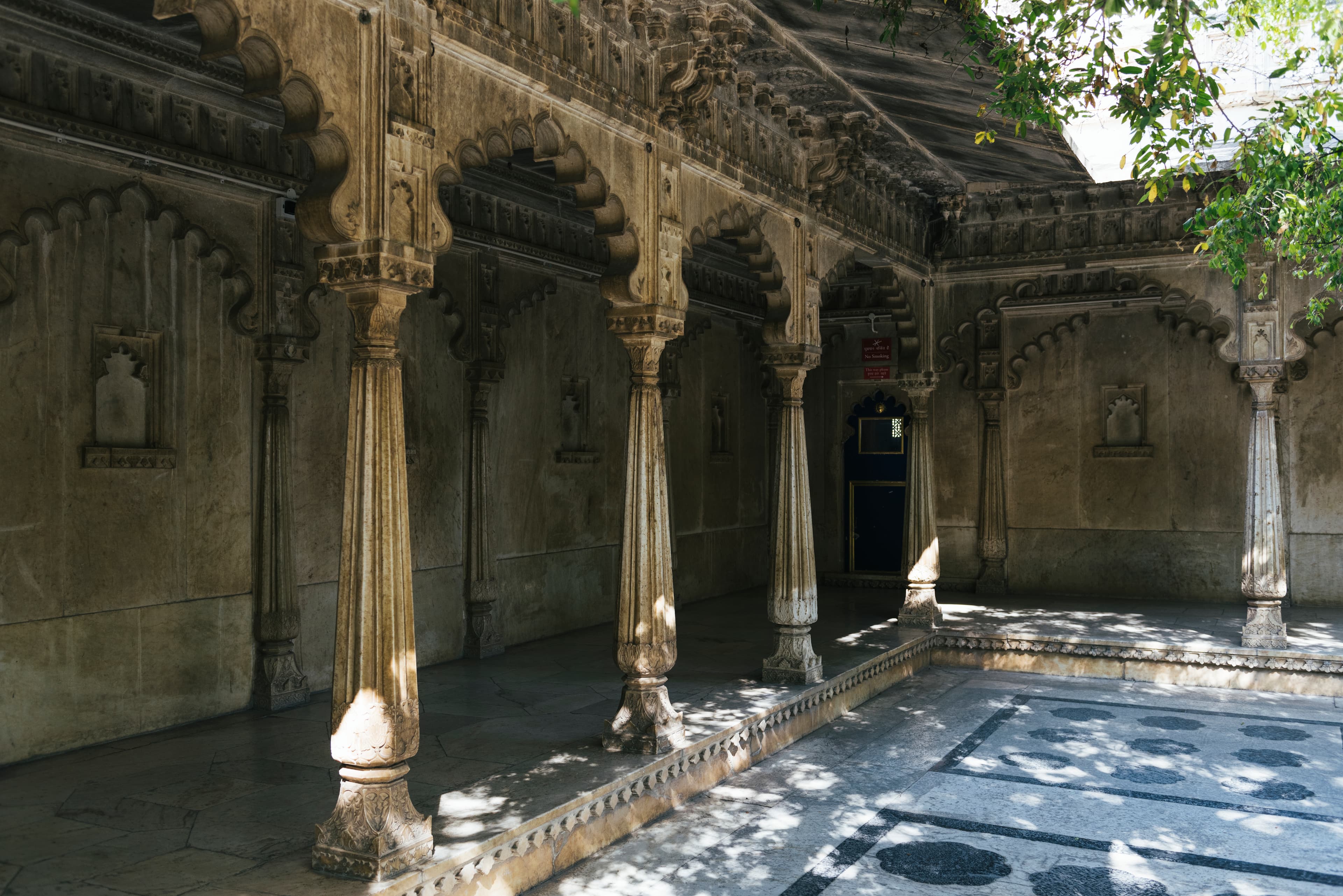
Across the Indian luxury interior market, craftsmanship and heritage are not decorative afterthoughts; they are the substance of the brief. A client commissioning a residence will more often than not specify the material traditions they want honoured — stone inlay, hand-carved wood, handloom textiles, metalwork, fresco or embroidery — and will judge the outcome by how authentically those traditions are realised.
This changes what competence means. A design house that brings only a global repertoire, however refined, is offering less than the client already has access to domestically. India possesses one of the world's deepest reservoirs of living craft, sustained by artisans whose skills have been transmitted across generations. The international house that cannot engage with this reservoir — that cannot commission a master carver or specify a regional weaving technique with confidence — is at a structural disadvantage.
The successful entrant treats craft as a partner, not a source. It learns the regional grammar of materials, builds relationships with workshops and credits the artisans whose work it specifies. In this market, the ability to direct genuine craft is a form of fluency, and fluency is what separates the credible from the merely present.

What It Takes to Matter Culturally
Cultural credibility in India's luxury interior market is not granted by brand recognition alone. It is earned through a demonstrated understanding of context — the architectural lineage of a region, the craft traditions of a state, the social and religious dimensions of how a home is used. A design house that enters with a fixed international identity and a portfolio of generic luxury signals that it has not done this work.
Mattering culturally begins with listening. The most respected international practices in India have typically spent years building local relationships, hiring local talent and developing projects that respond to a site's history rather than imposing a signature on it. They present less as authorities than as serious participants in a conversation that predates them.
There is no shortcut, but there is a method: study the regional architecture, engage the craft community, and let the client's heritage shape the design rather than the reverse. The houses that matter are those that treat India not as a market to be entered but as a culture to be understood — and that recognise the commercial and reputational value of doing so properly.
“In this market, the ability to direct genuine craft is a form of fluency — and fluency separates the credible from the merely present.”
The Route to Market for Global Houses
For a global furniture brand or interior house, the practical route into India's luxury market runs through a small number of credible channels. Relationships with architects and interior designers of standing remain the most important, because in a commissioning culture the designer is often the decision-maker the client trusts. Reputable distributors and showrooms in the right cities provide visibility, but visibility alone does not convert a clientele that buys on trust.
Editorial presence matters in ways that paid advertising cannot fully substitute. The affluent Indian client is widely travelled and media-literate, and is influenced by serious design publications, architecture media and cultural institutions. Being written about credibly — by a publication that understands the market — is a form of endorsement that reaches precisely the clientele that commissions.
For hospitality-design firms, the opportunity is different but parallel: India's hotel and resort sector continues to invest in design-led properties, and the firms that can bring genuine craft fluency to a hospitality brief are well positioned. In every segment the pattern is the same — the route to market runs through trust, craft and cultural understanding, not through the simple import of a global template.
The Royal Gallerys Perspective
THE ROYAL GALLERYS covers India's luxury interior market as it covers the wider luxury economy: as a subject of craft, culture and commerce, best understood through editorial seriousness rather than promotion. We write for the clients who commission, the designers who serve them and the international houses that seek to enter — and we document the craft and heritage that give Indian interiors their authority.
We believe the global houses that will matter in India are those that arrive as students of the culture rather than exporters of a template — that learn the craft, respect the heritage and earn the client's trust over time. The opportunity is real and substantial, but it rewards patience and fluency rather than speed.
For international design houses, furniture brands and hospitality-design firms seeking to reach the affluent Indian client — the readers who commission and the trade that serves them — THE ROYAL GALLERYS offers an editorial platform of genuine reach and credibility. To discuss how our editorial authority can support your entry into India's luxury market, contact our partnerships team at /advertise.
THE ROYAL GALLERYS is the international magazine for heritage, culture and luxury — documenting the people, places and ideas shaping the worlds of royalty, jewellery, design, travel and contemporary life. Our editorial authority rests on deep engagement with India's cultural ecosystem and a commitment to telling the stories that matter.
For editorial inquiries, story proposals, and partnership discussions, contact our editors at hey.theroyalgallerys@gmail.com.
The Royal Gallerys Editorial
Business & Design Correspondent. THE ROYAL GALLERYS is the international magazine for heritage, culture and luxury — editorial authority on the people, places and ideas shaping our world.
Part of Design
This article is part of THE ROYAL GALLERYS Design section — our international editorial destination for design, heritage and luxury.
Explore All Design Stories →